
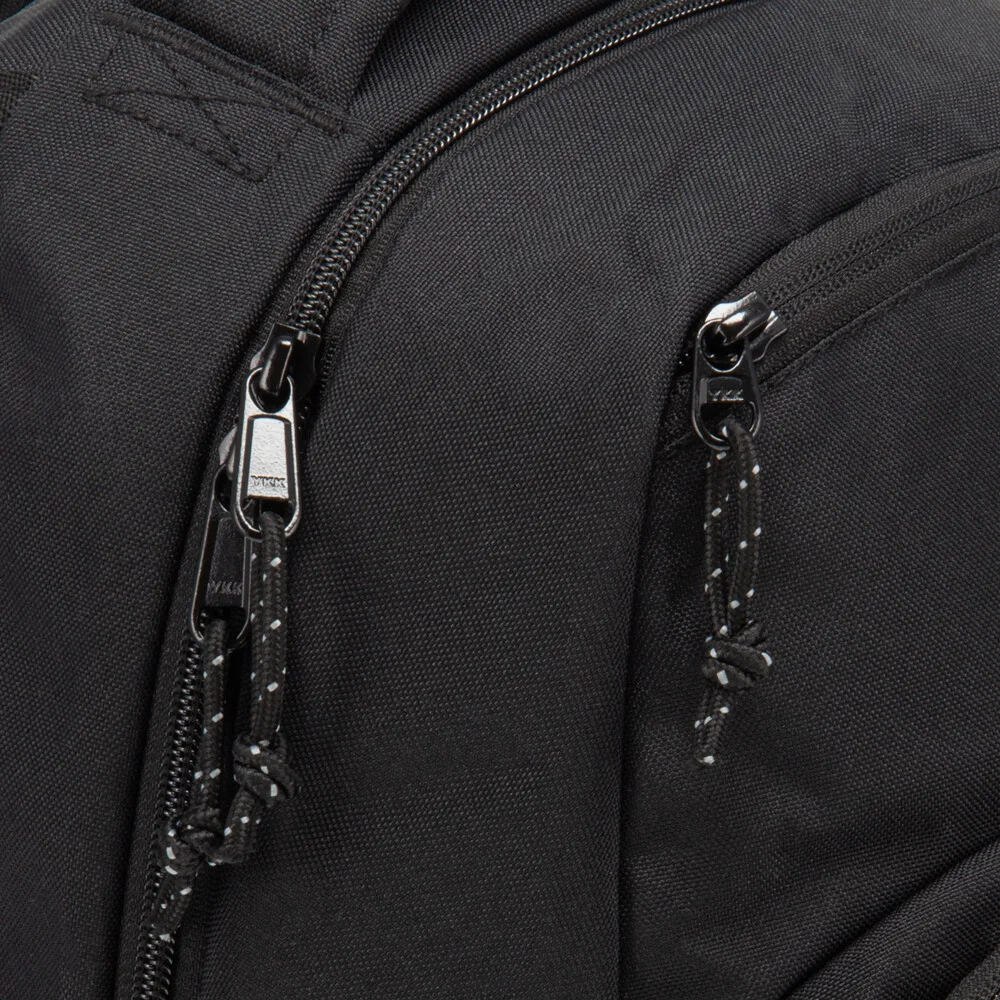
A student backpack can remain intact while its textile surface begins to look worn. Small fibre balls, a raised fuzzy surface and a snagged yarn are not the same observation. Before replacing a fabric, identify the change and decide which appearance requirement the proposed material must meet.
For a buyer developing a woven-shell backpack, the useful question is not simply whether the fabric is durable. It is whether the specified surface remains acceptable under an agreed evaluation, and what that evaluation can support. This guide proposes an approval workflow, not a test result for the pictured bag or a promise about its service life.
01
Name the surface change before requesting a test
Scope before approval
Describe what is visible without immediately assigning a cause. Record attached fibre balls, general surface fuzz, flattened raised fibres, pulled yarns and holes separately. Photograph an unaffected area beside the affected area, keeping the material identity and panel location in the record. Avoid using pilling as a catch-all term for every rough-looking surface.
ISO 12945-2:2020 identifies a modified Martindale method for evaluating textile resistance to pilling, fuzzing and matting. These named appearance properties give the buyer and laboratory a more precise starting point than a general request for a rubbing test. The public scope is not the full test procedure.
Ask the laboratory whether the method suits the actual material and question. A coated face, raised textile surface and exposed woven backing should not be treated as identical specimens merely because they belong to one backpack. Keep any limits of applicability in the approval record rather than hiding them behind a standard number.
02
Keep appearance evidence separate from abrasion breakdown
The presence of the word Martindale does not establish that two reports measure the same outcome. Identify whether the document concerns surface appearance or an abrasion endpoint before comparing results. A buyer should not convert an abrasion count into a pilling grade or present one as a substitute for the other.
The Association for Contract Textiles lists pilling separately from breaking strength and seam slippage in its woven-fabric guidance. Its application is indoor contract textiles, not backpacks. The useful lesson here is the separation of properties; its upholstery thresholds should not be copied into a bag specification.
Create separate approval fields for surface appearance and structural evidence. A fabric may satisfy one requirement while another remains unresolved. The existing abrasion-report guide addresses a different purchasing question. Neither a good appearance assessment nor a high abrasion figure supplies a complete finished-bag durability claim.
03
Identify the face that the buyer will see
Connect the tested specimen to the proposed shell article, colour, finish and supply lot. Mark the outward-facing side. If the bag uses more than one textile, identify each panel rather than describing the complete backpack with one material result. Retain a swatch with its label so later samples can be checked against the original submission.
Ask whether the fabric supplied for testing is in the same finishing state as the quoted material. Record differences such as a changed surface treatment or a different backing, without assuming that a particular change necessarily improves performance. The supplier should explain the construction; the laboratory should explain whether the report covers it.
For a panel that is partly hidden by a pocket, distinguish the visible area from the whole cut piece. This does not justify a weaker material in a concealed area. It makes the appearance review reproducible: the sample team should know which surfaces the buyer examined and which requirements apply throughout the construction.
04
Define the comparison conditions before viewing results
Agree the method edition, evaluation stages and reporting requirements with the laboratory before samples are submitted. Request the result expression and observations for each identified specimen. Do not select whichever stage or photograph makes a candidate look best after seeing the results. Resolve ambiguous report headings before ranking suppliers.
Keep an untested reference and, where available, the assessed specimens. For an internal visual comparison, use consistent lighting, viewing distance and fabric orientation. Label that activity as a buyer review, not as formal standard grading. Phone photographs and different screens can help communicate a location but are poor substitutes for the actual reference.
- Material identity: which article, colour, face and finishing state was assessed?
- Evaluation identity: which method, edition and reported stage does the result represent?
- Decision identity: which agreed appearance requirement is being accepted or left open?
These three questions prevent a loose certificate from becoming approval for every colourway or later substitution. If a report covers only one submitted specimen, keep that boundary explicit until evidence supports broader coverage.
05
Map contact locations without inventing a lifetime claim
Review where the student bag's fabric may contact straps, clothing, nearby hardware or other parts of the bag. Use an assembled sample to locate those interfaces. Do not assume the same contact occurs on every panel, or that a flat laboratory specimen recreates the complete movement of a loaded backpack.
Where an edge or rough component touches the shell, document the contact before asking for a different fabric. The development response may involve clearance, edge finishing or component position, but the observation alone cannot prove the cause of a surface defect. Keep a proposed explanation separate from a demonstrated finding.
ACT also cautions that laboratory results alone do not predict field pilling behaviour in its end-use context. For a backpack project, maintain the same evidence boundary: an appearance test is not a warranty duration. Agree any assembled-use evaluation separately and avoid translating a laboratory stage into months of school use.
06
Compare revisions as complete, identified materials
When reviewing an alternative, retain both the original and revised references. Record changes in yarn, textile construction and finish that the supplier discloses. If several variables change together, approve or reject the new combination as a combination; do not claim that one ingredient solved the problem without a controlled comparison.
Check other requirements after selecting for appearance. A candidate still needs to meet the project's weight, handling, sewing, colour and functional requirements. The empty-backpack weight guide can support the mass review, while the sample team checks whether the material works in the intended panel construction.
Close the decision with the accepted article reference, appearance evidence, retained swatch and unresolved limitations. Link it to the sample revision record so a visually similar substitute cannot silently inherit approval. The aim is a specific, repeatable material decision, not an unsupported claim that the backpack will never pill.
Discuss your bag development project
ANSON XIE
General Manager & Founder
Quanzhou Junkai Pengda Special Equipment Co., Ltd.
Email: ansonxie@jkpdtime.com
Phone: +86 177 5095 3355
WhatsApp: +86 177 5095 3355
Factory address: Floors 2–4, Building 1, Phase I, Huixin Intelligent Manufacturing Industrial Park, Hui'an County, Quanzhou, Fujian, China