
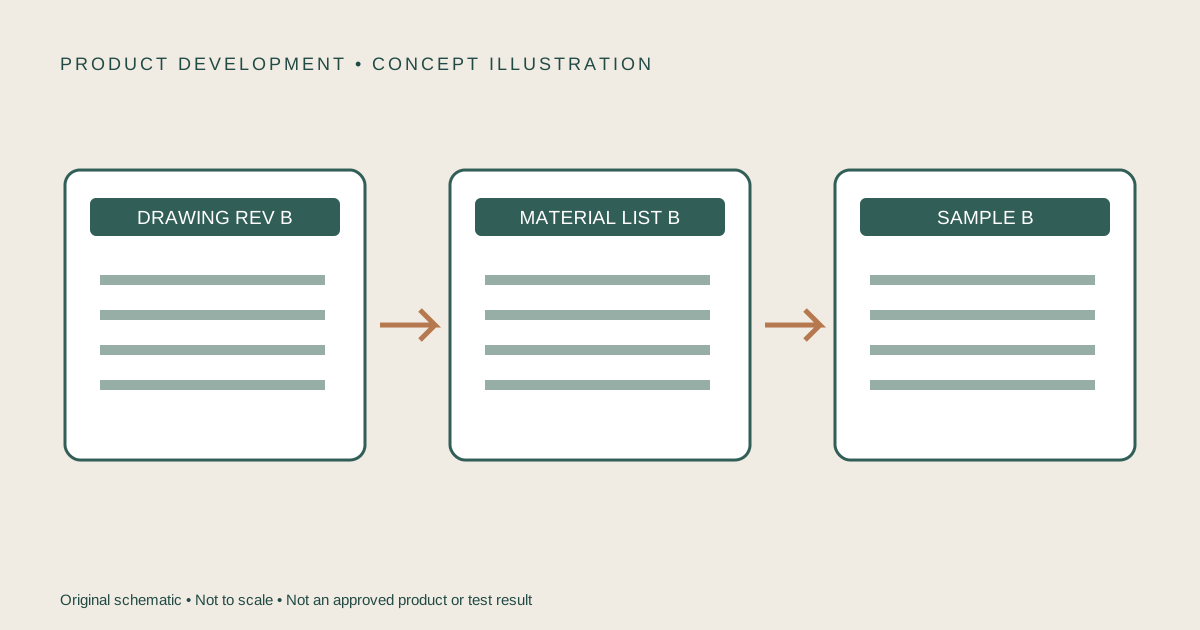
A sample revision should update the physical bag, its drawings and its material list together. A message such as “make the pocket larger” leaves room for different interpretations. A traceable change record gives the brand and sampling team a shared reference for the next review.
01
Identify the sample before reviewing it
Record the sample ID, date, drawing revision and material-list revision. Use the same identifier on photographs so different rounds of the same product do not become mixed.
Identify the materials actually used and any temporary substitutes. A similar appearance does not establish that a material has been approved. Matching information on the physical sample and electronic records helps another team retrieve the correct files after receiving it.
02
Write changes as checkable items
Each comment should state the location, current issue, requested change and review method. For example, describe difficult access to a front pocket, request an opening adjustment and specify review with the intended item. For dimensions, define measurement points and sample condition.
Mark consistent-view photographs and add an interior image when needed. Number each change separately. This makes it easier to compare the next sample against the request without mixing size, material and construction comments.
03
Separate corrections from new requirements
An unmet original requirement is different from an added function. Recording the reason helps the team decide whether to reassess construction, materials or commercial conditions.
Moving an opening may be a local change, while adding a laptop section can affect storage space and connections. A material substitution can also change thickness, handling and component fit. Review the assembled sample rather than changing only a name in the material list.
04
Update linked documents together
A change can affect several views and components. After moving a pocket opening, review front and side drawings, measurement notes and related material requirements. A shoulder-strap change may also affect attachment positions, adjustment range and assembly notes.
List the documents that need updating and identify who confirms them. Retain earlier versions for reference, but clearly mark the files used for the next build. Resolve conflicting revision information before work continues.
05
Close previous issues at the next review
Begin a new sample review with the previous change list. Record items as completed, requiring further adjustment or not yet verified. A different appearance alone does not demonstrate that an issue has been resolved.
Use consistent packing and operating conditions for comparison. A sample made with temporary materials may support some layout decisions without validating final material performance. Keep comparison photographs and the reasons for acceptance.
06
Finish with a coherent revision package
Save current drawings, the material list, comments and sample photographs together. State what is approved, what remains open and the conditions for the next stage. Approval from a photograph should not silently become approval of every sample requirement.
For initial documentation, see JKPD's Tech Pack guide. For an existing sample revision, share aligned files and marked photographs through the project inquiry page.
Discuss your bag development project
ANSON XIE
General Manager & Founder
Quanzhou Junkai Pengda Special Equipment Co., Ltd.
Email: ansonxie@jkpdtime.com
Phone: +86 177 5095 3355
WhatsApp: +86 177 5095 3355
Factory address: Floors 2–4, Building 1, Phase I, Huixin Intelligent Manufacturing Industrial Park, Hui'an County, Quanzhou, Fujian, China