
A student backpack's empty weight is only comparable when everyone weighs the same configuration. A sample without its removable insert cannot support a claim for a retail bag supplied with that insert. Start by defining what is included, then build a component mass budget and verify the finished sample before publishing a number.
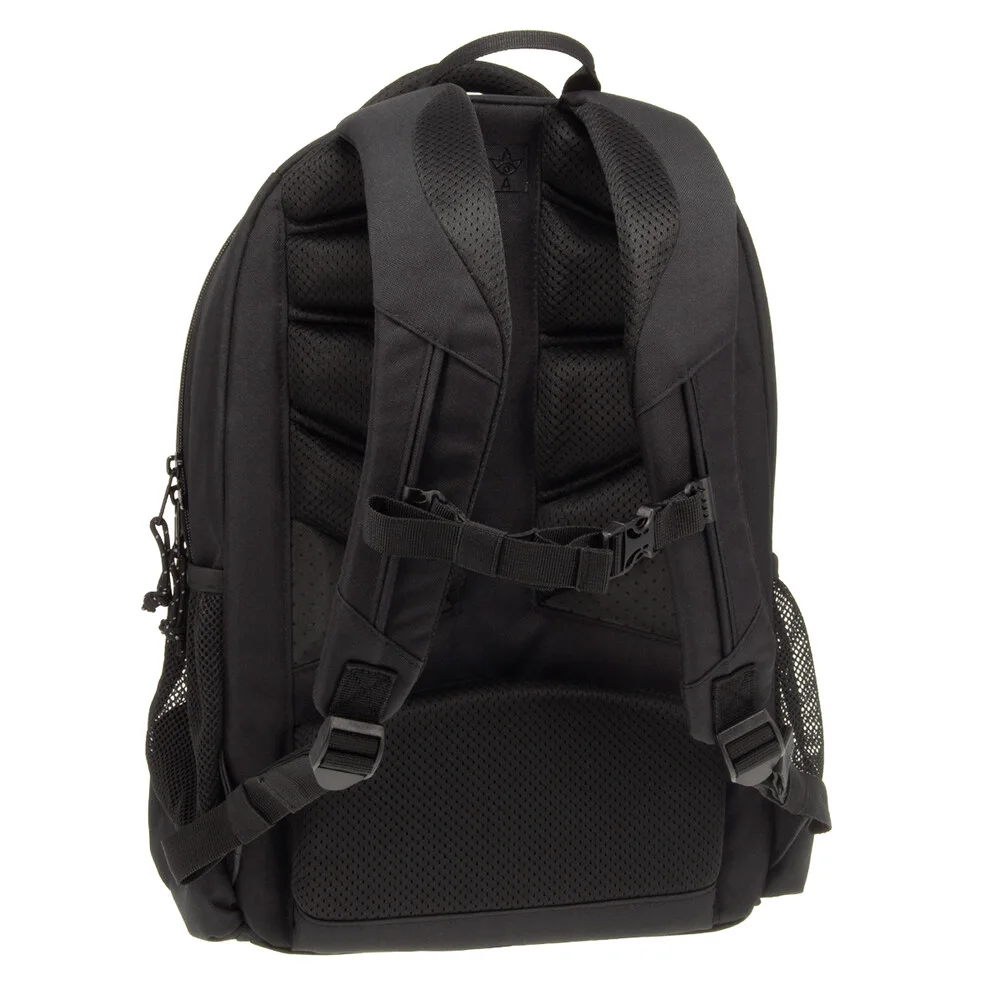
The Arsuna 2 student backpack is a useful starting reference: its rear view shows padded shoulder straps, a shaped back panel and adjustment hardware. Those visible parts raise a development question, not a conclusion about weight. Which features does the intended school-use brief actually require, and how much mass does each add? The photograph supplies no measured weight or ergonomic test result.
This review concerns the empty bag. It does not prescribe a safe carrying load for children or imply that a lighter bag automatically fits better. Fit, packing, attachment strength and appropriate use need their own evaluation.
01
Define the configuration before the target
Write an inclusion list beside the proposed weight specification. State whether the bag includes a removable base, internal organizer, rain cover, detachable straps and any other supplied accessories. Separate the product itself from hangtags, protective tissue, retail packaging and shipping materials. A description such as bag only is too vague when different sample teams remove different parts.
Photograph the weighed configuration and give it a revision identifier. Empty every pocket and remove packing supports. Check that no loose sample components remain inside. If an accessory is sold separately, document that fact rather than quietly omitting it to achieve the target. Where two retail configurations exist, keep two identified results.
Specify a target and an acceptance range as project requirements, not as an assumed industry rule. A design target guides development; a production limit decides acceptance. The two serve different purposes. Agree how sampling, rounding and variation will be handled before the first finished sample is judged.
02
Make the measurement repeatable
Choose a scale with suitable capacity and resolution for the decision being made. A display that changes only in large increments cannot resolve a small proposed saving. Record the instrument identifier and its verification or calibration status, use a stable support, and follow its operating instructions. Let the indication settle before recording it.
Keep the entire bag supported by the weighing platform or a suitable tared container. A shoulder strap resting on the table can transfer part of the load away from the scale. Reposition the bag and repeat the reading when the result is questionable; do not simply select the lowest displayed value.
OIML R 76-1 distinguishes gross, net and tare values for non-automatic weighing instruments. It is an instrument reference, not a backpack weight limit. For this development review, the practical point is to state whether a supporting tray has been tared and to preserve that setup in the record. Do not describe the bag as OIML-certified on this basis.
Record whether samples were measured under comparable storage conditions. A recently wet sample and a dry retained sample are not a useful pair for judging a small construction change. If conditioning is part of the agreed procedure, record it consistently instead of inventing a correction factor.
03
Find where the mass is going
Group the bill of materials into shell panels, linings and pockets, padding and support, webbing and binding, closures and hardware, and branding or accessories. Weigh representative components where practical. Use these groups to find the main contributors rather than trimming whichever part is easiest to reach.
For a preliminary fabric estimate, multiply cut-panel area by the specified mass per unit area, keeping units consistent and including every layer. Do not substitute fabric purchased per bag for fabric retained in the bag: cutting waste belongs to material consumption and cost, not to the finished empty weight. Add coating or backing only if it is not already included in the material specification.
The estimate will not perfectly equal the assembled sample. Thread, adhesive, small trims, seam allowances and measurement variation can explain a difference. Investigate a large gap before using the calculation to promise a retail figure. A spreadsheet total is a planning tool; the actual configuration still needs to be weighed.
04
Remove unnecessary construction, not necessary function
Begin with duplicated layers or features that the buyer has not requested. An extra organizer wall, a decorative overlay or a full-area reinforcement may deserve review. Ask what function it provides and whether a smaller, more targeted construction could meet the same requirement. Each proposed saving should have a corresponding functional check.
Avoid treating thinner foam as a universal answer. Changing padding can alter edge feel, shape retention and the position of hard components against the wearer. Similarly, narrowing webbing can change the fit in adjustment hardware. The strap-padding review and the relevant approved sample should be consulted before removing material from a contact area.
For a reinforced base, compare the intended wear zone with the actual reinforcement area. A localized design may be worth sampling, but it must still address abrasion, seam loading and the packed shape required by the brief. The student backpack base guide covers that separate design decision. Do not transfer a favourable result from one material stack to another without checking it.
05
Compare revisions with one clear question
Change one defined construction group at a time where practical. Keep the baseline and revised sample under the same weighing configuration, then record the mass difference alongside the functional observations. This makes a result such as lower mass but poorer pocket access actionable; an unexplained new total does not tell the pattern team what to retain.
Use the intended packing set for the separate usability review. Check whether the bag stands, opens and closes as required, whether contents press through the back, and whether shoulder adjustments still operate. Empty-weight reduction should not obscure a lost function that forces the user to carry an additional organizer or protective sleeve.
If a target cannot be met without compromising agreed requirements, return to the brief. Offer a documented choice: fewer features, a different material system, or an adjusted weight target. Do not approve a stripped demonstration sample while planning to restore the removed features in production.
06
Connect the claim to the approved product
Freeze the inclusion list, materials, component revisions and measurement method together. Keep the measured sample identifier with the result. A later change from a lightweight trim to a heavier substitute should trigger a review of the published figure even when the outward appearance remains similar.
Production sampling
Production checks should use an agreed sample plan and acceptance criteria. Record individual readings where required rather than only an average that hides variation. If a result is outside the agreed range, first confirm configuration and measurement setup, then investigate materials or missing components. An unexpectedly light unit is not automatically a good unit.
Before adding empty weight to a product page, confirm which size, configuration and revision it describes. Keep shipping weight elsewhere. For an OEM discussion, send JKPD the intended student use, required features and proposed empty-weight range through the project contact page. A defined target lets the development team compare meaningful alternatives without turning lightweight into an unsupported promise.
Discuss your bag development project
ANSON XIE
General Manager & Founder
Quanzhou Junkai Pengda Special Equipment Co., Ltd.
Email: ansonxie@jkpdtime.com
Phone: +86 177 5095 3355
WhatsApp: +86 177 5095 3355
Factory address: Floors 2–4, Building 1, Phase I, Huixin Intelligent Manufacturing Industrial Park, Hui'an County, Quanzhou, Fujian, China