
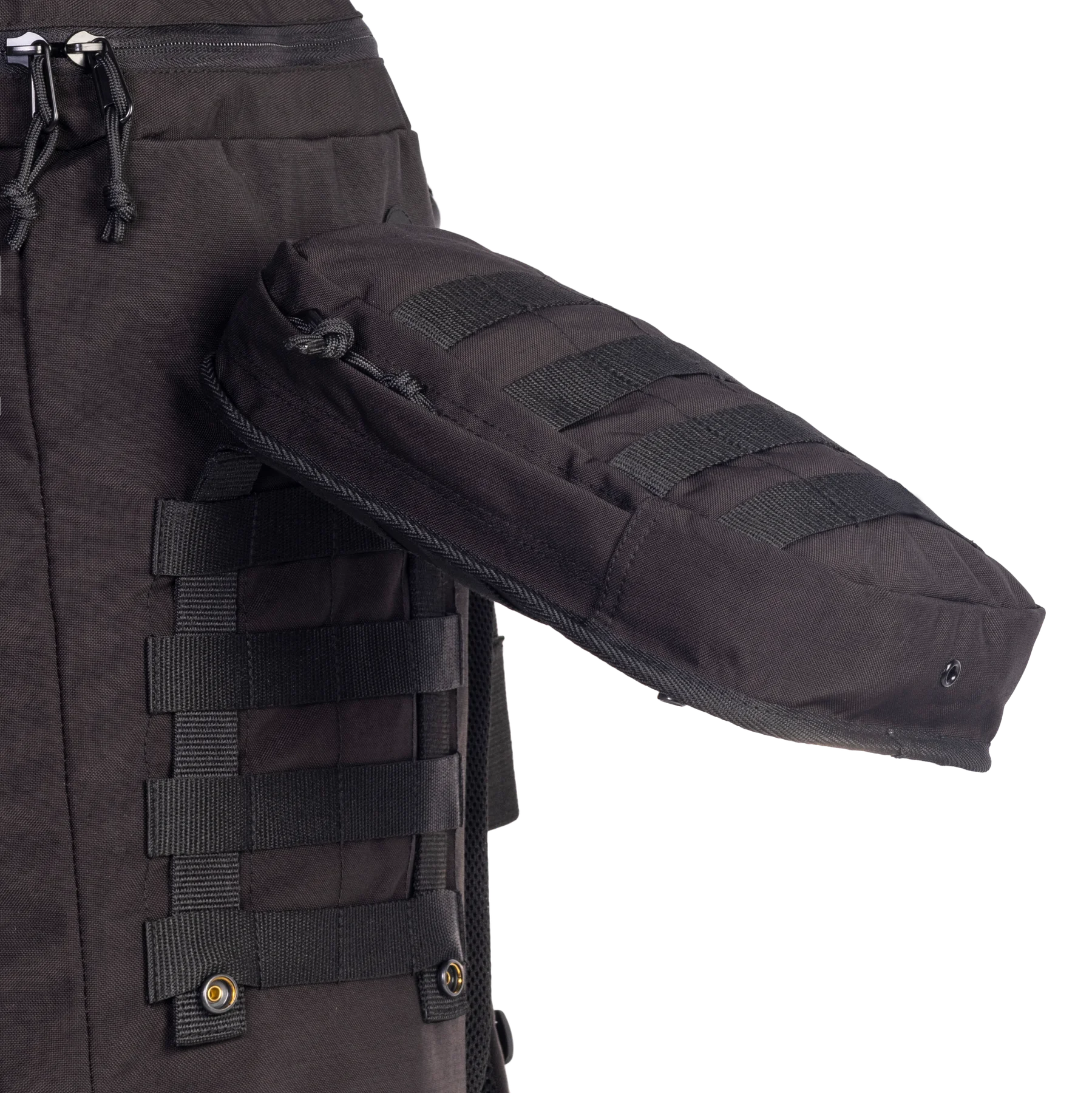
A replacement fabric can match the colour and nominal weight of an approved tactical soft bag yet behave differently at a folded edge. Before changing the pattern or blaming the sewing operation, establish whether the two thickness figures were measured on comparable material under comparable conditions. A millimetre value without its measurement conditions is an incomplete purchasing specification.
This review concerns ordinary bag construction: shell panels, textile facings and layered components. It does not address protective equipment or establish any protective rating. The aim is to connect a repeatable material measurement with the actual folds and interfaces that the sample team needs to build.
- Identify the supplied material state, including bonded layers or finishes.
- Keep the measuring pressure and method attached to every thickness result.
- Separate a single-material reading from an assembled seam or padded panel.
- Approve functional fit on the actual construction, not from thickness alone.
01
Why can two thickness readings disagree?
Textiles compress during measurement, so the reading depends on how the instrument contacts the specimen. The public description of ASTM D1777-26 identifies applied pressure as a necessary part of a textile thickness value. It also notes that a material-specific method can take precedence over the general method.
That makes a quick hand-held calliper comparison a useful observation at most, unless the agreed procedure supports it. A tightly squeezed reading and a lightly contacted reading do not demonstrate a change in the supplied textile. First ask how each number was obtained.
Do not try to recreate a formal procedure from a catalogue summary. The laboratory needs the applicable complete method, equipment and reporting requirements. The public source supports the importance of measurement conditions; the following purchasing workflow is practical guidance, not a replacement test method or a claim of standard compliance.
02
Define exactly which material is being measured
Name the supplier article, colour, finish and lot before requesting a thickness figure. State whether the sample is the base textile, the finished coated material, a bonded composite or a sewn part. These are different test objects even when the purchasing team calls all of them the outer fabric.
Separate the component from its assembly
A textile face bonded to another layer should not silently inherit a thickness value from the unbonded face. Likewise, a back panel containing textile, foam and lining needs a component list rather than one unexplained fabric number. Ask which layers the result includes and whether they were measured together.
Keep cut swatches with the report and identify their face and reverse. Do not flatten, stretch, iron or otherwise prepare a comparison sample differently simply to make the readings agree. Any preparation required by the selected procedure should be documented and applied consistently by the testing party.
03
What belongs on the thickness review sheet?
Record the information needed to compare results, not just the number that fits the purchasing form. Ask the laboratory or supplier to identify the method and edition, relevant measurement settings, specimen condition and reporting units. If a report omits an important condition, resolve that gap before treating two results as equivalent.
- Material identity: article reference, lot, finish and layer construction.
- Procedure identity: method, edition and any declared deviations.
- Measurement conditions: the pressure and other settings required by that procedure.
- Sampling identity: where the specimens came from and which supplied material they represent.
- Result: units, individual readings or reported summary, and agreed acceptance basis.
A short supplier email saying approximately the same thickness does not close these points. Request clarification in the same record as the proposed substitution. Otherwise the sample room may approve one material while purchasing later orders another under a broad description.
04
Check the construction where thickness matters
Use thickness data to identify possible fit changes, then examine the actual seam or interface. A folded edge, binding turn or webbing attachment contains a local stack of materials. A single flat textile value does not directly predict the finished stack after folding, stitching and compression.
For a hypothetical side-pocket revision, map the shell, lining and folded seam allowances at the corner. If a material substitution changes that corner's bulk, compare an operation sample made with the intended layers before moving the sewing line. This is a proposed development exercise, not a reported factory test.
Inspect transitions, not only the thickest point
A construction may feed differently where it changes from a flat panel to a folded junction. Mark that transition on the sample and note whether the problem is appearance, alignment, feeding or access for the next assembly operation. A general note that the fabric is too thick does not identify which change would help.
The existing seam-junction review explains allowance direction and assembly order. Keep that construction decision separate from material acceptance. A pattern correction may improve an interface, but it does not prove that a substitute textile meets the agreed material specification.
05
Keep thickness, mass and compression behaviour separate
Thickness and mass per unit area describe different aspects of a material. Do not replace a missing thickness specification with a GSM figure, or treat matching GSM as proof of identical bulk. For purchasing comparisons, retain both measurements with their own procedures and material identities.
The fabric mass-per-area guide addresses the scope of GSM sampling. Thickness review adds a different question: what distance is measured between the contacting surfaces under specified conditions? Neither measurement alone proves abrasion resistance, seam strength or suitability for a particular load.
For padded sections, also distinguish initial thickness from recovery after compression. A single reading does not establish how a material responds after repeated loading or storage. If recovery is important, define a separate evaluation with the material supplier rather than turning a thickness tolerance into a durability promise.
06
Resolve disagreements without changing several variables
When two reports disagree, first compare identity, units, method and conditions. If those do not match, a numerical argument about which supplier is correct is premature. Ask for comparable evidence on representative material before rejecting a delivery or approving a substitution.
For the sewn sample, hold the pattern revision and material stack constant while reviewing a proposed change where practical. If the supplier changes the fabric, binding and seam allowance together, record the result as a new assembly combination. Do not credit the improvement to reduced thickness without isolating that cause.
Photograph the affected operation and retain labelled samples. Keep subjective observations, such as a smoother folded edge, separate from instrument readings. Both can inform approval, but they answer different questions and should not be merged into an unsupported measured improvement.
07
Release a usable specification
Close the review with the approved material reference, measurement basis and agreed limits, plus the construction sample that demonstrates fit. Have the supplier flag changes to the layer structure or finishing route before substitution. Set limits from the actual product requirements and validation, not from an unrelated bag's report.
For a tactical soft-bag development brief, identify which folded edges and interfaces are sensitive to a material change. This gives the material supplier, sample team and buyer a shared decision: the textile evidence is comparable, and the intended assembly remains workable. Neither conclusion should be assumed from a thickness number alone.
Discuss your bag development project
ANSON XIE
General Manager & Founder
Quanzhou Junkai Pengda Special Equipment Co., Ltd.
Email: ansonxie@jkpdtime.com
Phone: +86 177 5095 3355
WhatsApp: +86 177 5095 3355
Factory address: Floors 2–4, Building 1, Phase I, Huixin Intelligent Manufacturing Industrial Park, Hui'an County, Quanzhou, Fujian, China