
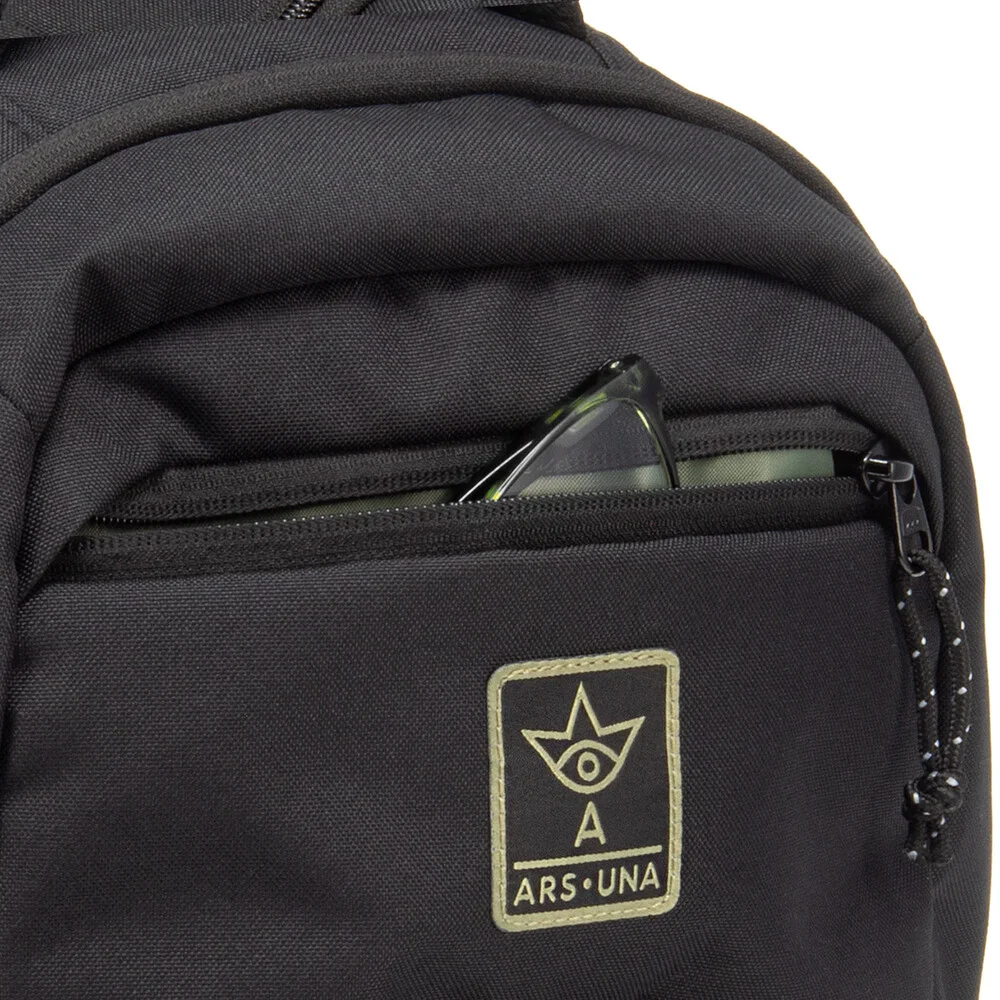
A school logo that looks correct on a freshly pressed swatch is not yet an approved decoration system. Before releasing a student backpack, check the proposed transfer against the actual shell material, the pressing arrangement and the agreed observation period. Keep color change, edge lifting and damage to the underlying panel as separate decisions.
This review starts with a specific development choice: a heat-applied mark on a student backpack pocket. It does not assume that the pictured bag uses heat transfer, or that any particular textile is suitable. The aim is to prepare a traceable sample request before a purchasing team orders decorated panels in bulk.
01
Which material combination needs approval?
Identify the whole combination, not just “polyester backpack with white logo.” Record the fabric supplier reference, color, lot, face finish and backing, together with the transfer reference and artwork revision. A successful result on another color or an unfinished fabric is useful background, not automatic approval of the proposed combination.
Ask the fabric supplier what heat exposure and decoration processes are supported. Ask the transfer supplier to confirm compatibility with that identified fabric and finish. If either party needs a sample, send material from the intended production route rather than a convenient substitute from the sample room.
Separate the three questions
- Will the transfer bond to this surface under an approved application procedure?
- Will the decoration retain an acceptable appearance after the agreed observation and use checks?
- Will the panel and neighboring components remain acceptable after application?
These questions need separate observations. A strong bond does not excuse a changed fabric shade, and an undamaged panel does not establish that the transfer will stay attached. An approval form with one box marked “printing passed” hides those distinctions.
02
What does dye migration change in the review?
Stahls' guidance on difficult fabrics identifies polyester dye migration as a possible source of transfer discoloration after pressing. It also notes adhesion challenges with nylon and coated materials. Those are reasons to qualify the actual combination, not reasons to reject every synthetic fabric or assume that more pressure solves every defect.
For purchasing purposes, keep an undecorated control from the same fabric lot and an approved transfer appearance reference. Compare the decorated sample under agreed lighting, then repeat the comparison at the intervals specified with the supplier. Record when each observation took place; “looked fine” without an elapsed time is weak evidence for a delayed appearance issue.
Distinguish color entering the transfer from lifting edges, surface shine, flattening or a changed panel outline. Photographs can locate the affected area, but retain the physical sample for a disputed color decision. Do not diagnose the cause from a compressed phone image alone.
03
How should the application window be agreed?
Use the selected transfer supplier's instructions as the starting point. Record the permitted temperature, dwell, pressure description, peeling condition and any preparation requirements. Confirm that the fabric supplier's limits and the assembled panel construction can accommodate that procedure; there is no universal setting for all student backpack shells.
The development team's job is to reconcile these instructions before production. If the transfer needs a process outside the material's permitted range, request an alternative system or material. Do not quietly shorten the application or lower the temperature and call the result approved simply because the first sample looks better.
Make the trial reproducible
Give each trial an ID linking the material, transfer and recorded settings. Identify the press, support arrangement and operator procedure, including which side faced the platen. Keep unsuccessful trials as labeled evidence so a later operator does not repeat a rejected combination from an attractive photograph.
Change one planned variable at a time where practical. If the transfer product, material finish and pressing arrangement all change together, the comparison cannot identify which change resolved the problem. Supplier support is more useful when it receives that controlled history.
04
Does a flat swatch represent the pocket panel?
A flat swatch answers only part of the question. The pocket panel may be decorated before sewing, or the finished pocket may arrive at the press with seams, lining and hardware already attached. Confirm the intended production sequence and reproduce its support conditions during the next sample stage.
Consider a hypothetical school backpack whose logo sits close to a pocket opening. A flat sample can establish a promising material combination, while a sewn pocket introduces a different contact surface. Treat that change as a new assembly check rather than assuming the approved swatch proves the finished operation.
The artwork placement review covers finished reference points and visibility. Here, record the support and access needed to apply the transfer consistently. If the proposed sequence cannot provide those conditions, discuss decorating the cut panel earlier or revising the decoration method before bulk sewing starts.
05
What belongs in the post-application checks?
Agree the observation schedule and intended care conditions before testing. A school bag may have a different cleaning instruction from a garment, so do not copy a clothing wash program into the brief without checking the product's intended care. Any laboratory method, conditioning and acceptance requirement should be named explicitly.
Keep the evaluation sheet short enough to use, but separate its entries:
- Transfer appearance: shade, opacity and visible surface changes against the approved reference.
- Attachment: location and extent of any lifting or separation under the agreed evaluation.
- Panel condition: color, texture, outline and neighboring trim after the application sequence.
Avoid presenting a fingernail lift, a single fold or an informal cleaning trial as a standardized durability result. Such observations can flag a sample for investigation. They do not establish an unspecified service life, and this article supplies neither a universal pass threshold nor evidence of a completed factory test.
06
What should purchasing freeze before ordering?
Release a named combination with the supplier references, lot or color scope, artwork version, application procedure and approved sample ID. Record unresolved items separately, with responsibility and the evidence needed to close them. A commercially urgent order does not turn a pending compatibility check into an accepted risk by default.
State which changes require review: a different fabric finish, dye lot, transfer system, panel construction or decoration sequence may fall outside the recorded approval. The sample revision guide provides a way to keep that decision attached to the correct product version.
For a new student backpack project, send the intended shell specification, authorized artwork and proposed decoration location through the development inquiry page. The useful starting question is not simply whether a logo can be added. It is which material and application combination can be sampled, checked and reproduced under an agreed release record.
Discuss your bag development project
ANSON XIE
General Manager & Founder
Quanzhou Junkai Pengda Special Equipment Co., Ltd.
Email: ansonxie@jkpdtime.com
Phone: +86 177 5095 3355
WhatsApp: +86 177 5095 3355
Factory address: Floors 2–4, Building 1, Phase I, Huixin Intelligent Manufacturing Industrial Park, Hui'an County, Quanzhou, Fujian, China