
A student backpack shell can arrive with an impressive breaking-force figure and still leave the purchasing decision unresolved. Before ranking two fabrics, establish whether their reports describe the same test, material state and direction. A larger number from a different procedure is not evidence that one candidate is the stronger choice for your pattern.
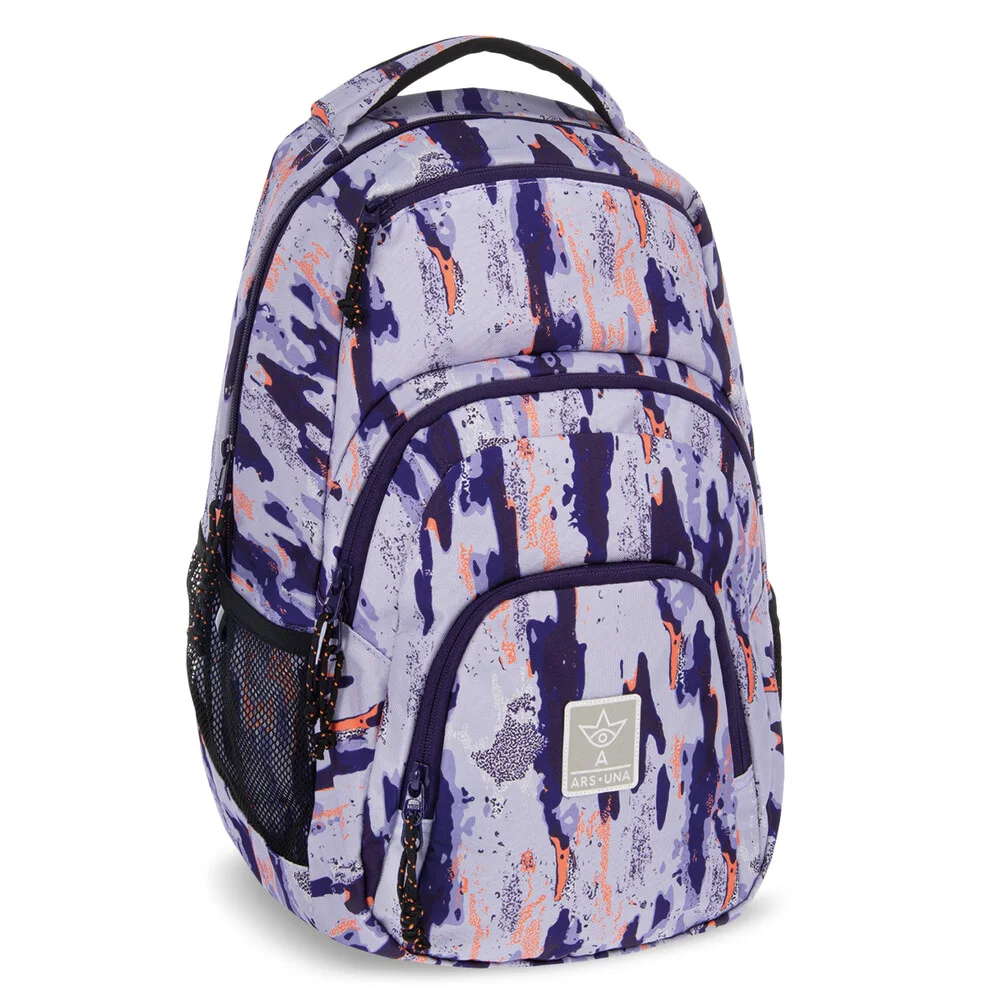
Start with a specific shell application, such as the main panels of the JK-086 student backpack reference. The photograph identifies the product context, not a tested fabric specification. The following workflow is a proposed review process for woven shell candidates; it reports no JKPD laboratory result or carrying limit.
- Compare method and specimen identity before comparing numbers.
- Keep fabric directions and conditioning states separate.
- Review elongation alongside breaking force.
- Approve seams and the finished backpack separately from the shell material.
01
First decide which question the report answers
A tensile report concerns a defined specimen pulled under specified conditions. It is not interchangeable with a tear, abrasion or pilling report. Ask the buyer and material supplier to name the property being accepted before discussing whether a fabric passes.
For example, choosing between woven shell candidates is a different task from investigating a cut that propagates beside a seam. The latter may require a separate tear investigation. The ripstop and tear-testing guide explains why a visible grid cannot settle that question by itself.
Keep the requirement attached to the relevant component. A main shell, stretch bottle pocket and padded contact mesh should not inherit one specification merely because they belong to the same backpack. Confirm the proposed method's suitability with the laboratory, particularly when a candidate stretches substantially or has a construction unlike the original woven shell.
02
Separate grab results from strip results
The public ASTM D5034 listing covers grab and modified-grab procedures. It explains that adjacent fabric contributes to the grab result and that there is no simple relationship between grab and strip results. Do not create a conversion factor to make two unmatched reports look comparable.
ASTM D5035 covers strip procedures. Its public description distinguishes cut and raveled strips and cautions against mathematically scaling one specimen width into another. Ask the laboratory to identify the actual procedure rather than recording only “tensile test.”
A practical comparison decision
Suppose two quotations contain different breaking-force values, but one report names a grab procedure and the other a strip procedure. This is a hypothetical purchasing situation, not a test result. Mark the comparison as incomplete and request matched testing, or explain why the project specification intentionally accepts different evidence.
Do not solve the mismatch by deleting the method column. Keeping that column visible protects the next buyer from treating a supplier's headline value as a common performance scale. Preserve the original reports with the comparison sheet so that qualifications remain accessible.
03
Make the specimen traceable to the proposed shell
The report should identify the material article and the state in which it was tested. Ask whether the specimen represents the finished color and coating proposed for production, an unfinished base cloth, or another variant. A report for a related textile is background information until its applicability is established.
Retain a labeled swatch from the proposed batch or sample submission. Link it to the supplier reference, color, finish, report number and date. Where the supplier uses one commercial name for several constructions, obtain a more precise article identifier rather than relying on the marketing name.
Do not infer identity from a product photograph. Printed patterns, surface texture and a stated fiber family cannot verify that the pictured shell is the laboratory specimen. If a substitute is proposed later, ask which supporting records still apply and which need replacement.
Useful comparison fields include:
- Supplier article, color, finish and batch reference.
- Test method, edition, procedure and specimen details.
- Material direction and reported units.
- Conditioning or wet-testing state.
- Individual results, summary values and laboratory observations.
04
Keep direction and elongation visible
Record the directions separately and carry that information into the cutting discussion. A single selected value can conceal the direction that matters for a particular panel. Ask the supplier to identify the specimen orientation clearly enough that the sample maker can relate it to the fabric roll.
Also retain the reported elongation rather than reducing the comparison to force alone. The development question includes how the material deforms in the intended construction, not just the point at which a test ends. Do not turn an elongation-at-break value into a prediction of normal-use panel stretch.
A patterned student backpack adds another constraint: artwork orientation may limit how pieces can be rotated. If an intended direction conflicts with print placement or cutting efficiency, resolve that conflict before approving the layout. Material approval and pattern approval should refer to the same proposed arrangement.
For an assembly review, use the intended books and other dimensioned contents without treating them as a standardized laboratory load. Record the arrangement and observe panel shape and opening access. Those observations supplement, but do not replace, controlled material testing.
05
Resolve mismatches before setting a limit
If a report lacks essential conditions, request clarification rather than accepting it because the value looks high. A result with ambiguous units, unidentified direction or a different material state may not answer the purchase requirement. The laboratory should explain deviations and observations that affect interpretation.
Choose acceptance criteria with the buyer and qualified test provider around the intended material and use. This article does not supply a universal breaking-force threshold for student backpacks. Nor does it reproduce the standard's operating procedure; the laboratory needs the applicable complete method.
When a replacement report arrives, retain both versions and record the reason for the change. Do not overwrite a failed or incomparable submission with a passing-looking summary. The approval trail should show whether the change was corrected reporting, a different specimen or a revised material.
06
Close material approval without overclaiming bag capacity
A shell-material result does not establish a finished backpack's load rating. Seams, handle connections, shoulder attachments, fasteners and the intended packing arrangement remain separate parts of the product assessment. Do not convert the laboratory force into kilograms of school supplies on a product page.
Use the selected shell in a representative sewn sample and review the construction that will actually be purchased. If a stronger-looking material creates a different sewing problem or changes the finished shape, document that tradeoff. Relevant checks may include the base reinforcement layout and attachment details, under separately agreed conditions.
The release record should state exactly what was approved: the identified shell against an agreed tensile requirement, with any unfinished assembly checks listed openly. Send the material references, existing reports and target backpack brief through the project inquiry page when discussing the next sample. That is a usable starting point; “strong fabric required” is not.
Discuss your bag development project
ANSON XIE
General Manager & Founder
Quanzhou Junkai Pengda Special Equipment Co., Ltd.
Email: ansonxie@jkpdtime.com
Phone: +86 177 5095 3355
WhatsApp: +86 177 5095 3355
Factory address: Floors 2–4, Building 1, Phase I, Huixin Intelligent Manufacturing Industrial Park, Hui'an County, Quanzhou, Fujian, China