
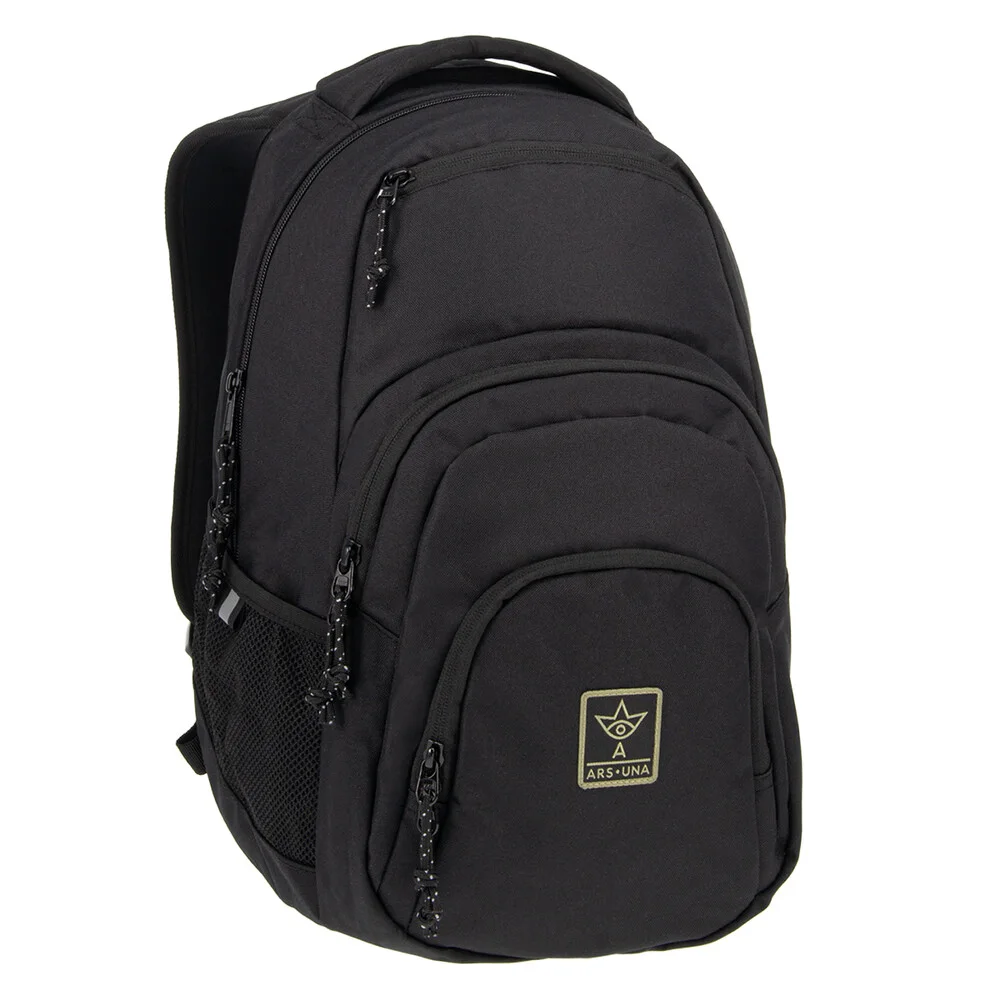
A school backpack base does two different jobs: it meets the surface under the bag, and it supports the contents above it. One heavy fabric does not automatically solve both. For a buyer developing a student range, the useful question is where wear starts and which layer should deal with it.
01
Start with the packed shape, not the empty silhouette
Use a representative load before choosing reinforcement. Books, a lunch container and a bottle create a different base shape from soft clothing. Record the intended contents and position them consistently when comparing samples, without turning a development load into an unsupported carrying-capacity claim.
Place the sample on a flat surface and examine it from each side. Does the center sag below the perimeter seam? Does a book corner create a small hard contact point? Does the back panel pull the bag onto one edge? Mark these locations on photographs rather than specifying a thicker bottom everywhere.
Include the intended user and handling conditions in the brief. A compact primary-school bag and a larger student laptop backpack may need different weight and stiffness trade-offs. The purpose is to identify the construction problem, not to borrow a reinforcement specification from an unrelated product.
02
Separate surface wear from internal support
The outer fabric, reinforcement patch and internal support layer are not interchangeable. A tougher outer panel addresses surface contact. An internal sheet can spread pressure or hold shape, while padding changes how a hard object bears against the construction. Confirm which problem each proposed layer is meant to solve.
If a sample wears at a corner, adding a stiff sheet without reviewing its edge may simply move the concentrated contact elsewhere. If the bag collapses under a book load, a second soft outer layer might add weight without giving the requested shape. Ask for a section drawing showing every layer and where it ends.
Compare material candidates as finished combinations. Include the lining and attachment method, not only loose swatches. A base that feels suitable by hand can become awkward after sewing through several layers or joining to a much softer side panel.
03
Ask for a fabric identity, not just a denier number
Denier describes yarn linear density; it is not a finished-bag durability rating. Ask for the fiber, fabric construction, weight, finish and supplier article code alongside any yarn specification. Two materials with the same nominal denier should not be treated as interchangeable without supporting information.
CORDURA's Classic Fabric page describes a family with different constructions and finished, coated or laminated options, including abrasion and tear resistance characteristics. That is a useful reminder to identify the actual material variant. It does not establish that a pictured school bag uses that fabric, or predict the service life of a sewn base.
Request relevant test information for the proposed fabric and discuss its limits with the supplier or laboratory. Compare results only when the method, conditions and endpoint are comparable. A number copied from a different fabric or test setup is not an approval basis for your order.
04
Keep seams and stiff edges out of avoidable contact
Review where the base joins the front, sides and back once the bag is packed. A raised or displaced join may reduce direct contact in one location, but it can also change the silhouette and sewing sequence. Check the whole perimeter rather than approving the front view alone.
Draw the limits of a reinforcement patch and any internal sheet. Review rounded edges, retention and movement inside the lining. Loose support components should not migrate into a seam, create a pressure ridge or make the compartment difficult to clean.
Give the sewing team an assembled sample to assess at the thickest intersections. Ask whether the proposed stack can be fed and turned consistently with the chosen seam construction. More layers are not a useful improvement if they introduce uneven joining or an uncomfortable rigid corner.
05
Compare options with a small decision sheet
Keep the review focused by comparing a baseline and clearly identified alternatives. Change one principal construction feature at a time where possible, so the team can understand why the sample behaves differently.
Record these items for each version: total sample weight; base materials and layer order; empty flexibility; packed shape; seam contact locations; access to the main compartment; and any proposed validation still outstanding.
A wipe-clean surface may be attractive, but cleaning suitability needs its own review with the intended instructions and materials. Do not equate a coated surface with a washable bag, or an added bottom layer with waterproof construction. Those claims need separate evidence.
Discuss cost through the actual operation changes: additional cutting, alignment, joining and inspection. A smaller patch is not necessarily cheaper if it requires difficult positioning. Request comparable quotations after the construction has been defined.
06
Agree on checks before approving production
Separate controlled material testing from assembled-bag observations. Ask a competent laboratory to recommend suitable abrasion or other tests for the material and intended use. Agree on acceptance criteria before testing rather than selecting a favorable threshold after seeing the results.
For the sample review, repeat the same packing arrangement and inspect contact zones, seam appearance and support-layer position. Photograph the sample before and after any agreed handling sequence. Record what the review demonstrates and what it does not; an informal handling check is not a lifetime guarantee.
Retain the approved base swatch, layer drawing and sample revision together. If the fabric supplier, finish, support sheet or joining construction changes, review the affected requirements again. A matching black color alone is not evidence that the replacement is equivalent.
07
Put the decision into the development brief
A usable approval states the material identity, layer boundaries, seam layout and verification requirements in one place. It should also identify any open questions. That gives purchasing, sampling and production a shared reference instead of several competing comments.
Use the linked tech-pack guide for the broader document structure and the sample-revision article for change control. For a new student backpack, share the intended packing list and photographs of the wear points you want to address. Those details are more useful than a general request for a stronger bottom.
FAQ
Questions buyers often ask
Does a higher-denier base always last longer?
No. Yarn size alone does not establish abrasion performance or finished-bag durability. Compare identified fabrics under relevant, comparable conditions and review the sewn construction.
Should every school bag have a rigid base sheet?
Not necessarily. Review the required shape, weight, flexibility and packing arrangement first. A support sheet is one construction option, not a universal requirement.
Prepare the next sample review
Connect these decisions to the backpack tech pack and retain changes in the sample revision record. Browse student backpack references. For project-specific questions, send your development brief.
Discuss your bag development project
ANSON XIE
General Manager & Founder
Quanzhou Junkai Pengda Special Equipment Co., Ltd.
Email: ansonxie@jkpdtime.com
Phone: +86 177 5095 3355
WhatsApp: +86 177 5095 3355
Factory address: Floors 2–4, Building 1, Phase I, Huixin Intelligent Manufacturing Industrial Park, Hui'an County, Quanzhou, Fujian, China