
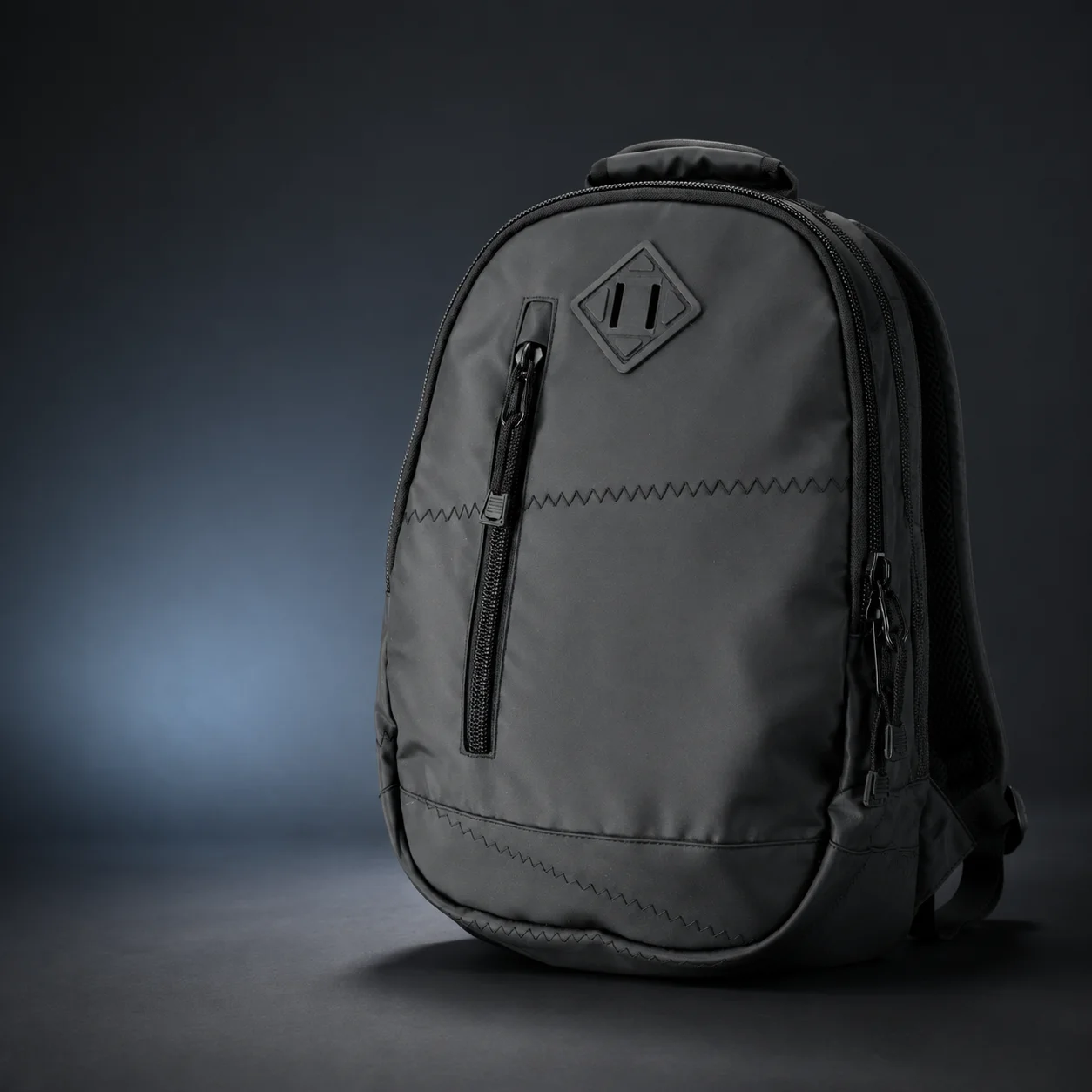
A sports backpack can contain shell fabric, mesh, webbing, zipper tape and binding that all carry the same color name. That name does not tell a supplier how closely the parts should match. Nor does approval of a small fabric swatch explain which rolls may be cut together when bulk material arrives.
The practical task is to carry one clear color decision from development into the cutting room. Establish the physical reference, agree how differences will be judged and keep material identities attached to the panels. This guide focuses on appearance matching, not resistance to fading, rubbing or washing.
01
Give the approved shade a physical identity
Begin with an agreed physical standard and a revision identifier. Record the material, supplier reference, intended face and finish. If a brand color code is used during development, also identify the actual fabric sample approved for the bag. A code is useful for communication, but it does not explain every difference between a matte woven shell and glossy trim.
Keep the original reference protected and decide who holds the working copies. Record when copies are issued or replaced. An unmarked swatch passed between departments can become an accidental new standard, particularly if nobody knows whether it represents a proposal, an approval or a rejected attempt.
Ask for approval wording that states its scope. “Shell fabric shade approved for this material reference” is clearer than “color approved.” It leaves no assumption that the same decision covers the mesh, webbing or subsequent material substitution.
02
Agree the viewing conditions before a dispute
Datacolor’s guidance on light sources explains why color approval needs defined, repeatable lighting shared across the supply chain. Agree the evaluation conditions early rather than asking two teams under different lamps to settle the difference through photographs.
Use the same agreed presentation when comparing references and submissions. Identify the fabric face and orientation, keep samples clean and avoid mixing an unrecorded viewing setup into an existing approval. Where instrumental measurement is specified, the measurement conditions and acceptance method also need agreement; a bare numeric result is not a complete release instruction.
Phone images are useful for showing which panels are being discussed and where they sit on the bag. Treat them as communication aids, not final color standards. Preserve the physical evidence when a decision depends on a subtle difference that a screen cannot reliably convey.
03
Approve the combination, not only isolated swatches
Build a small material board in the intended arrangement: shell beside zipper tape, webbing beside shell, mesh beside binding. Label each component separately. The buyer should decide whether the design calls for a close match, an intentional tonal difference or a clear contrast.
Datacolor defines metamerism as a situation where two samples match under one light source but not another. This matters when different materials meet on one bag. Do not label every mismatch metamerism: samples that already differ under the approval light may simply fail the original matching requirement.
Document the selected combination under the agreed evaluation conditions. If the textured webbing is accepted as visibly different from the shell, state that explicitly. Otherwise a later inspector may reject the intended appearance, or a supplier may treat an accidental difference as a design choice.
04
Translate bulk review into roll decisions
Before cutting, make the incoming material traceable by supplier batch and roll identifier. Ask the material and quality teams to define the sampling coverage for the order. The plan should address the risk of variation within and between rolls; one loose swatch should not silently stand for an unidentified shipment.
Compare the collected samples with the approved reference and with each other. Record which material is released, held or assigned to a separately approved shade group. A shade group is an internal production-control decision, not permission to ship visibly different bags against one approved standard.
Agree any tolerance with the buyer and relevant technical team. There is no single color-difference number suitable for every fabric, finish and product expectation. If a borderline batch is accepted, record the batch, quantity, conditions and approval scope instead of changing the master reference without notice.
05
Keep shade identity attached to the cut panels
A useful review loses its value if released material is mixed indiscriminately during cutting. Put the roll or approved group identity on the cutting record and retain a connection between that record and the panel bundles. The exact labeling method can be simple, provided the team can follow it consistently.
Pay particular attention to paired or adjacent visible panels. If a pattern allows different cutting orientations, review the resulting appearance before production. An orientation change should not be used as an improvised remedy for a shade mismatch.
Replacement panels need the same discipline. When a damaged front panel is recut, identify the material group used for the rest of that bag before selecting replacement fabric. Include this requirement in the cut-panel kit handover so that repair work does not break the matching logic.
06
Close exceptions with a decision people can use
For a shade concern, collect the reference ID, affected roll IDs, adjacent component references, viewing conditions and location on the bag. State whether the issue occurs on an individual component, between panels of one bag or between finished bags. These are different problems and may require different containment decisions.
Hold the affected material or work until the agreed reviewer decides its disposition. Possible outcomes include rejection, replacement or a documented limited acceptance. Do not expand a one-batch exception to future orders without a new decision.
Before release, confirm the following points:
- The physical standard and revision are identified.
- Shell and trim matching expectations are written down.
- Bulk roll or group status is visible to cutting staff.
- Reworked panels retain the required material identity.
- Finished appearance is checked against the agreed reference.
Shade approval does not establish colorfastness. If the brief includes resistance to color transfer, manage that as a separate requirement; see the distinction in our lining color-transfer review. For a new sports bag, send the target material and the intended shell-to-trim relationship with the design brief.
FAQ
Questions buyers often ask
Can a photograph be the final shade approval?
A photograph can identify a submission or show a problem location, but screen appearance should not replace an agreed physical reference and viewing method. Keep the sample identity with the approval so suppliers and inspectors can compare the same evidence.
Does the same color name mean shell and webbing will match?
No. Specify the intended relationship between the actual materials and review them together. A close match, a tonal difference and a contrast are different design decisions, even when purchasing descriptions use the same color name.
Does shade approval also cover colorfastness?
No. Shade approval concerns the accepted appearance under defined conditions. Resistance to rubbing, washing or other exposure needs its own agreed validation. Do not use a successful color match as evidence that the material will not transfer or fade.
Discuss your bag development project
ANSON XIE
General Manager & Founder
Quanzhou Junkai Pengda Special Equipment Co., Ltd.
Email: ansonxie@jkpdtime.com
Phone: +86 177 5095 3355
WhatsApp: +86 177 5095 3355
Factory address: Floors 2–4, Building 1, Phase I, Huixin Intelligent Manufacturing Industrial Park, Hui'an County, Quanzhou, Fujian, China