
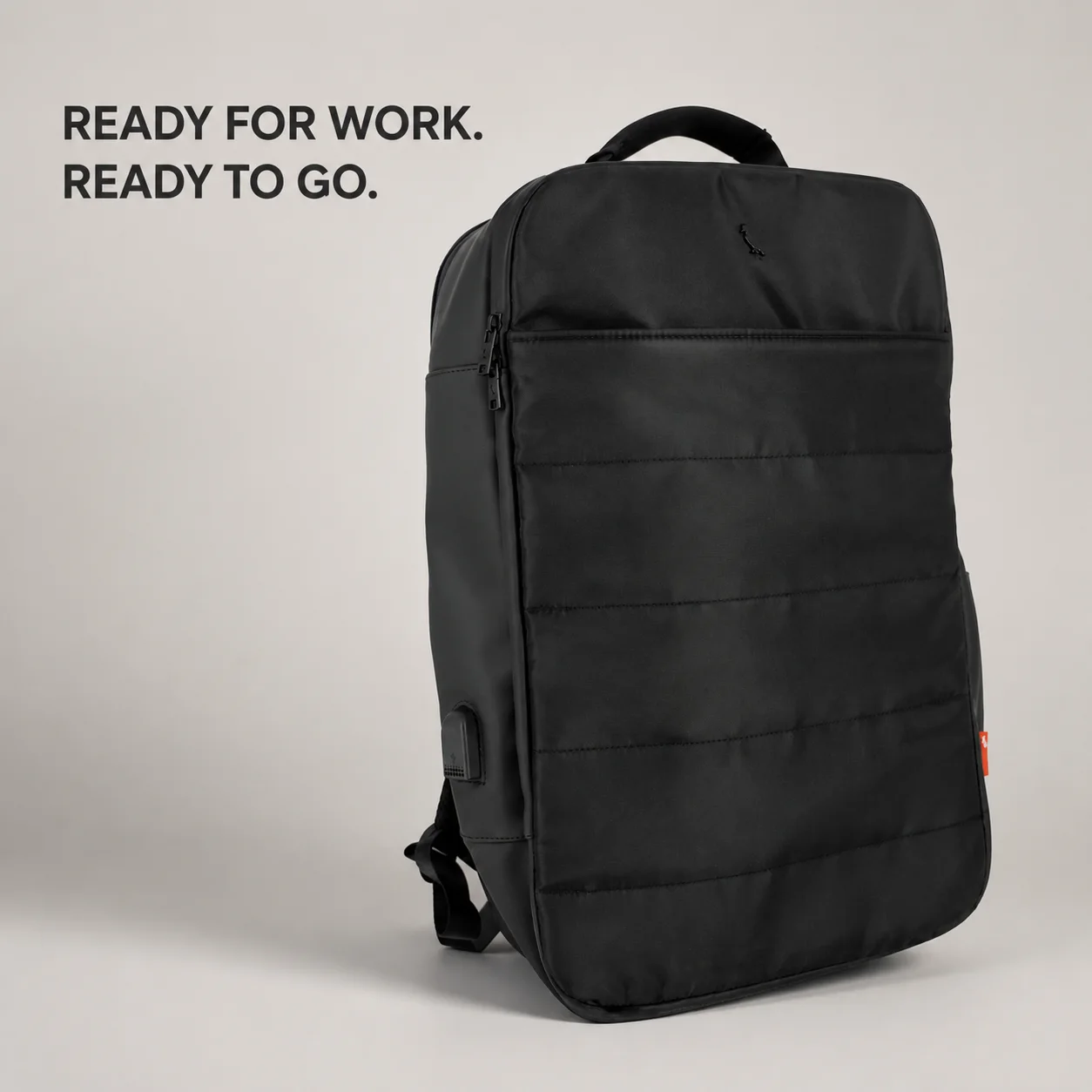
A dark lining can look clean and coordinated in a business backpack, yet appearance approval says little about color transfer. The interior touches notebook covers, cables, clothing and device sleeves. Before signing off the color, specify which contacts matter and what evidence will support the decision.
01
Map the contacts inside the bag
Start with a contact map rather than a single fabric swatch. Identify the main lining, laptop sleeve face, pocket mesh, binding and zipper tape. Different components may come from different suppliers even when they share a color name.
List representative items that users are expected to carry. Light-colored accessories are useful for discussing visible transfer risk, but do not assume that every white surface behaves alike. A woven sleeve, a coated notebook cover and a cable jacket are different contact materials.
Separate normal dry use from reasonably anticipated damp conditions and any proposed cleaning instructions. The aim is to define a review scope with the supplier or laboratory, not to invent a universal test that covers every object a customer might carry.
02
Separate shade approval from rubbing performance
A shade reference answers whether a color matches the design. Colorfastness evidence addresses how color behaves under defined conditions. Keep those decisions separate in the material record so an approved shade is not interpreted as approval of all performance requirements.
AATCC explains crocking as color transfer caused by rubbing and discusses both dry and wet conditions. Its published account of student research references Test Method 8 and a Crockmeter. This establishes the distinction between appearance and rubbing behavior, not a test result for a particular backpack.
When commissioning testing, confirm the current method and edition, specimen identity, conditions, evaluation procedure and agreed acceptance requirement. Do not substitute an informal wipe for a standardized report, or turn a report on one color into approval of an entire color range.
03
Choose lining color with visibility and contact in mind
A lighter lining can make small dark items easier to locate in some layouts, while it may also make marks more noticeable. A darker option changes the visual balance but does not remove the need for transfer testing. Make the choice with the actual pocket geometry and intended contents.
Review candidates inside an assembled sample under consistent lighting. Check whether pockets remain easy to identify and whether contrasts between tape, mesh and lining meet the design intent. Photograph the arrangement for communication, but retain physical shade references for approval.
Ask for the same level of traceability for accent panels as for the main lining. A small colored pocket can still contact an important accessory. An attractive contrast should not fall outside the material approval process simply because it occupies little surface area.
04
Read a report as evidence for a specific material
Check that the report identifies the material you intend to buy. Supplier names, article codes, colors and sample references should connect it to your material list. If the report lacks enough detail to make that connection, request clarification before treating it as approval.
Discuss how representative the submitted specimen is of the planned supply. A development cutting and a later production lot are not automatically the same evidence. Agree which changes require further review, including supplier, coloration or finishing changes.
Ask the laboratory or supplier to explain the rating and its limits if they are unfamiliar. The buyer and manufacturer need a shared acceptance basis. Avoid writing a generic pass statement in the order when nobody has agreed which method or requirement that statement refers to.
05
Use an assembled review to find missed contacts
An assembled sample helps reveal where materials touch; it does not replace controlled textile testing. Pack representative accessories, operate pockets and examine lining folds, binding edges and areas compressed by the contents. Look for contact locations that were absent from the original map.
If a mark appears, document the exact surfaces, sample version and conditions before changing a material. A visible mark alone does not identify its cause. Color transfer, surface residue and mechanical scuffing can call for different investigations.
Keep a short issue record: which item was affected, which bag component touched it, what operation preceded the observation, and whether the materials were dry or damp. Send the record with retained specimens for a suitable assessment rather than diagnosing from one photograph.
06
Control substitutions and incoming batches
Link the approved color and material code to the purchase specification. Retain the reference swatch and relevant report alongside the sample record. A production team should be able to tell which lining is approved without relying on a color description such as charcoal or navy.
When a substitution is proposed, ask what has changed besides appearance. Review the replacement against the same requirements and document the decision. A similar shade and hand feel do not establish equivalent colorfastness.
For incoming supply, agree on identification checks, sampling and any required testing with the responsible quality team. Keep lot references so an issue can be investigated. Do not make up a universal inspection frequency; the plan should reflect the material risk and order requirements.
07
Write useful claims and care information
Keep customer-facing language within the evidence. An approved rubbing test under defined conditions does not mean that no color can ever transfer in any environment. Likewise, colorfastness is not a general chemical-safety certification, and it does not demonstrate that the complete bag is washable.
Discuss care instructions against the complete material combination. A cleaning recommendation affects more than the lining: adhesives, padding, coatings and trims may also need review. Do not add a care promise solely because one fabric supplier describes its material as easy to clean.
For a new business backpack, provide the preferred lining colors, representative carried items and any existing buyer requirements. Use the laptop-compartment article for fit and construction questions; keep the color-transfer decision separately traceable so neither approval hides the other.
FAQ
Questions buyers often ask
Can a white-cloth wipe replace a laboratory rubbing test?
No. An informal observation may identify a concern, but it does not reproduce a standardized method or establish an agreed rating. Use a suitable laboratory assessment for contractual requirements.
Does one approved lining color cover all other colors?
Not automatically. Identify the colors and materials covered by the evidence and agree which additional variants or changes require review.
Prepare the next sample review
Connect these decisions to the backpack tech pack and retain changes in the sample revision record. Review laptop compartment construction separately. For project-specific questions, send your development brief.
Discuss your bag development project
ANSON XIE
General Manager & Founder
Quanzhou Junkai Pengda Special Equipment Co., Ltd.
Email: ansonxie@jkpdtime.com
Phone: +86 177 5095 3355
WhatsApp: +86 177 5095 3355
Factory address: Floors 2–4, Building 1, Phase I, Huixin Intelligent Manufacturing Industrial Park, Hui'an County, Quanzhou, Fujian, China