
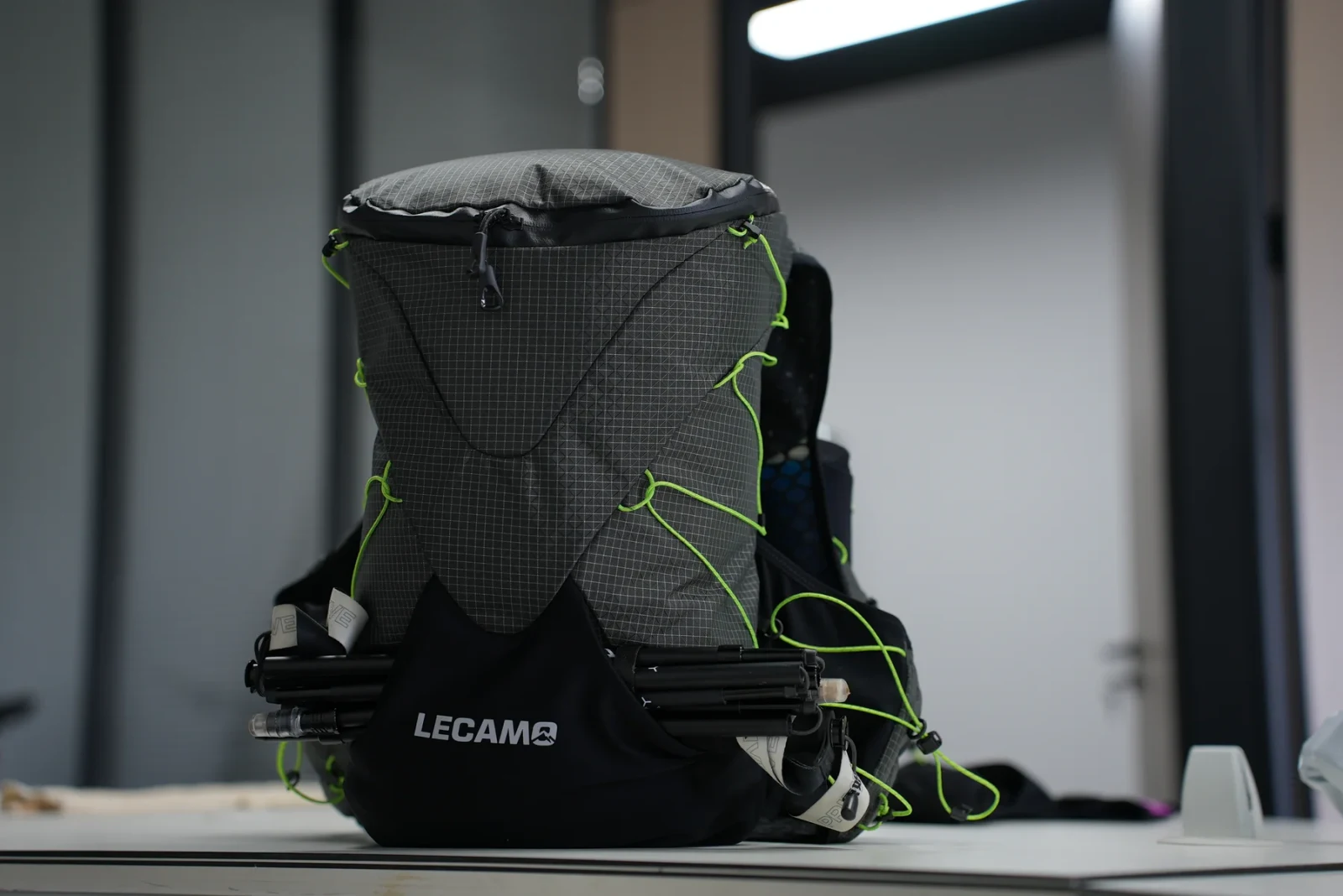
A hiking pack buckle that closes neatly at a sample table may be difficult to release after the pack has been carried in the cold. The question is not simply whether a plastic is described as tough. The purchaser needs to know whether the identified buckle, fitted to the chosen strap, still closes, retains and opens in the state the user will encounter.
Treat resin evidence, component evidence and pack observations as separate records. A component may be acceptable on its own but awkward once a strap pulls it sideways against a bulky jacket. Conversely, a difficult release may come from insufficient finger space rather than a change in the plastic. The review below applies to ordinary hiking pack straps, not load-bearing safety equipment.
01
Define where the pack gets cold
Write a short use scenario. A pack stored overnight in an unheated space may start the day with the whole assembly cold. A buckle on the front of a pack worn under a jacket may experience a different exposure than a compression buckle on the outside. Define which buckle is being approved, whether it is covered and whether rain or snow is part of the intended scenario. Do not silently substitute a dry cold test for an ice or freeze-thaw scenario; they answer different questions.
State when the critical action happens. Closing a strap at the start of a walk, releasing it while it is under tension and opening it after bringing the bag indoors are distinct states. An approval protocol should identify the state it represents instead of describing all checks as a generic winter test.
02
Use resin and component documents for different decisions
ISO 179-1 describes Charpy impact testing of plastics under defined conditions, including specimen and notch choices. A result on a prescribed specimen helps compare materials under the stated conditions. It does not reproduce the shape of a molded buckle arm, its engagement with the mating half, or its mounting on a sewn strap. Ask whether any given result is for a resin specimen, a molded component or an assembled buckle. Keep the values in their own columns; do not treat their units or limits as interchangeable.
The ITW Nexus Classic SR catalog, for example, identifies variants by part number and describes their material. That is a useful level of component identification, not an endorsement of a specific model for this application. Require both mating parts to match the approved specification and ask the supplier to identify any variant changes, including changes to resin grade or production tooling. A width or a color name by itself does not identify a buckle pair.
03
Agree what counts as cold before you start
IEC 60068-2-1 distinguishes low-temperature exposure from testing the effects of temperature changes. It is a useful reference for discussing conditioning with a lab, not a bag certification or a source of automatic pass limits. Set the target condition according to the project’s actual use case. Agree how the lab will confirm that the samples have reached the intended condition and how much time is allowed between removal and operation. A sample that warmed on the bench before testing is not evidence of operation in the original cold state.
Include a room-temperature baseline from the same component and assembly revision. Document dry versus wet condition, the strap material and width, the length adjustment and the loading direction. If quick repeated handling warms the part or changes the condition, agree how the test will account for it instead of counting every cycle as equivalent.
04
Build separate checks for closure, release and retention
Closure and release
Check for full engagement using the component’s intended method of confirmation. A user might hear or feel something without both sides fully seating, so agree what the inspector can see or verify. Then release the buckle as intended, including with the gloves specified for the product if glove use matters. Observe whether the difficulty is finding the release arms, pressing them, or separating the halves after release. Record the difference between a blocked release and one that simply requires a different grip.
Retention and physical damage
Have the lab and buyer define retention loading, direction and limits for the identified component and sewn assembly. Check for partial engagement, fractures, visible deformation and unwanted release. If impact is a credible use condition, specify it separately; a cold soak followed by ordinary operation does not establish impact resistance. Inspect the buckle again after the test and document what changed. All of these are proposed checks; no product performance is claimed from photographs.
05
Keep the failure visible in the handoff
If a free buckle works but its installed version binds, check mounting angle, contact with a seam and clearance beside the release arms before changing resin. If both versions fail in the same mode, retain the parts and ask the supplier to review the exact failure. Compare the condition after the sample returns to room temperature without treating recovery as a pass. A part that works again only after warming still did not perform in the requested state.
Consider a hypothetical sample in which a buckle closes cold on the bench but someone wearing gloves cannot reach the lower release arm when the pack is loaded. First compare the installed buckle with and without the adjacent fabric under the same strap tension. If the fabric edge is the interference, revising the mount or moving the buckle may preserve the approved component and avoid a new tooling decision. If the arms remain difficult to operate even when unobstructed, keep the component-level observations and ask the supplier for a matched replacement to test. Change one variable at a time so that the next sample actually resolves the question.
For final approval, attach the part identifiers, strap routing, exposure and handling sequence, loads, inspection notes and any agreed exceptions to the sample record. Keep the matched reference pair with the project materials so that any later replacement can be compared against the same baseline. For adjacent checks see matching buckle halves and routing strap tails.
More product development resources: JKPD Blog.
Discuss your bag development project
ANSON XIE
General Manager & Founder
Quanzhou Junkai Pengda Special Equipment Co., Ltd.
Email: ansonxie@jkpdtime.com
Phone: +86 177 5095 3355
WhatsApp: +86 177 5095 3355
Factory address: Floors 2–4, Building 1, Phase I, Huixin Intelligent Manufacturing Industrial Park, Hui'an County, Quanzhou, Fujian, China