
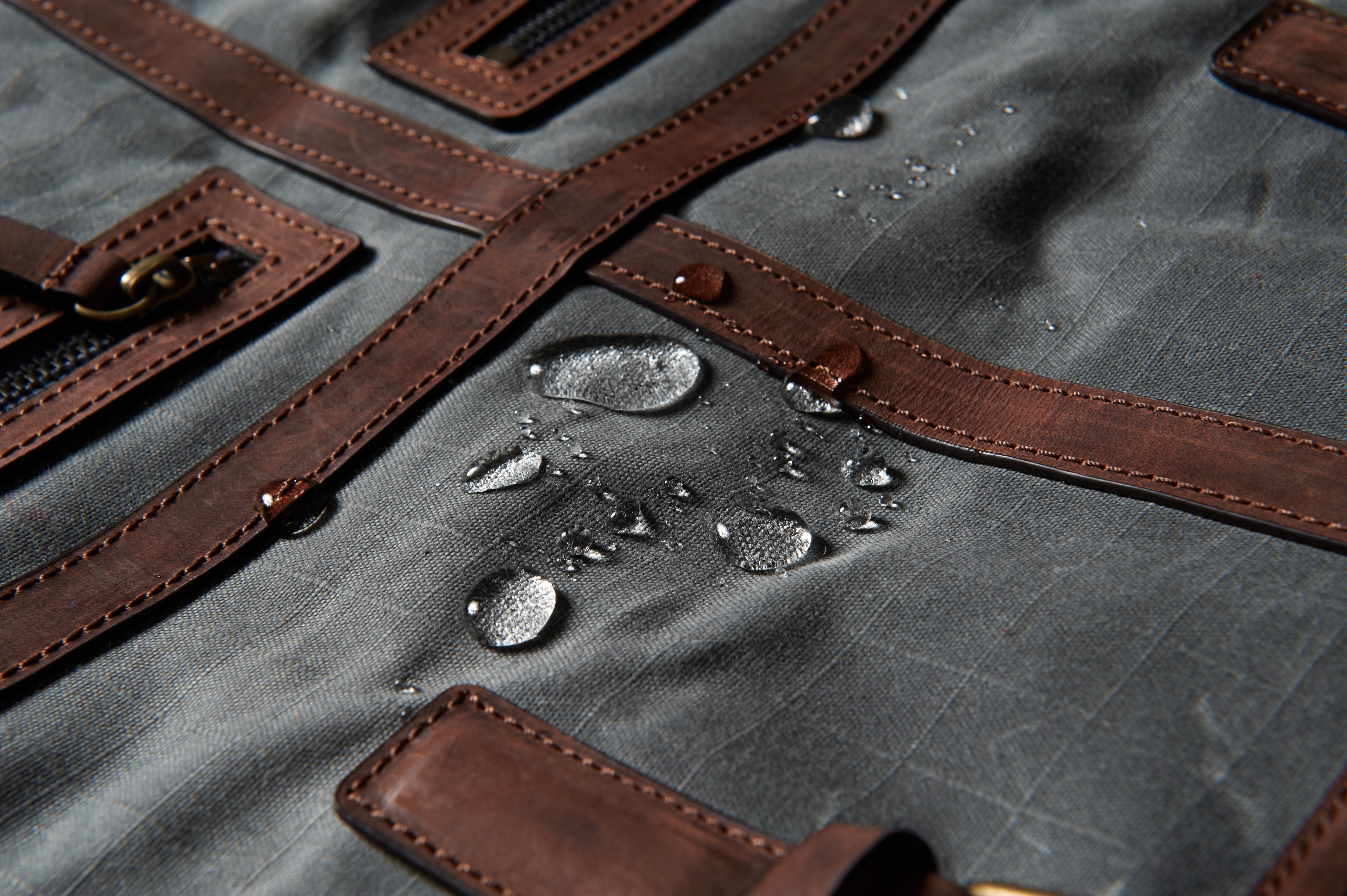
Photo: David kss7. CC BY 4.0 · Original source. Unmodified for this article. The photograph remains under its stated license; no endorsement, specific material grade or JKPD use is implied.

01
Specify the cloth and its finish separately
Begin waxed-cotton selection with the textile and finishing system. Fibre composition, weave, yarn and construction describe the base cloth. The finish article, handle and care limits describe the completed material. Vintage canvas is not a substitute for those details.
British Millerain’s range distinguishes traditional wax, washable wax and dry-finish categories. Treat dry or oily handle as a starting description, not a universal industry grade. Ask what the term means for that supplier and article. Keep the base-cloth record linked to the finish version so two similar-looking swatches can be compared without assuming that their processing or care requirements match.
02
Read a beading photograph within its limits
The real photograph above shows fabric, trim and water droplets near stitched details. The source author identifies Martexin waxed canvas. That description and the visible surface are the extent of the identification here. Weight, wax formulation and finishing batch are unverified, and the external product is not a JKPD case.
Droplets can illustrate a discussion of surface repellency. They do not reveal exposure duration, pressure, reverse-side condition or ingress through stitching. Keep fabric statements separate from finished-bag statements. Even with visible beading, openings, seams and connections still need review for the intended exposure rather than approval from a single attractive image.
03
Separate base-cloth ounces from finished weight
When an offer says eight-ounce waxed cloth, ask whether it describes unfinished base cloth or finished material, and whether the denominator is a square yard, another area or a linear unit. Compare it with grams per square metre only after those details are clear. Colour and heavy handle cannot resolve the units.
For a unit calculation, eight ounces per square yard is approximately 271 grams per square metre. This is a conversion, not a recommended specification or measured weight for the photograph or source note. If the supplier means base-cloth weight, the converted figure is not automatically the finished waxed weight. Request that value and its measurement condition separately.
04
Check processing limits for the actual finish
British Millerain’s traditional-wax guidance discusses handling marks and lighter scuffing, along with heat, lining and trim contact. These points describe that traditional system, not a rule automatically covering every dry-wax or composite material.
A proposed sample review can document folds, presser-foot contact and rubbing appearance, while the selected supplier confirms the processing route. Do not classify every aged-looking mark as failure. Equally, patina is not a reason to accept every stain or damaged area. Agree the acceptable appearance using processed specimens before production. This gives the sampling team a reference for distinguishing an intended surface character from an unresolved defect.
05
Tie care guidance to the article
Traditional-wax care should not be transferred automatically to a newer washable system. Halley Stevensons’ P270 Hybrid/Aero information supplies another manufacturer example combining emulsified wax with a softening route. It is not the identified material in the photograph.
Ask the selected supplier whether washing, local cleaning or replenishment is permitted and which maintenance products apply. Then review that guidance against the bag’s lining, adhesive, leather trim and hardware. A maintainable fabric does not establish that every component tolerates the same treatment. Keep a record of any conflicts so the finished-product instructions reflect the complete construction instead of copying a fabric label.
Turn a care conflict into a specific sampling question. If a textile permits maintenance but compatibility of the trim with that product is unknown, leave the combination pending rather than assigning the same care label to the entire bag. Describe the open question by contact surface, layer and operation. The supplier can then propose a verifiable adjustment, such as a different contact material or handling sequence. This is a suggested review method, not a reported failure of the pictured bag or evidence that a particular maintenance product is unsuitable.
06
Use video for context and specimens for contact review
The collaboration video below is published by Tom Beckbe and described as a discussion with Halley Stevenson experts. It is supplementary material context, not supply evidence for the photographed cloth or a universal weather-resistance or lifetime promise for bags.
A development plan can retain original cloth, folded storage specimens and complete face-and-lining stacks. Observe appearance and contact transfer under agreed conditions, recording duration, surfaces and specimen state. Use those records to discuss lining, packaging or finish changes with the supplier. A wipe demonstration or photograph alone does not establish long-term compatibility.
Related video: Why Use Waxed Cotton? | Tom Beckbe x Halley Stevenson · Tom Beckbe
Supplementary viewing only. This external demonstration is not evidence of the pictured component, certification or finished-bag performance; consult current article-specific documentation.
A demonstration is not performance certification. If the player is unavailable, use the original link; internet access is required.
07
Preserve the finished condition and revision
The inquiry should identify base composition and construction, base and finished weight conventions, finish article, handle and colour requirements, processing limits, neighbouring materials, care and the exposure awaiting verification. File typical values, supplier declarations and actual specimen results separately.
For substitution, identify whether the cloth, finish or processing changes before choosing the review scope. Website content can explain the material category, but a product-specific composition or performance statement still needs matching records. Similar vintage appearance does not establish formulation, performance or company adoption. Controlled records make the material story useful for sourcing as well as for publication.
Related reading: DWR finishes and durability.
Share the application, candidate material articles and available records through the JKPD project inquiry page.
Discuss your bag development project
ANSON XIE
General Manager & Founder
Quanzhou Junkai Pengda Special Equipment Co., Ltd.
Email: ansonxie@jkpdtime.com
Phone: +86 177 5095 3355
WhatsApp: +86 177 5095 3355
Factory address: Floors 2–4, Building 1, Phase I, Huixin Intelligent Manufacturing Industrial Park, Hui'an County, Quanzhou, Fujian, China