
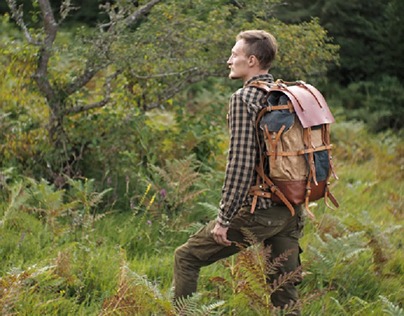
Canvas-and-leather packs can put the most frequently repaired or adjusted parts on the outside. Examples here include leather straps with punched holes, laced side panels, drawcord closures and riveted handles. A separate laminate image shows a comparable roll-top construction, not a specification for the canvas examples.
01
At a glance
| Feature | Reference layout |
|---|---|
| Materials | Waxed canvas, leather and metal hardware; a separate laminate example |
| Capacity | Not published |
| Weight | Not published |
| Dimensions | Not published |
| Load rating | Not published |
The examples show construction rather than verified weight, capacity or load rating. Confirm fibre content, leather finish and hardware composition before writing a technical specification.
02
Different materials for the body, closures and high-contact zones
The canvas forms the main bag while straps, flap details and rivets handle repeated fastening and adjustment. The material choice at the edge is as important as the main body because it sees contact on every opening.
03
Functions and features
The canvas and leather packs
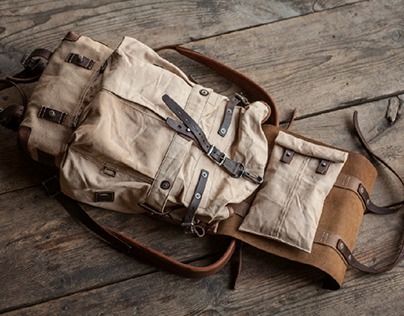
The body panels use canvas, while leather occupies several load or wear areas, such as straps, the belt and side panels. The grain and thickness are visible to different degrees, but tannage should not be inferred from colour.
The main openings use drawcords or leather straps and buckles rather than main zippers. In one layout, lacing pulls the leather side panels into shape; another uses a curled handle secured at the ends. Check the load at the punched holes and whether reinforcement supports the rivets.
The back panel of one pack uses perforated leather. The openings can make a relatively stiff piece easier to bend. Check the remaining material between holes for wear and determine whether the fitted pack has any usable gap for air.
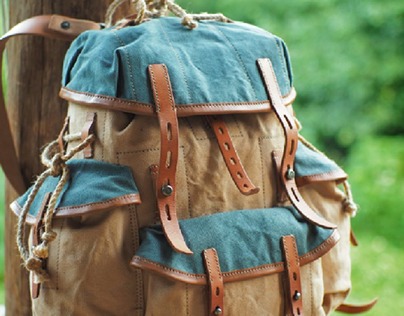
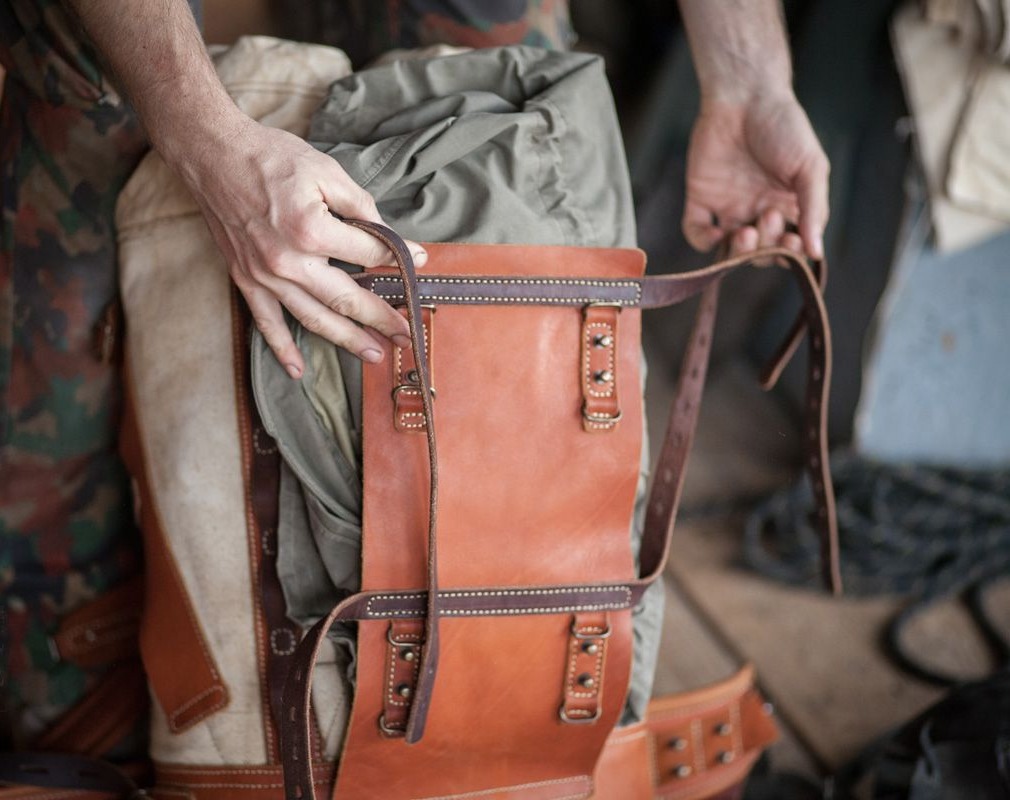
Visible stitching and adjustment holes
The hands photograph also shows the construction most clearly. The leather flap is stitched with a contrasting thread, double rows, with the stitching itself on display rather than hidden inside a seam. The straps are adjusted by moving a buckle through holes punched in the leather, and the adjustment is visible: the holes are part of the design, not a detail to be covered up. Everything about these packs is on the outside, including the work that went into them.
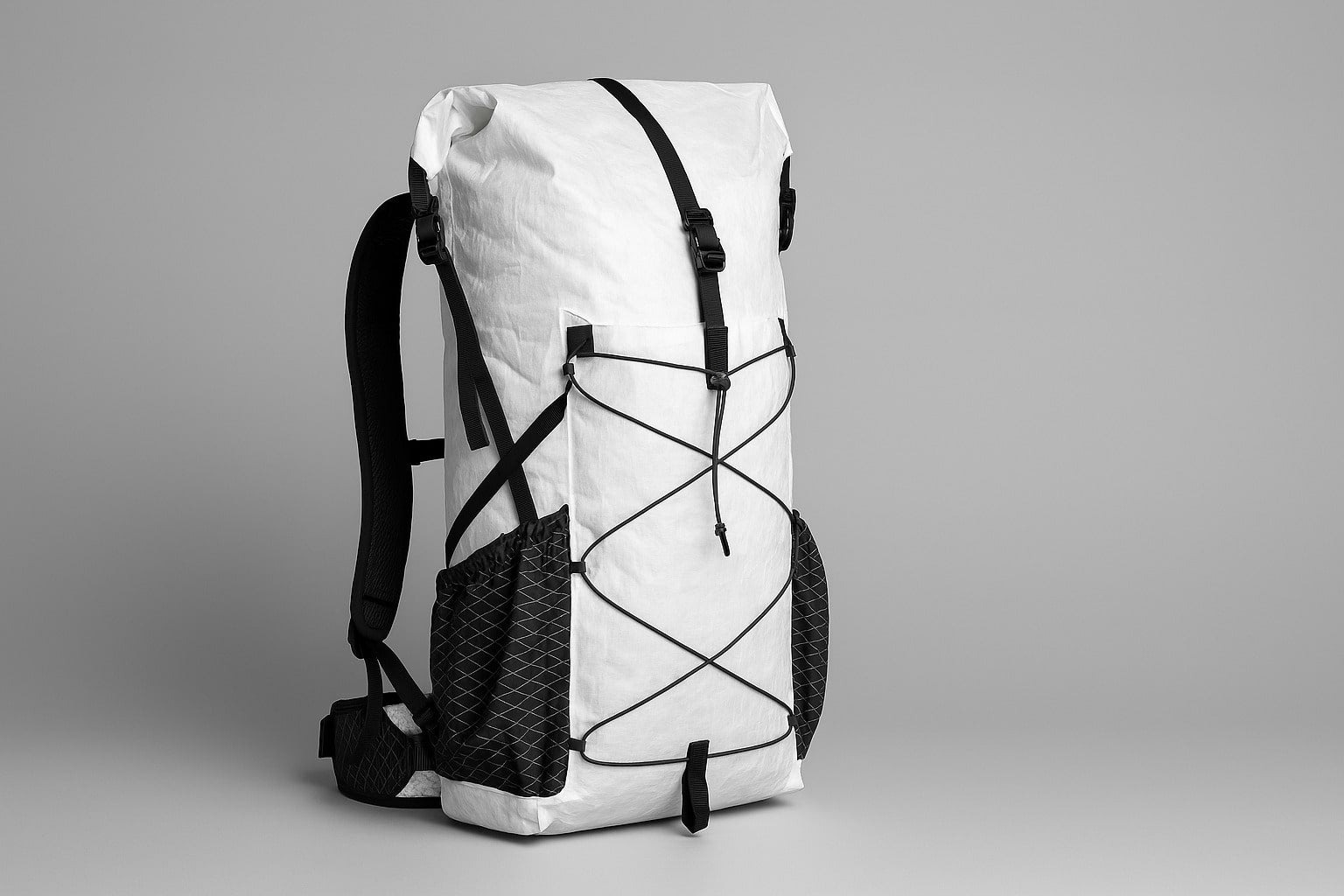
The translucent laminate roll-top
A translucent laminate roll-top uses a different body material but has some of the same decisions about closures, strap attachment and base protection. Verify seam behaviour on the actual laminate instead of borrowing assumptions from the canvas sample.
The white pack in the image is a separate construction example illustrating a laminate body and mesh pockets.
04
Fabric and material combinations
These material observations describe how the construction can work. They are not guarantees about the examples.
- Waxed canvas: wax in the woven fabric can limit wetting, and its surface can develop crease marks. Confirm the exact care instructions before re-waxing.
- Leather: check thickness, finish and flexibility at the punched holes; the precise grade or tannage cannot be determined from the photographs.
- Metal hardware: check the actual alloy, surface finish and fastener type. A brass-coloured buckle is not proof of its composition.
- Laminate: a thin layered body needs reinforcement where straps and buckles apply load. Confirm the selected grade and test the assembled seam.
- Construction: exposed stitch rows, punched strap holes, rivets and main closures built without zippers.
Waxed canvas, leather and laminate call for different care. No completed pack is established as waterproof; verify the closure and seams separately from any rating for the body material.
05
Who is it for?
- Hikers who walk in fair weather and maintain their gear, and accept re-waxing canvas and conditioning leather as part of owning the pack.
- Users who want to compare how different materials affect the closure, panel shape and maintenance.
06
Pain points it solves
- Wear at exposed closures and handles. Review whether webbing, leather, stitching and hardware can be maintained or replaced without opening the whole bag.
- Hardware wear. Agree whether a damaged rivet or buckle can be replaced without tearing the panel.
- A rigid back panel. Compare the bend and contact of perforated leather with the untouched panel in the loaded bag.
07
Design strengths
- Canvas and leather that can develop a patina; confirm the care steps on the actual materials.
- Replaceable hardware where attachment and backing permit safe access for repairs.
- Different closures to compare, from laced drawcord construction to a laminate roll-top.
- Visible stitching, punched holes and formed handles that are easy to inspect.
08
Limitations to keep in mind
- The examples do not establish capacity, weight, dimensions or load rating. Measure the real sample.
- Canvas and leather can make a bag heavier when used in broad panels. Measure against the intended hardware and carry system.
- Care is required. Waxed canvas needs re-waxing, leather needs conditioning, and both need drying after wet weather. A buyer who will not maintain the materials will not get the benefit of them.
- The laminate example needs its own abrasion and seam assessment, separate from the canvas construction.
09
What the design teaches
Use material choice to solve the local problem: canvas shapes the body, leather makes a broad hinge or adjustable strap, and perforation changes how a panel bends. Test the latter before calling it ventilated.
Leave out hardware that does not serve the intended opening frequency or load. A simple flap may suit infrequent access; a foamed panel or adjustable harness may still be needed if the packed weight and wear tests call for one.
10
Prototype brief
A prototype brief should set the visible stitching, fastener backing and material variation before assembling the first sample.
- Target capacity and weight, and how they will be verified — measured, not assumed.
- Materials by zone: waxed canvas weight and finish, leather type, thickness and tannage, laminate weight where used, and the care the materials will need.
- Hardware: brass or steel, rivet and buckle specification, and how the hardware is set.
- Construction: stitching style and thread, adjustment-hole spacing, and which seams are left visible.
- Closure and access: drawcord, flap and buckle, or roll-top, and how the closure is tested.
- Finishing and repeatability: check matching edges, hole alignment and inspection criteria.
Related guide: Hiking Daypack Front Pockets: Buckle or Zipper?
Discuss your bag development project
ANSON XIE
General Manager & Founder
Quanzhou Junkai Pengda Special Equipment Co., Ltd.
Email: ansonxie@jkpdtime.com
Phone: +86 177 5095 3355
WhatsApp: +86 177 5095 3355
Factory address: Floors 2–4, Building 1, Phase I, Huixin Intelligent Manufacturing Industrial Park, Hui'an County, Quanzhou, Fujian, China