
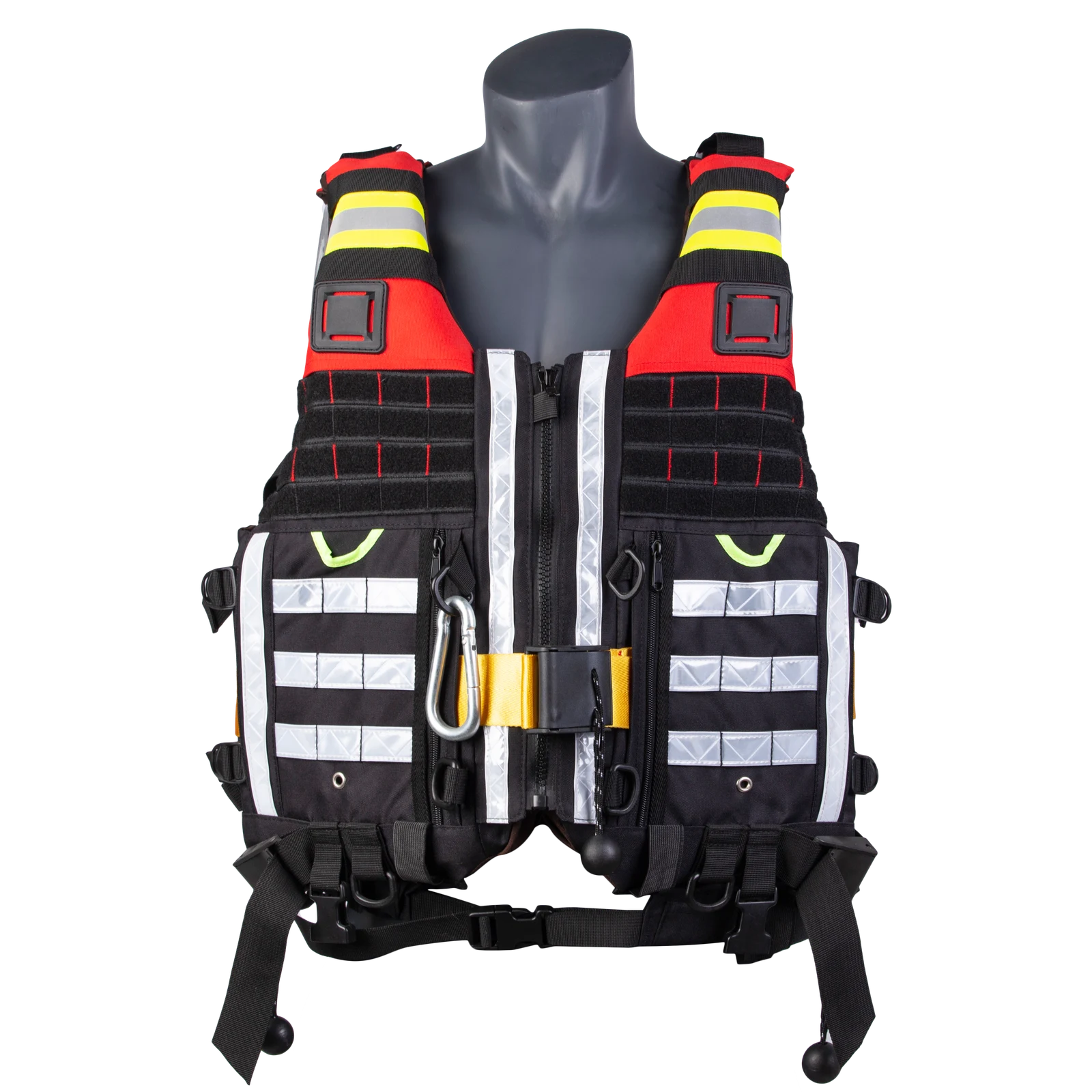
Front pockets on a utility vest need room for their own contents and for the center of the vest to open and close. Separation in an empty product view does not establish usable access after loading. Review pocket projection alongside the paths of the central zipper, cross-body closure and the hand operating them.
Treat opening the vest and opening a pocket as separate actions. Identify where their paths meet. This article addresses the visible textile layout and storage arrangement; it does not evaluate flotation, protective performance or load capacity.
01
Define the working area at the center
The central working area includes the zipper, other closures and the approach of the hand. Establish where the user grasps a component and the direction it moves before placing the inner pocket edges. A line down the center of a flat pattern cannot describe all the room required for an operation.
The front photograph shows a pocket on each side of the central zipper and another closure running across the middle. Record zipper access and the cross-body closure separately. Their proximity does not establish that they perform the same task or substitute for each other.
02
Allow for the loaded pocket shape
A thicker item may spread a pocket outward or move its inner edge toward the center. Review that change with the intended reference objects, particularly any rigid corners ending beside a closure. Pocket depth should be decided around the direction of the contents rather than the maximum exterior outline alone.
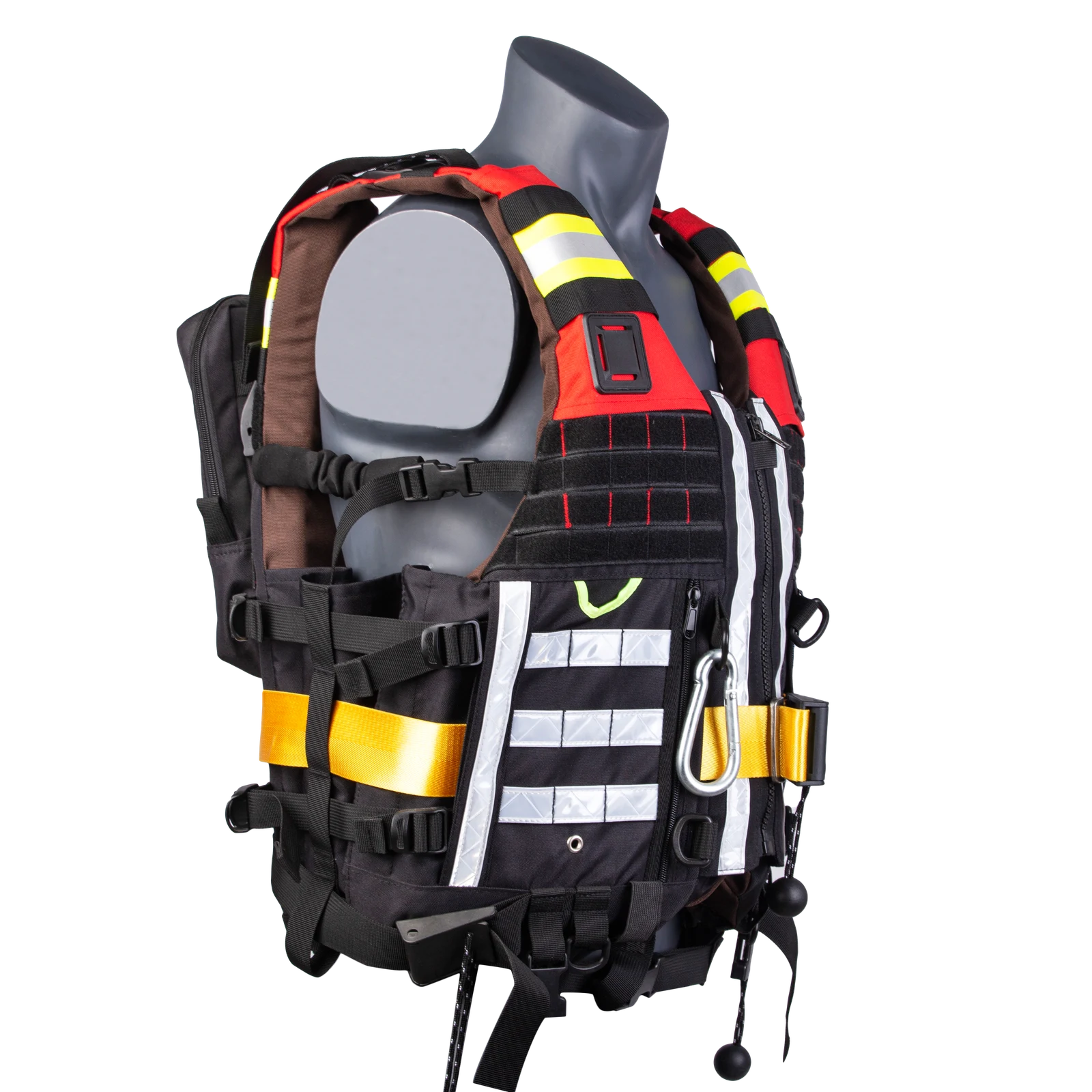
The side photograph shows projection from the front of the vest. It does not expose contents or establish a depth measurement. Compare the development sample empty, under its everyday load and with only one front pocket occupied. Use the resulting shapes to decide whether the central area or inner pocket edge needs revision.
03
Make the operating part reachable
A pull or buckle should have an accessible grasping position, beyond being visible from a selected camera angle. Approach it with one hand and observe whether the pocket or a hanging accessory must first be moved. If the intended activity requires gloves, review the same approach with the specified gloves.
A longer zipper cord is not a complete solution to an obstructed working area. Its resting position also needs a decision. Avoid placing it beside an unrelated pocket pull where the user may initially grasp the wrong component. Choose the pull arrangement around the direction of the intended action.
04
Review both sides independently
Left and right pockets may carry different objects, while both still need to leave the center usable. A rigid item on one side can change access beside the opposite pocket. Review the actual intended loading on both sides instead of accepting one side’s photograph as confirmation of the other.
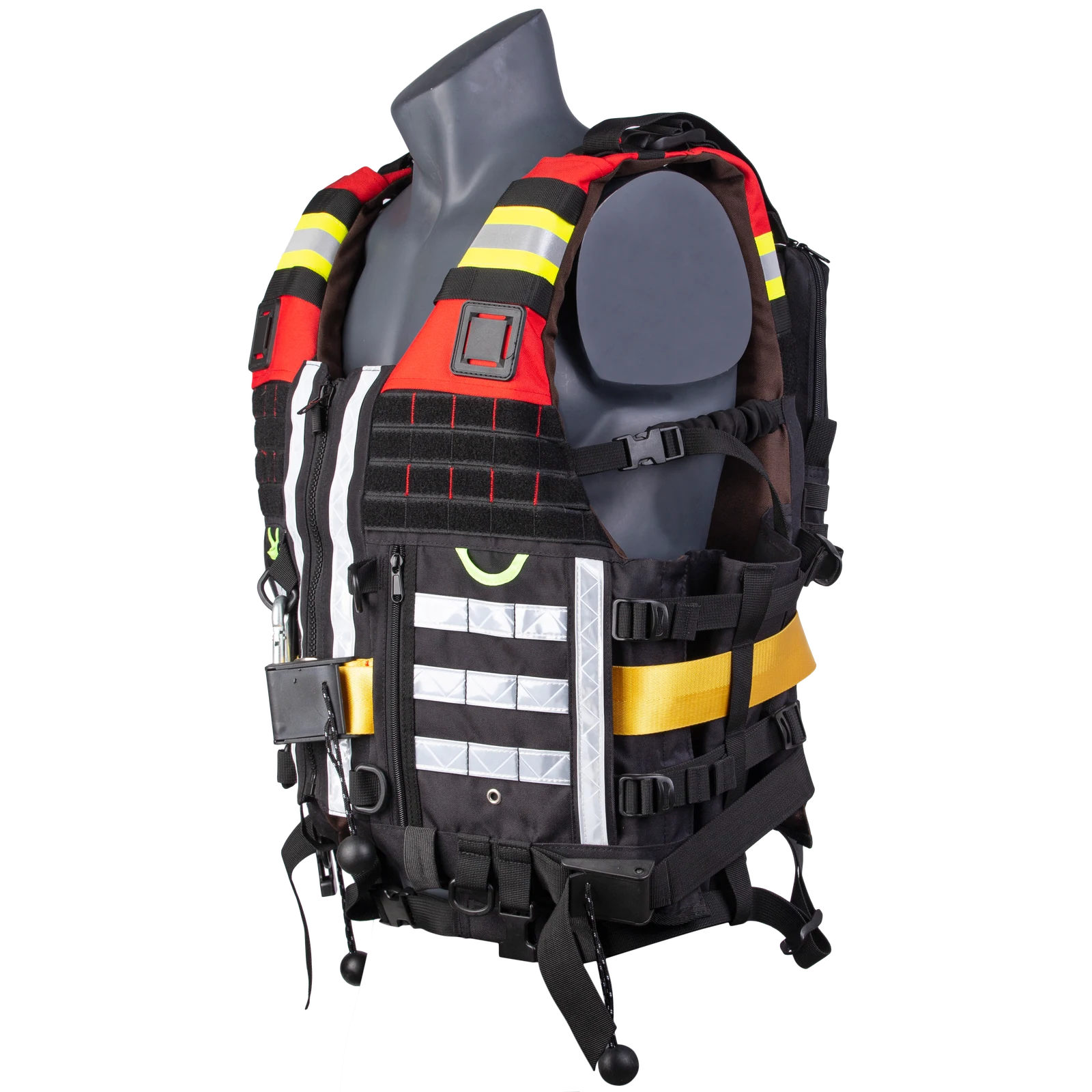
The opposite-side view provides another reference for the pocket edge, central zipper and cross-body strap. It does not show a closing or opening sequence. No one-handed operation or unverified rapid-removal procedure is claimed from these photographs.
05
Include sitting and leaning in the layout review
Pocket length and the lower edge affect available space when sitting, leaning or reaching. Fix the reference items in their planned positions first. Then observe whether those actions bring the pocket base against a lower strap or move a central component toward the body. Address the geometry before trying to conceal a layout issue by tightening side adjustments.
If pocket height changes, revisit hand approach and the intended clothing layers. Standing and seated references describe different development conditions. Preserve both states in the sample notes; a mannequin photograph does not establish comfort during movement.
06
Hand over an operating sequence
Keep the approved sample identifiable
Use front and both-side views, together with the normally loaded state, to define the central working area. Supply the reference contents and their directions for each pocket. After changing depth, closure location or a pull, repeat the complete opening, closing and retrieval sequence to see whether the revision affects a neighboring operation.
The corporate photographs supply construction references. The text contains independent development proposals, without reporting tests or personal use. Related soft-goods layout questions are available in the JKPD blog.
Related: utility vest side band adjustment reference. See the JKPD product reference.
Discuss your bag development project
ANSON XIE
General Manager & Founder
Quanzhou Junkai Pengda Special Equipment Co., Ltd.
Email: ansonxie@jkpdtime.com
Phone: +86 177 5095 3355
WhatsApp: +86 177 5095 3355
Factory address: Floors 2–4, Building 1, Phase I, Huixin Intelligent Manufacturing Industrial Park, Hui'an County, Quanzhou, Fujian, China