
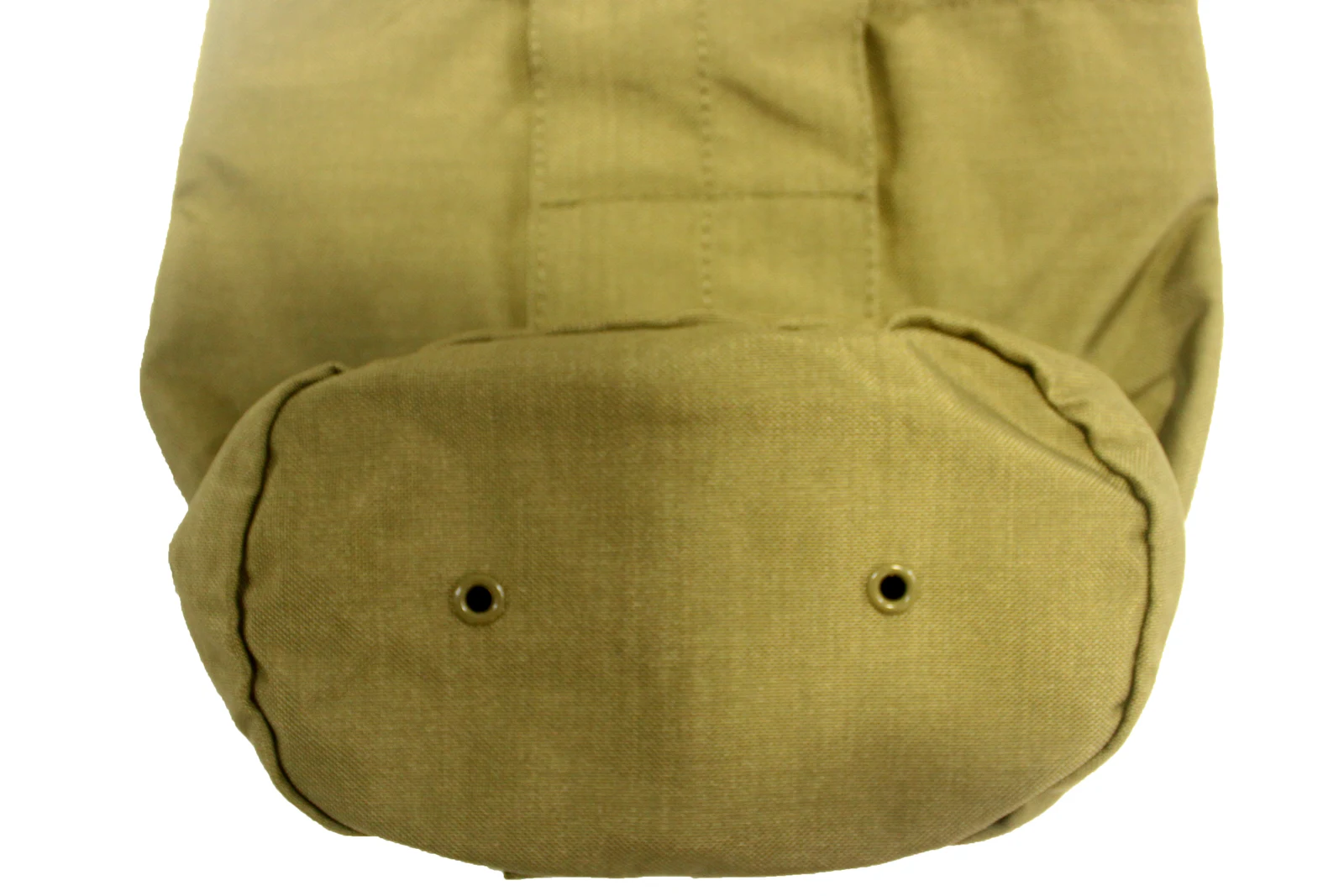
A hole in a utility pouch base creates a path between the inside and the outside. It can be designed to let water leave, while also affecting small-item retention and the way the base behaves against a surface. Start with the intended contents and use position before choosing the openings and their internal route.
Drainage, small-item retention and exclusion of outside water are separate requirements. Two round openings are visible in the photographed base. Their unobstructed path, discharge rate and smallest retained item still require review of the assembled pouch under defined conditions.
01
Decide what must stay inside
List the actual temporary contents, including their smallest detachable or foldable parts. Gloves and larger wrapped items present different storage needs from loose screws or earplugs. If small pieces must remain contained, consider a separate inner container first instead of asking one open-bottom arrangement to serve every purpose.
Passage through an opening depends on orientation, deformation and handling as well as size. Comparing a nominal hole diameter with an object’s largest dimension does not establish retention. Procurement information should identify which items may be placed directly in the pouch and which require secondary containment.
02
Check the route from the inside
The base photograph shows two round holes with metal-colored rims. It does not expose every internal layer. A lining, reinforcement patch or second fabric layer could obstruct access from inside even when the exterior opening is visible. Review the matching openings and edge treatment on the assembled sample’s interior.
Account for folds in the base as well. Flexible fabric can form different low areas under different loads, changing the route toward an outlet. Locate openings against the intended finished shape rather than placing them only at convenient points on a flat pattern.
03
Separate hanging use from resting use
When suspended, the base takes a shape influenced by its contents. When placed on a bench or the ground, the same openings may sit against the supporting surface. Review those positions separately. A pouch intended to hold damp gloves also needs a practical place and method for emptying and drying after removal.
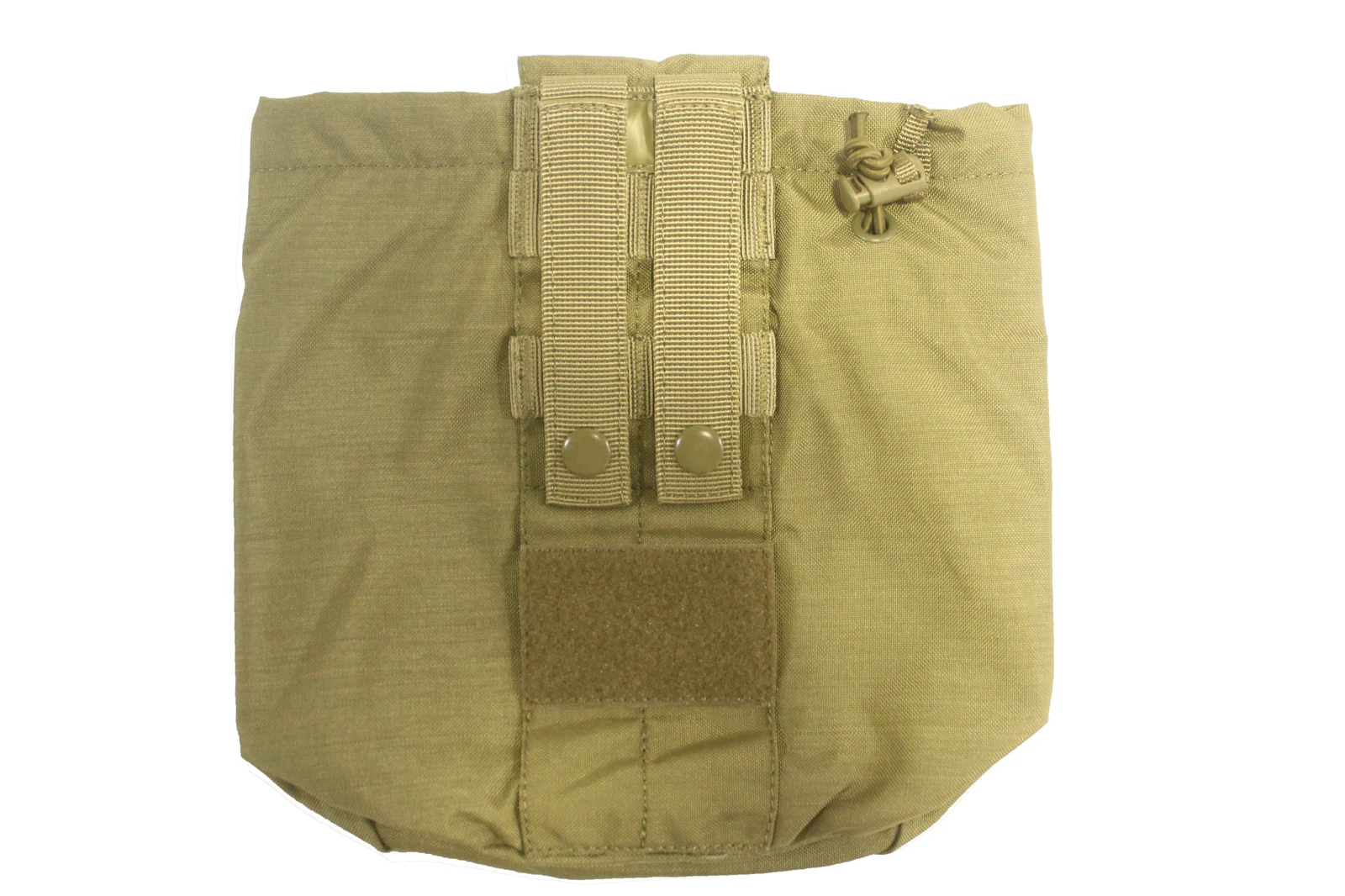
The rear photograph provides a reference for the mounting-strap positions and body shape. It does not show the loaded base position or demonstrate attachment load capacity. Use the intended mounting surface on the sample and observe tilting, folded areas and contents resting over the openings.
04
Compare local openings with a mesh base
Local holes and mesh provide different open areas and contact surfaces. Select between them around the contents and environment. The Hexatac HDP manufacturer description identifies a mesh base as its route for water and dust to leave. This is another construction approach, not performance evidence for the two-hole pouch illustrated here.
For a mesh proposal, review the mesh openings against the smallest intended items, its contact surface and its seam connections. For local holes, review access from both sides and the surrounding fabric layers. No comparative flow or durability measurements are reported here, so neither arrangement is ranked as inherently better.
05
Distinguish drainage from waterproof storage
An open route should not also be treated as a sealed waterproof barrier. Items that must remain dry need an appropriate internal package and location for the particular situation. A drainage opening is not evidence that the pouch protects electronic contents from water.
Water leaving the pouch does not establish that the fabric layers and seams have dried. Define maintenance around the actual material and finished construction, with access to inspect and air the interior. The photographs do not identify a coating, fiber composition or drying rate.
06
Hand over an inspectable base construction
Keep the approved sample identifiable
Provide an exterior base view, the internal layer arrangement and the intended loaded condition together. Define the water path and small-item retention scope separately. Keep the hole positions, possible lining obstructions and maintenance actions tied to the same sample version, making later material or base-shape changes easier to review.
Visit the JKPD blog for related construction-development topics.
Related: folding utility pouch return to stow. See the JKPD product reference.
Discuss your bag development project
ANSON XIE
General Manager & Founder
Quanzhou Junkai Pengda Special Equipment Co., Ltd.
Email: ansonxie@jkpdtime.com
Phone: +86 177 5095 3355
WhatsApp: +86 177 5095 3355
Factory address: Floors 2–4, Building 1, Phase I, Huixin Intelligent Manufacturing Industrial Park, Hui'an County, Quanzhou, Fujian, China