
Develop a folding utility pouch through its complete cycle: deployment, temporary storage, emptying and return to stow. Extra space is useful only when the mouth, contents and folded arrangement can be managed through the intended sequence. The final compact appearance is one part of that sequence.
Development priorities: define temporary contents; separate mouth adjustment from folded retention; include an emptying check; assign a place for the cord and adjuster after folding.
01
Define the temporary contents
State the group of objects, where they enter the pouch and when they transfer elsewhere. A claim that it holds miscellaneous items is too vague for sampling. Small flat objects, hard edges and items leaving debris each raise different observation questions.
This article concerns ordinary equipment and everyday-item organization. It offers no application advice for medical waste, hazardous goods or food hygiene. The empty-pouch photographs establish neither capacity nor a particular item fit or carrying limit.
Keep the target list with the sample even if the pouch is intentionally flexible in use. A defined reference group lets developers compare revisions. Without it, an easier demonstration may simply result from using different contents.
02
Give the open retention flap a place
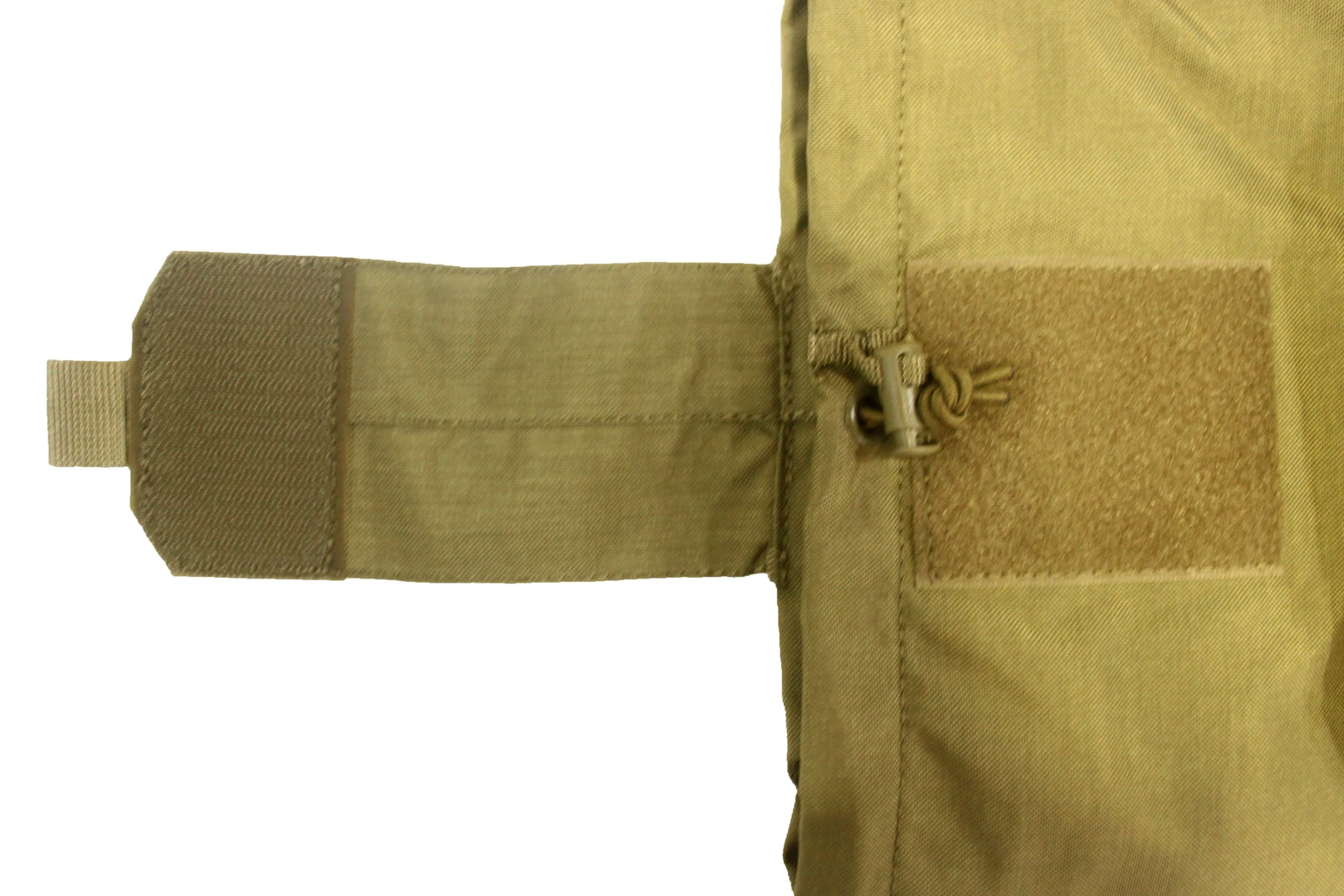
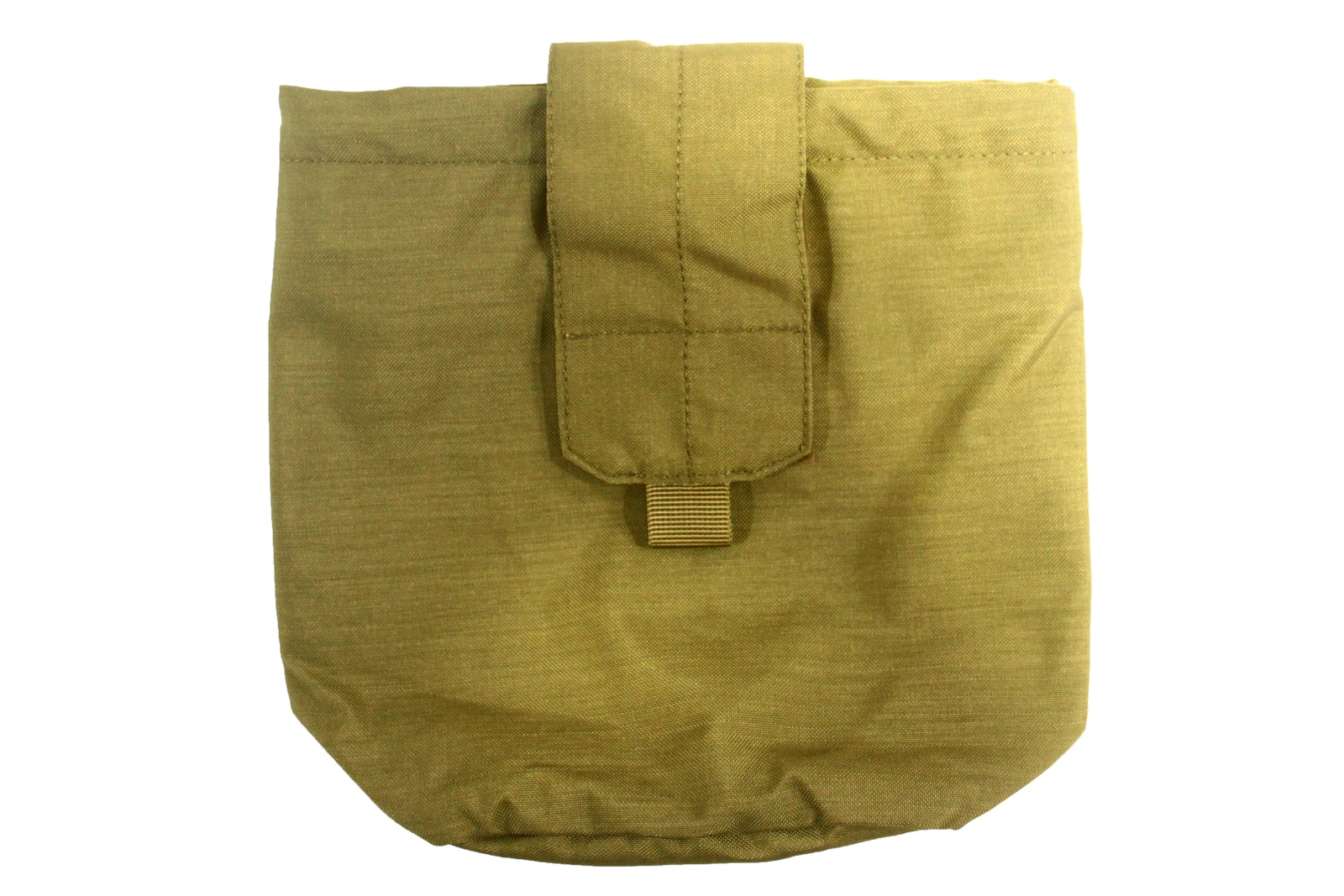
The deployed photograph shows a flap at the front of the body. Review its relationship to the mouth, hands and nearby items. Decide whether it remains there or needs a defined parked position rather than treating it as irrelevant after release.
If the flap interferes during insertion, identify the action and contact point before changing its length or fixing position. A larger flap may add handling steps as well as coverage. The revision should solve the observed problem rather than simply look more substantial.
Record the condition after deployment, not only the moment a closure opens. A user may still need to arrange the mouth or move the flap. Those actions belong in the intended workflow and should appear in sample comments and later instructions.
03
Separate mouth adjustment from folded retention
The detail shows the open flap, a cord adjuster and a knot near the mouth. It records neighbouring components, not the complete operating sequence. Confirm mouth adjustment and folded retention independently on the physical sample so their states remain understandable.
Begin a review with deployment, insertion of the reference contents, intended mouth adjustment and removal. Record whether one hand must support the body and whether the adjuster needs repositioning. Do not infer one-handed operation from an empty product view.
A useful instruction identifies what the user changes at each stage. If a cord must first be loosened before folding, that should be an explicit step. Calling every component a closure can obscure the difference between containing items and retaining the empty folded body.
04
Include emptying before stowage
Before folding, the user should be able to inspect the interior and confirm the reference items have been removed. Observe whether small objects remain in bottom folds and whether lining, seams or a flap obstruct the view. These are proposed development observations, not results reported here.
Maintenance instructions need the actual fabric, finish and component requirements. Do not prescribe washing, drying or chemical cleaning from the appearance of the textile. Nor should a folding-pouch label imply suitability for every dirty or damp item.
05
Review component positions after folding
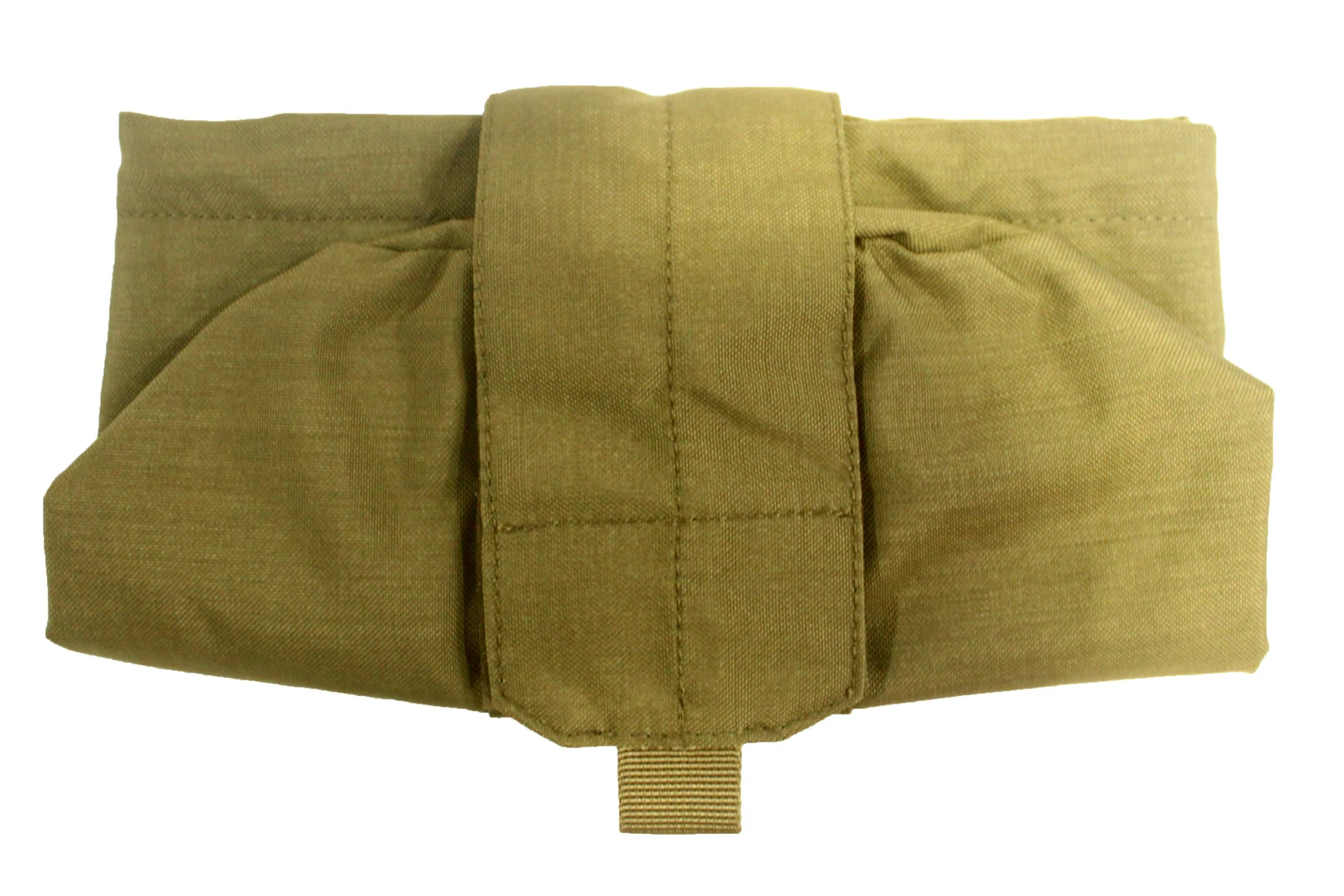
The folded view shows a central flap around the body but does not demonstrate the folding steps. Record whether the mouth is arranged first or the base folded first, then inspect the locations of cord, adjuster and edges. Check for components left outside the intended envelope.
Compare more than the final size. Reopening should also follow the planned sequence. If only the photographer can reproduce a particularly tidy fold, simplify it or provide clear instructions rather than treating that presentation method as automatic everyday use.
Keep both deployed and stowed references in the approval record. A change that improves the compact arrangement can still make deployment less clear, so both states should remain part of the decision.
06
Recheck folding after material changes
Fabric, binding and flap layers create local folded thickness. A thicker or stiffer substitution needs another check of flap coverage and recognizable closure states. A loose swatch cannot establish those assembled relationships.
Composition, retention and durability requirements need identifiable materials and supporting evidence. An empty photograph supplies no safe loading limit or cycle-life result. If such performance is required, agree a suitable verification plan for the intended assembly.
07
Hand over a repeatable cycle
Save the contents list, deployment view, emptying check, folding steps and final stowed photograph with the sample version. Revisit the full sequence after changing an adjuster, flap or fabric.
These are original company product photographs, with no generated or reconstructed structure. Find further independent development topics in the JKPD blog.
08
Further viewing: another folding pouch
Keep the approved sample identifiable
Search metadata identifies MAXPEDITION Rollypoly Folding Dump Pouch by Maxpedition. Opening was attempted, but playback content and embed availability could not be verified. Further viewing only: no claims or timestamps are taken from it. This is another brand’s product, not evidence about the illustrated company sample.
YouTube: MAXPEDITION Rollypoly Folding Dump Pouch
Related: tactical bag hook and loop closures. See the photographed product reference.
Discuss your bag development project
ANSON XIE
General Manager & Founder
Quanzhou Junkai Pengda Special Equipment Co., Ltd.
Email: ansonxie@jkpdtime.com
Phone: +86 177 5095 3355
WhatsApp: +86 177 5095 3355
Factory address: Floors 2–4, Building 1, Phase I, Huixin Intelligent Manufacturing Industrial Park, Hui'an County, Quanzhou, Fujian, China