
A travel organizer can have a satisfactory zipper-chain report and still need a separate review of its end construction. The chain joins the two sides of the opening; the terminal arrangement must also keep the slider on its intended route. A report headed simply “zipper strength” does not tell a buyer which of those jobs was evaluated.
For a development brief, start with the actual opening drawing and the supplied zipper assembly. Identify what stops each slider, who creates that stop, and how the terminal is incorporated into the sewn bag. The review below is a proposed procurement workflow, not a test result for the photographed product or a substitute for a laboratory method.
01
Name both ends on the opening drawing
Mark the ends of the opening A and B before using terms such as top stop or bottom stop. On a bag laid flat, “top” can mean the upper edge of a photograph rather than the zipper supplier's component terminology. Two sliders and an opening that travels around several sides make that ambiguity more expensive during sampling.
Ask the supplier to identify the chain, sliders, terminal components and supplied lengths on the same drawing. State whether the zipper arrives as a completed assembly or whether the bag factory cuts and finishes a continuous chain. Do not assume that a visible fabric tab is the component that actually limits travel; it may conceal a different construction underneath.
The drawing should show the usable opening and the material beyond it. A buyer may want the slider to reach a convenient corner, while the sewing team needs space to secure and finish the tape. Resolve that relationship on the sample. An attractive external tab is not a complete specification for the hidden endpoint.
02
Ask which strength the report actually measures
YKK Korea's testing overview separates chain crosswise strength from top-stop and bottom-stop holding strength. Its top-stop example loads the slider against the stop; its bottom-stop example spreads the chain sides with the slider at that end. These are different loading arrangements, not alternative names for one result.
That distinction gives the buyer a useful question: does the submitted report evaluate the terminal arrangement being purchased? Record the named method and edition, specimen identification, loading arrangement, units and reported outcome. Ask the supplier or laboratory to explain how the result applies to the ordered assembly rather than treating a catalogue summary as a production certificate.
Keep three questions separate
- Does the joined chain meet the agreed transverse-load requirement?
- Does the relevant terminal retain the slider under the agreed endpoint assessment?
- Does the installed zipper and surrounding sewn structure meet the bag's development requirements?
The third question cannot be answered just by attaching the first two reports. For a discussion focused on the chain itself, see the separate travel-bag zipper lateral-strength review.
03
Match the evidence to the supplied configuration
Imagine a hypothetical organizer with a long opening supplied from continuous chain. One quotation includes a finished zipper assembly; another leaves the termination to the sewing factory. The same nominal chain size does not make those quotations equivalent. The responsibility for making and inspecting the end has changed.
Request a component reference and a sample of the proposed terminal arrangement before approval. Include slider identity, chain orientation, endpoint materials and the operation that secures the end. If the supplier recommends a particular terminal component or preparation process, carry that information into the factory's controlled instruction rather than leaving it in an email.
A change from one slider to another should trigger a review of affected compatibility and endpoint evidence. Likewise, changing the end construction while retaining the chain does not justify carrying over an old terminal approval automatically. Decide the scope of reassessment with the supplier and laboratory; do not invent an equivalence rule from appearance.
04
Inspect the sewn endpoint without turning it into a force test
On an approved development sample, follow the slider through its normal operating route. Observe whether surrounding fabric hides the pull, whether an end tab folds into the path, and whether the user can reach the end without twisting the whole opening. Use the intended contents arrangement because packing changes the surrounding geometry.
Then compare the accessible construction with the drawing. Check the terminal location, tape capture and nearby finishing against the approved reference. Where lining conceals a critical detail, arrange an appropriate construction sample or staged inspection. Do not infer the hidden stitching from a clean exterior photograph.
This is an identification and operation review, not permission to pull harder until something breaks. Any destructive or force-based assessment needs the agreed fixture, procedure and safe working conditions. An improvised hand pull has neither the repeatability nor the documented loading arrangement needed to replace the specified test.
05
Investigate the failure location before adding stitches
If an assessment fails, preserve the failed specimen and ask what moved or broke. A displaced terminal, damaged slider, broken chain elements and a torn tape attachment lead to different corrective actions. A single statement that the “zipper came off” loses information the component supplier and sewing team need.
Adding a dense stitch block is not a universal answer. The proposed change may alter the available slider travel, tape condition or thickness under the finishing piece. Review the construction and relevant supplier guidance before setting an operation. Machine settings and acceptance limits belong to the validated project process, not to a generic article.
Compare the revised sample with the failed one using identifiable revisions and consistent assessment conditions. Keep the failed evidence long enough to confirm that the original problem was addressed. If the revision merely moves the failure elsewhere, document that outcome instead of presenting the absence of the first symptom as complete approval.
06
Release an endpoint specification that purchasing can maintain
The release package should connect the opening drawing to the ordered components and the factory operation. Include the endpoint references, approved sample identification, applicable report numbers and agreed inspection responsibilities. Identify who approves a change to the slider, terminal, tape preparation or nearby sewn construction.
For repeat orders, make the endpoint visible in the change checklist. A substitution described as “same size zipper” is too broad to settle whether the terminal evidence still applies. The team should be able to trace a delivered sample to its component combination without opening an old chat history.
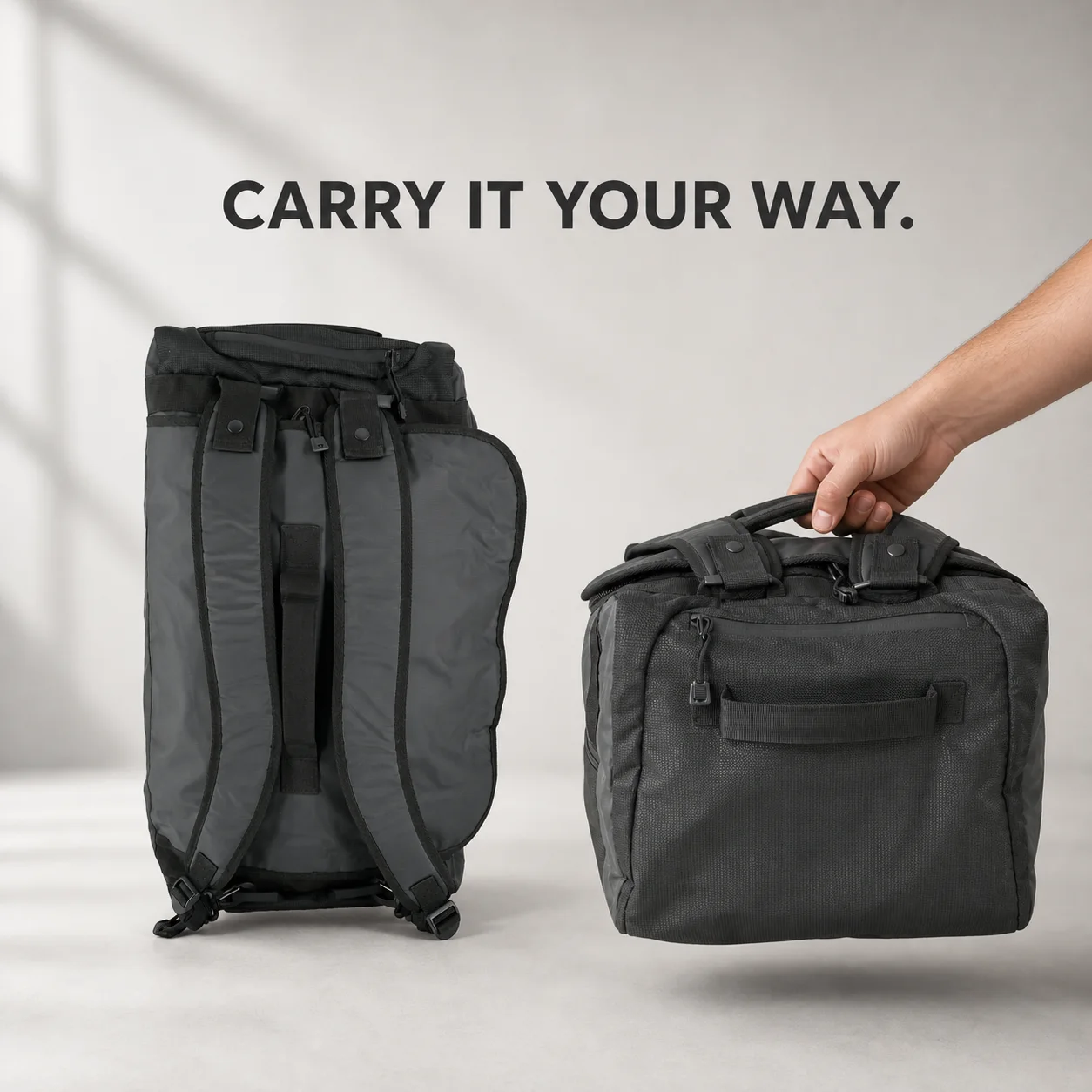
The JKPD travel organizer reference provides a product context for this discussion. Its photograph shows carrying arrangements, not a terminal test or a disclosed hidden construction. Send the intended opening route, component information and development requirements with an inquiry so the sample review can address the actual end arrangement rather than an unspecified request for a stronger zipper.
Discuss your bag development project
ANSON XIE
General Manager & Founder
Quanzhou Junkai Pengda Special Equipment Co., Ltd.
Email: ansonxie@jkpdtime.com
Phone: +86 177 5095 3355
WhatsApp: +86 177 5095 3355
Factory address: Floors 2–4, Building 1, Phase I, Huixin Intelligent Manufacturing Industrial Park, Hui'an County, Quanzhou, Fujian, China