
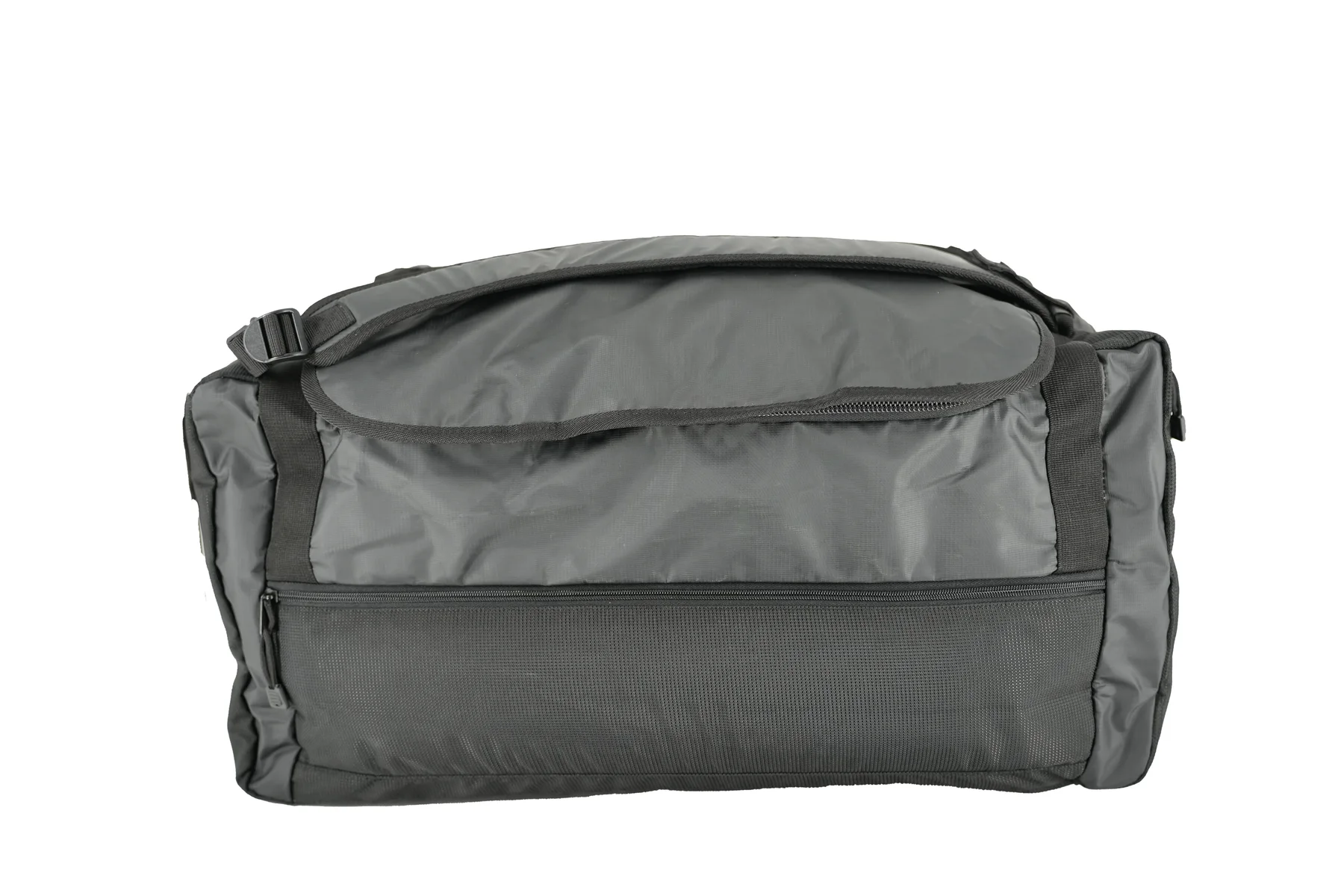
A travel backpack leaves the factory clean. The buyer still needs to know what happens after a spilled drink, a dusty trip or storage in a damp cupboard. Leaving care instructions until packaging approval makes it easy to promise a cleaning method that nobody has checked on the finished bag.
Treat the care note as part of product development. Gather the limits of the actual components, try the proposed procedure on a representative assembly and write down what the owner should do. This is a development guide for brands and sourcing teams, not a universal washing recipe for every backpack.
01
Start with the complete material list
Review the shell, lining, foam, stiffeners, coatings, adhesives, decoration and hardware together. Ask each relevant supplier about cleaning and drying restrictions for the exact material reference. A fabric recommendation is useful evidence, but it does not approve a whole backpack containing other components.
Identify removable parts and anything that cannot be removed by the owner. A development sample with its insert taken out does not represent the customer’s cleaning task if that insert will be permanently enclosed in production. Electrical accessories, if present, need their own supplier guidance and suitable separation from cleaning.
List which areas the proposed care procedure covers. Exterior spot cleaning, lining cleaning and treatment of detachable accessories can be different tasks. Avoid one broad instruction that leaves users guessing whether immersion, soaking or mechanical washing is intended.
Connect these notes to the material revision. A late change to a coating, trim or decoration should prompt a review of affected care instructions, not just a purchase-order update.
02
Define a realistic cleaning task
Choose the types of ordinary soil the product brief needs to address and agree how the trial will represent them. Describe the location, material and condition. Do not quietly broaden a routine care trial into a promise to remove every stain or deal with hazardous contamination.
Write the proposed steps precisely enough for another reviewer to repeat them. Identify the cleaning product, dilution where applicable, application method, contact time, rinsing and drying arrangement. The final consumer wording can be shorter, but development records should preserve what actually happened.
A brand-specific example shows why instructions matter: Osprey’s pack-care guide advises against machine washing its packs. That is guidance for its products, not proof of compatibility or incompatibility for a different OEM construction.
Use supplier advice and the intended bag assembly to choose candidate procedures. Do not copy another brand’s care text, recommend an arbitrary household chemical or describe the sample as washable before the relevant review is complete.
03
Trial the procedure on a representative bag
Use a sample with the intended materials, decoration and internal construction. Retain an untreated comparison and record the starting condition with clear photographs. If the purpose is to compare two cleaning approaches, label the samples and keep unrelated variables consistent.
Review both the cleaned area and neighboring materials. Look for visible changes in color, surface finish, shape, adhesion and decoration, along with any residue. Describe observations without claiming a cause that has not been investigated.
Recheck operation after the sample reaches the agreed dry condition. Open pockets and fasteners, review the lining and inspect places where layers meet. A surface that looks acceptable immediately after wiping does not complete the review of the assembled product.
Keep three records separate: what the supplier permits, what the trial actually did, and what the customer-facing instruction will say. The last should not promise more than the first two support.
04
Make drying and storage part of the instruction
Specify drying as deliberately as cleaning. During development, consider how the openings, padded regions and internal compartments can be exposed to the proposed drying conditions. Do not assume that a dry outer panel means every concealed area is ready for storage.
Ask suppliers about heat and exposure limits before proposing a dryer, heated surface or direct-sun procedure. Avoid a fixed drying-time promise unless there is an appropriate basis for it; the user’s environment and the bag’s construction can differ from a sample-room trial.
Review whether the owner can follow the steps without special tools. If a pocket needs to remain open or an approved removable insert needs separate drying, show that clearly. Do not instruct users to pull out structural parts that were not designed for removal.
Storage guidance should fit the product and the verified care procedure. Keep language practical and avoid unsupported mold-prevention, antibacterial or odor-elimination claims. A bag’s care note is not a substitute for evidence behind a separate material or treatment claim.
05
Turn trial notes into usable wording
Write the customer instructions in the order the task happens: preparation, approved cleaning, drying and storage. Name important exclusions directly. Vague wording such as clean gently may leave the user uncertain about the tool, solution or area of application.
Have someone who did not write the procedure follow the draft on an appropriate sample. Record where they pause or interpret a step differently. This checks the clarity of the instructions; it does not replace material compatibility or product-performance testing.
Keep the label, hangtag, website and customer-service reply consistent. If space forces a shorter label, provide a stable route to the complete instructions and ensure the brief version does not contradict them. Review translations for meaning rather than relying only on the same layout.
Care symbols and mandatory information may depend on the destination and product classification. Have the brand’s compliance team confirm applicable requirements and any permissions needed for the intended symbols. This article makes no claim that one label format satisfies every market.
06
Release the care note with the product revision
Approve the wording, supporting records and bag revision together. Give the artwork a controlled identifier so packaging suppliers cannot accidentally reuse an older file. Include the care instruction in the handover described in our sample revision guide.
When a later component change affects the approved procedure, decide which checks need repeating before accepting the change. Also decide whether old and new stock need different guidance. Keeping the product and instruction revisions linked makes that discussion possible.
For the first production order, verify that the correct label or insert is present and readable, and that its website destination works. Our packaging approval guide covers the broader packing release; the care procedure needs its own technical decision before that stage.
Bring cleaning expectations into the travel-bag development brief early. If the desired care method conflicts with the chosen construction, it is better to revise the materials or the claim during sampling than to hide that conflict behind a generic label.
FAQ
Questions buyers often ask
Does a washable shell fabric make the backpack washable?
Not by itself. The finished bag may contain coatings, support layers, trims or decoration with different restrictions. Review the full material combination and proposed procedure before deciding what the care instruction can claim.
Should a care guide be changed after a trim substitution?
Review whether the substitution affects the approved procedure. Keep the existing wording only when the supporting assessment still applies. Record the decision against the new material and product revision so later orders have a traceable reference.
Discuss your bag development project
ANSON XIE
General Manager & Founder
Quanzhou Junkai Pengda Special Equipment Co., Ltd.
Email: ansonxie@jkpdtime.com
Phone: +86 177 5095 3355
WhatsApp: +86 177 5095 3355
Factory address: Floors 2–4, Building 1, Phase I, Huixin Intelligent Manufacturing Industrial Park, Hui'an County, Quanzhou, Fujian, China