
Transport bag identification should be easy to locate in an agreed carrying or placed condition. Positioning is more than centring a graphic. Handles, straps and folds can cover information, while a fabric flap near a grip can affect how the user holds the bag.
Development priorities: define the identification task; inspect upright and horizontal positions; preserve grip clearance; approve visibility using the actual information layout.
01
Define what needs identifying
The task may be distinguishing users, similar bags or groups of contents. Each requires different information. Brand identity, user numbers and packing categories need not all occupy the same small field.
Specify viewing direction, expected distance and the main placed condition before choosing a location. This article supplies no readability-distance or durability data, so it does not turn one character size into a general performance promise.
Keep the proposed information content stable during a comparison. A location approved with a short number may not work for a longer name or a multi-line description. The artwork is part of the physical layout decision, not an item to add after the construction is fixed.
02
Review candidate fields on the whole bag
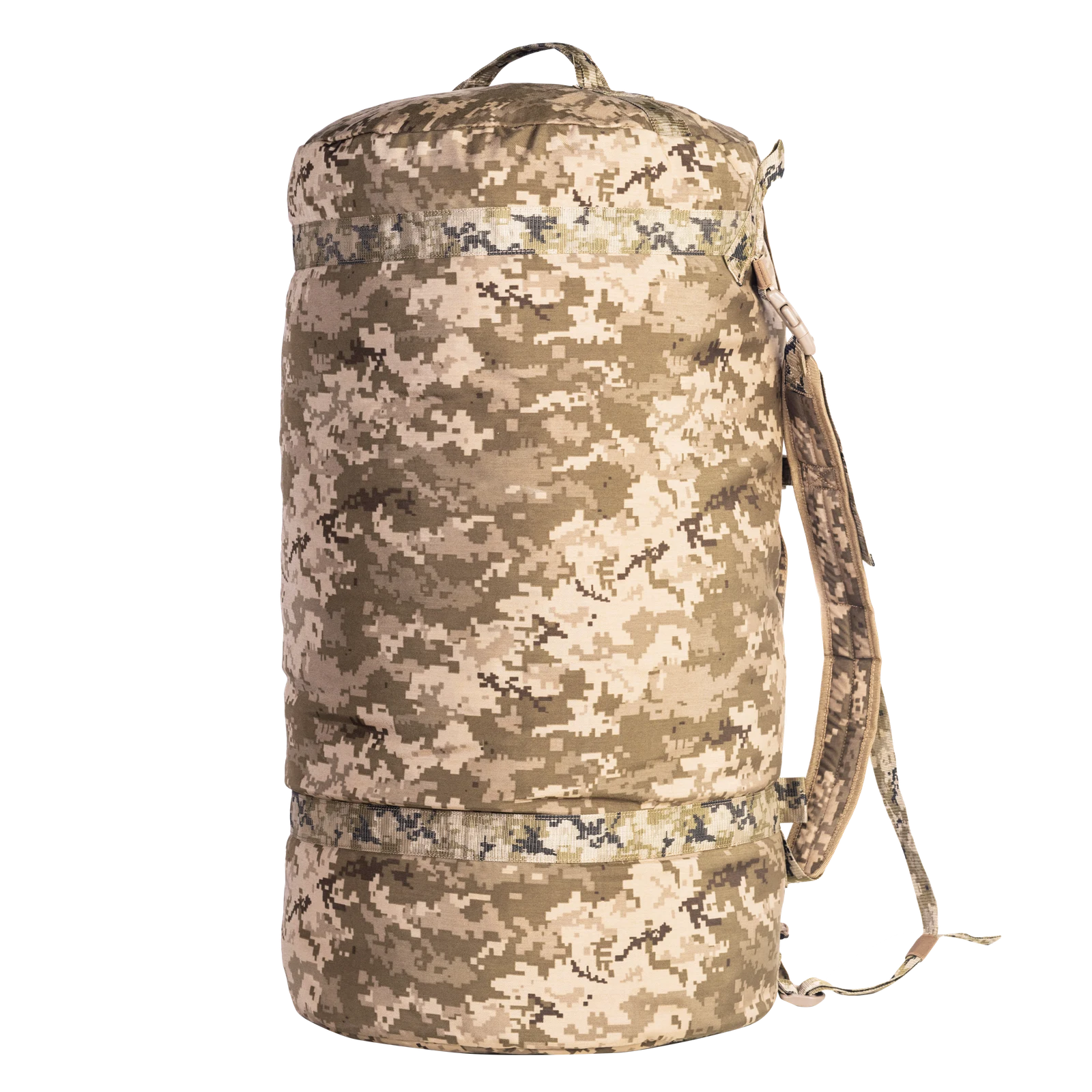
The rear-side photograph helps discuss which surfaces face upward or toward neighbouring objects. Place a temporary artwork sample at candidate positions on the actual bag. Record upright, horizontal and carrying conditions rather than approving only a flat drawing.
If bags normally stand together, inspect whether another bag covers the field. Enlarging the mark alone may not solve an orientation problem. The placement arrangement needs to reflect the way the product will actually be stored or handled.
A useful review identifies the reason information is hidden: a strap across the number, a curved surface turning away or a neighbouring bag. That gives the developer a specific layout problem to address without adding unnecessary markings everywhere.
03
Confirm the structure of a flap before naming its function
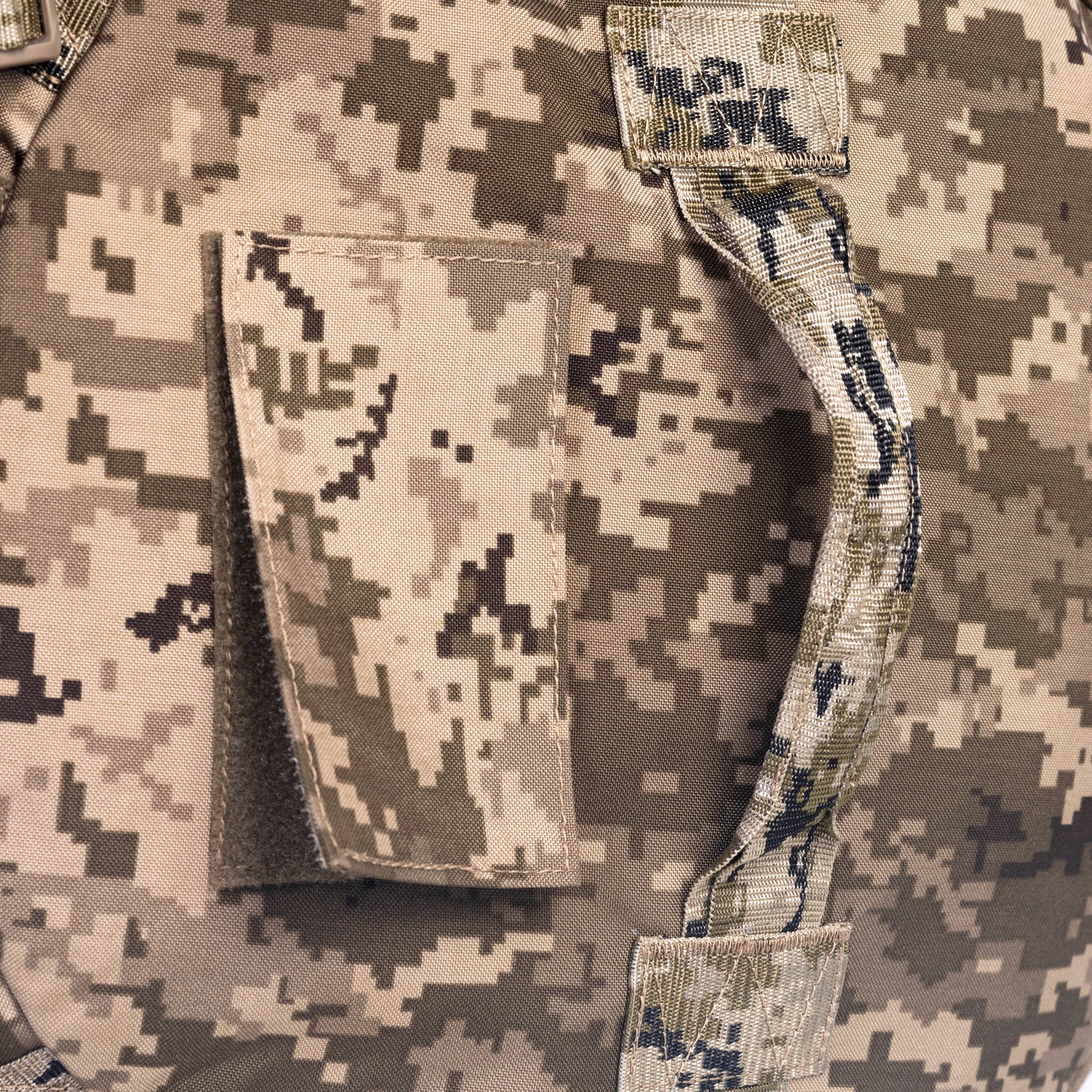
The detail photograph shows a rectangular fabric flap beside handle attachment points. It does not reveal an interior, fastening method or information carrier. It is a position reference, not evidence of a transparent ID window, card pocket or confirmed label system.
If a similar location will hold identification, define whether the design uses permanent printing, a sewn label or a replaceable carrier. Show the corresponding sample and replacement procedure. Do not infer an unshown feature from the outline of a fabric piece.
Keep the distinction clear in procurement descriptions. A proposed field for a label and an existing finished card holder are different items. The approved sample should establish which one is actually being supplied.
04
Coordinate identification with the grip
A hand, glove or wrist can approach the candidate field during handle use. Review gripping, lifting and placing the bag down, then inspect whether a flap edge obstructs the hand or the handle covers the information.
Compare relocating the field, changing flap direction or adjusting the information layout before revising the handle itself. If the handle does change, review it against the intended loading and connection requirements rather than treating it as a graphic adjustment.
05
Include straps and loose webbing in the view
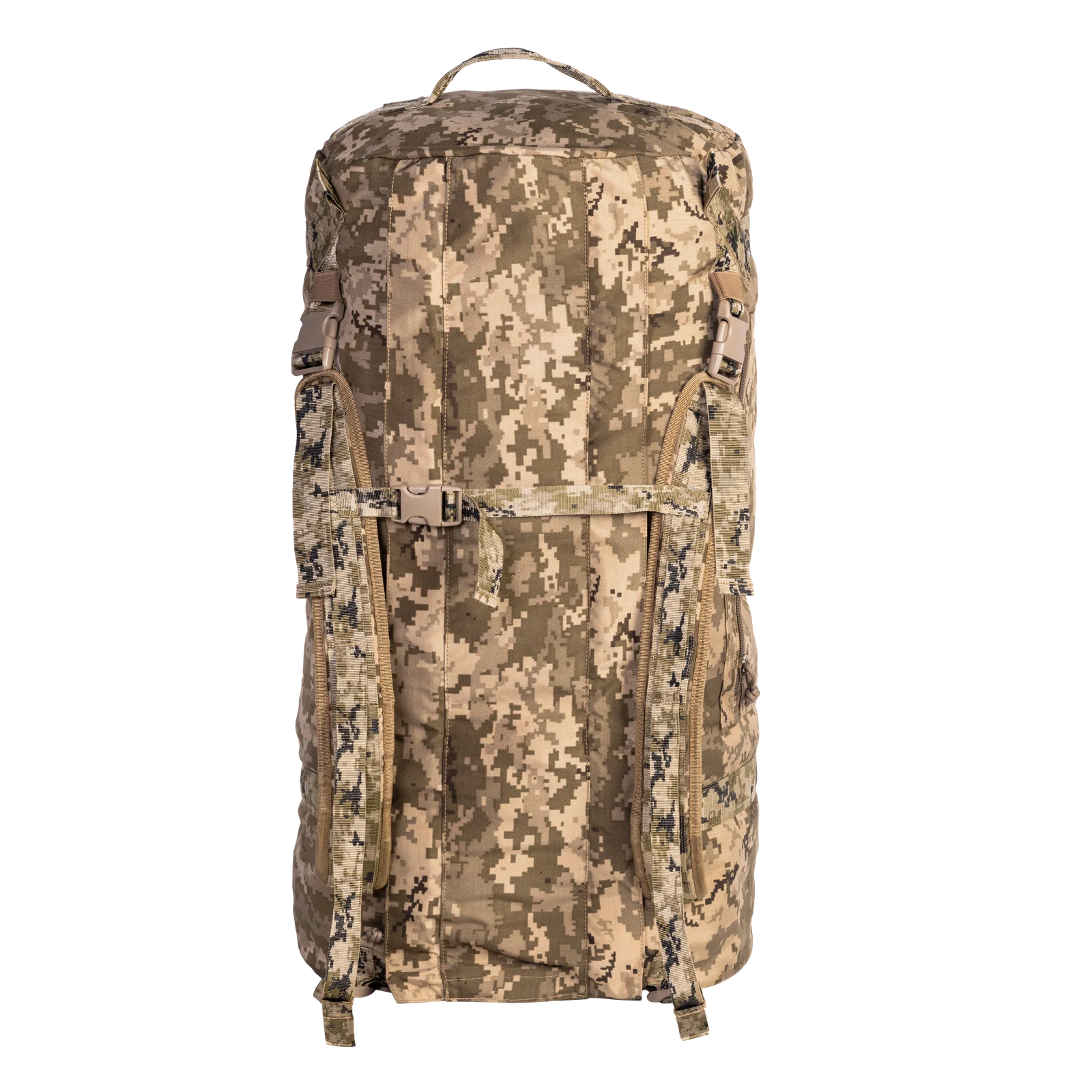
The rear photograph shows shoulder straps and a cross connection. A nearby identification field needs review while carried and while the straps hang naturally. A tidy arrangement created solely for photography is not necessarily the everyday condition.
For frequently changed identifiers, define whether replacement requires moving straps, removing contents or turning the whole bag. Recording those actions is more useful than an unsupported promise of a convenient replaceable label.
06
Approve materials and processes in the finished shape
Printing, sewn labels and replaceable carriers need to work with the actual shell material and curved body. A filled soft bag can form folds that a flat swatch does not reproduce. A process sample can approve part of the appearance, but not the final position by itself.
A camouflage pattern establishes no abrasion or weathering grade. Where washing, rubbing or prolonged outdoor visibility matters, agree separate material, process and evidence requirements instead of relying on a broad outdoor-grade description.
07
Keep an identifiable information layout
Keep the approved sample identifiable
Hand over the real artwork, location photographs, viewing direction, grip condition and sample version. Recheck visibility after changing information length or bag dimensions rather than scaling the layout automatically.
These company-library photographs explain relationships between visible parts. No particular identification function is claimed for the pictured flap. Continue with the JKPD blog for related construction topics.
Related: student backpack woven label approval. See the photographed product reference.
Discuss your bag development project
ANSON XIE
General Manager & Founder
Quanzhou Junkai Pengda Special Equipment Co., Ltd.
Email: ansonxie@jkpdtime.com
Phone: +86 177 5095 3355
WhatsApp: +86 177 5095 3355
Factory address: Floors 2–4, Building 1, Phase I, Huixin Intelligent Manufacturing Industrial Park, Hui'an County, Quanzhou, Fujian, China