
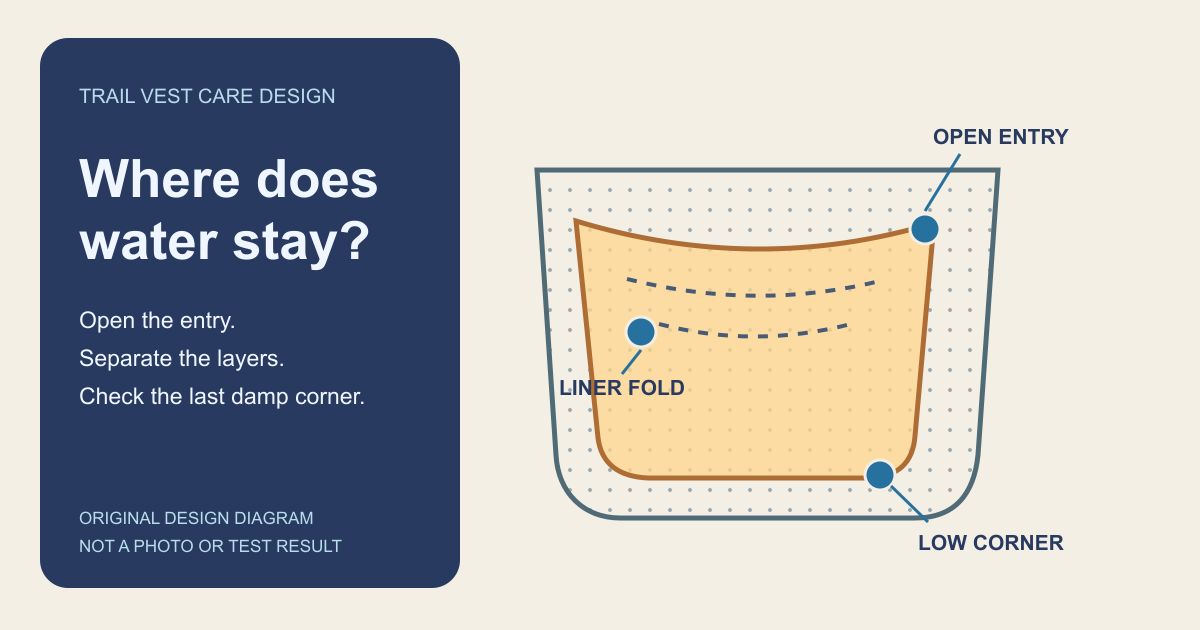
A running vest can feel dry on the outside while a folded pocket or bound seam still holds moisture. When designing for wash care, make each storage cavity easy to expose and inspect. Then compare the places that stay damp with the vest resting in the position a runner will actually use at home.
Key takeaways
- Confirm the approved wash and drying conditions before comparing samples.
- Watch how pocket mouths hang when the vest is empty, not how they stand open on a bench.
- Check the last damp area, not just the time when the outer face looks dry.
- Compare drainage, running retention and stretch after any construction change.
01
Separate the fabric shell from the hydration system
Start the review with the shell empty. Take out the removable flasks and reservoir according to the product instructions and set them aside. Their valves and hose have a different care process. The question here is how water leaves the stitched pockets, reinforcements and overlapping layers of the vest itself.
A product's own care label governs cleaning. Never infer that a vest can be tumble dried, machine washed or turned completely inside out from the fabric name. For a prototype, agree a care method with the material and trim suppliers before wetting samples. Compare designs under that same method rather than changing the wash and the pocket in one round.
Map the cavities before washing
With the vest dry, draw the back compartment, front flask sleeves and any smaller lined compartments. Mark where the user can reach and where layers touch when the garment hangs empty. Include covered zipper ends, pocket corners and the binding under an overlapping flap. The surface that dries first is rarely the only one worth checking.
02
See what closes under its own weight
A front pocket can stand open while stretched over a chest and collapse flat when the vest is on a hanger. Open the closures that the care instructions permit, then let the empty garment hang or rest as instructed. Look straight into each entry. Note which opening stays parted and which one folds against a liner.
With a deep sleeve, a hand may reach the mouth but not the bottom. With a short zipper at the top of a wide pocket, two layers can still press together at the far corners. Before adding another seam, test whether a slightly longer opening, a different orientation or a more accessible lining corner lets the user expose that location.
Do not solve an air-path problem with a drain hole
An opening near a low point can let free water leave, but it will not separate two wet surfaces pressed together. A mesh panel can give another way for air to reach a cavity, yet may change what the pocket can retain or how dirt enters. Use drainage and layer separation as separate questions, and check both after the change.
If the pocket has a weather-protection job, an extra opening may defeat it. Keep that function in the sample brief and verify it again. If a cavity still needs a lining, try a better opening or another resting position before replacing the lining with an open pocket.
03
Pick a support position a runner can repeat
Try the care-approved drying position on a household hanger or rack rather than relying on clips spread across a factory bench. Let the garment settle. Find out whether the empty shape traps a folded wing against the back and whether an adjustable strap pulls the neck opening into a bunch.
If the vest includes a hanging loop, check that it supports the wet, unloaded garment without concentrating distortion on one narrow stretch panel. Do not label such a loop as a carry handle unless it has been specified and tested for that job. A position that needs a special jig or a hand holding a pocket open may not transfer well to daily use.
04
Compare like for like after a controlled rinse
Use matched samples, or compare one change at a time on the same material set. Note the dry weight of each shell and its condition, then apply the agreed wetting and drip routine. Record the ambient conditions and resting position. Run samples together where possible, away from direct heat and without placing one in a stronger draft.
At the same planned intervals, weigh each sample if the scale can resolve the differences. Mass shows the overall trend, not where the water is. Open the same locations and check for damp transfer using an identical clean blotting material at each one. Record a simple observation such as dry to the touch, damp transfer, or a visible bead.
Handling can alter the comparison. Keep the number of checks and the time each pocket is held open consistent, or use a separate sample for repeated inspection. A time written next to one sample is only meaningful with the setup. It does not become a drying-time claim across climates, drying positions or garment sizes.
| After-rinse observation | Next sample change to test |
|---|---|
| Free water stays in a low, reachable corner | Compare the approved resting position and pocket geometry |
| The mouth opens but the liner clings | Compare an entry that lets the user separate the layers |
| Only the covered zipper end remains damp | Check the local cover overlap and access without forcing the slider |
| A stretch opening gets misshapen as it hangs | Spread the support area or review approved flat drying |
05
Recheck the running job once the shell is dry
Load the same flasks and small items used in the original fit review. Check pocket recovery, the security of small items and the effort to close the zippers. A pocket that dries more readily but no longer keeps a partly empty flask in place is not the same design delivered faster. Log that trade rather than letting one result stand in for the other.
Keep an inspection map with the approved sample: opening positions, drying setup, checkpoints and the location that dries last. In the instructions, describe the openings the wearer should expose and any limits on heat, support or opening direction. The reservoir maintenance access guide covers removal for a separate care routine. Use the flask pocket fit checks to confirm that the revised pocket still works on the move.
Discuss your bag development project
ANSON XIE
General Manager & Founder
Quanzhou Junkai Pengda Special Equipment Co., Ltd.
Email: ansonxie@jkpdtime.com
Phone: +86 177 5095 3355
WhatsApp: +86 177 5095 3355
Factory address: Floors 2–4, Building 1, Phase I, Huixin Intelligent Manufacturing Industrial Park, Hui'an County, Quanzhou, Fujian, China