
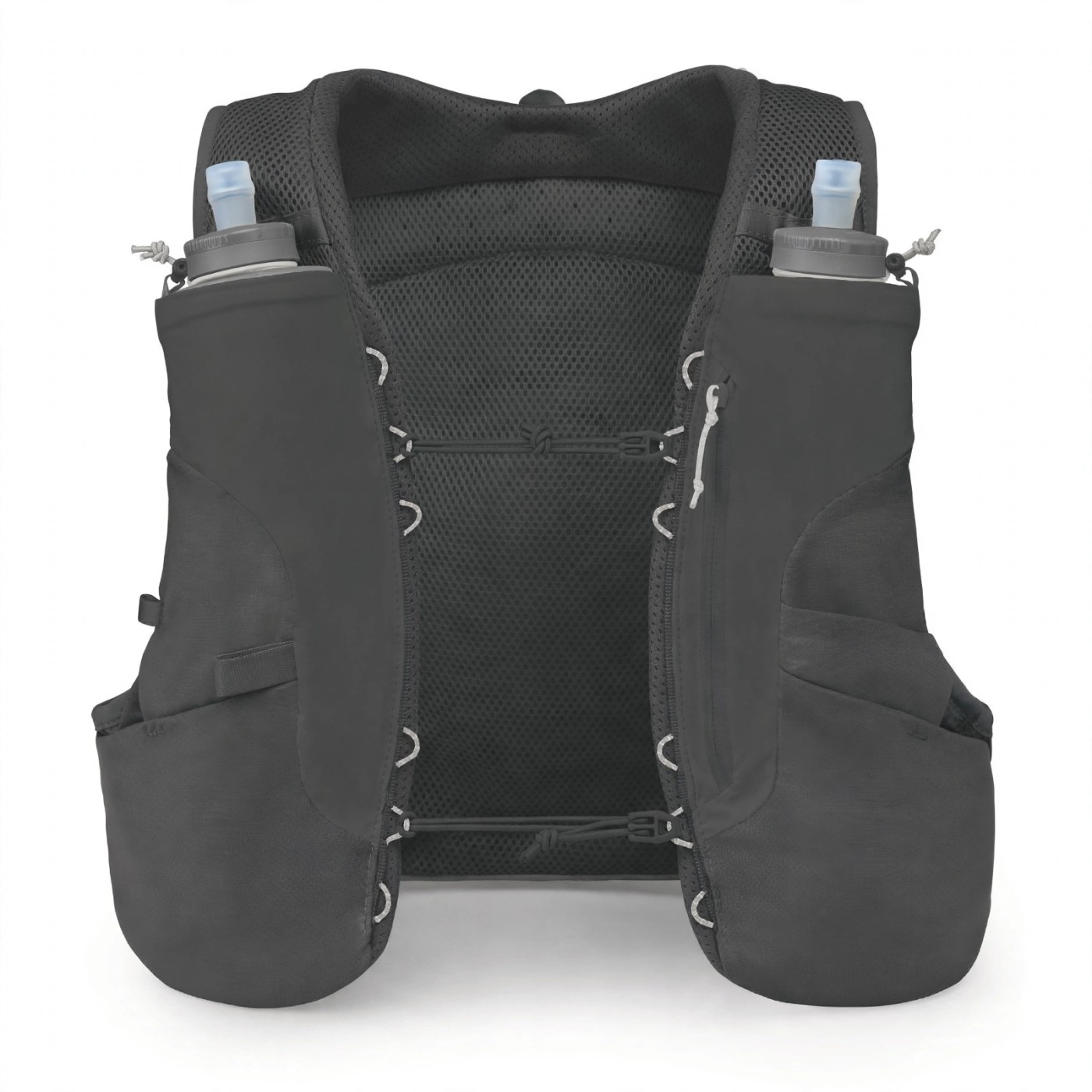
A flask-first vest can also carry a rear reservoir, but a spare pocket alone does not make it compatible. The rear sleeve, top suspension, hose path and front valve keeper have to work together. The same vest should still sit well when all of that hardware is idle and the water moves back to the chest. This design analysis treats those as two separate loading conditions.
| Design zone | Flasks only | With a rear reservoir |
|---|---|---|
| Front storage | Flasks supported by pockets and neck keepers | Keep flask and snack access clear of the hose |
| Rear compartment | Rear space is available for the planned kit | Allow room for the filled reservoir and its connector |
| Adjustments | Set the two chest closures with the rear sleeve empty | Recheck fit and travel as the rear water load drops |
01
Define what changes between the two layouts
Choose the intended flask shapes and reservoir dimensions before drawing the pattern. A reservoir that slides into an empty sleeve may become much thicker when filled. Check it with the rear gear compartments also packed, including the layers a runner would normally carry. Record whether the reservoir changes access to those compartments or pulls the back panel away from the torso.
Treat the nominal gear capacity and water capacity as different quantities. Do not assume that adding water leaves the same space for clothing. The design brief should say what kit the vest must still hold in each configuration.
02
Hold a flask at its neck and across its body
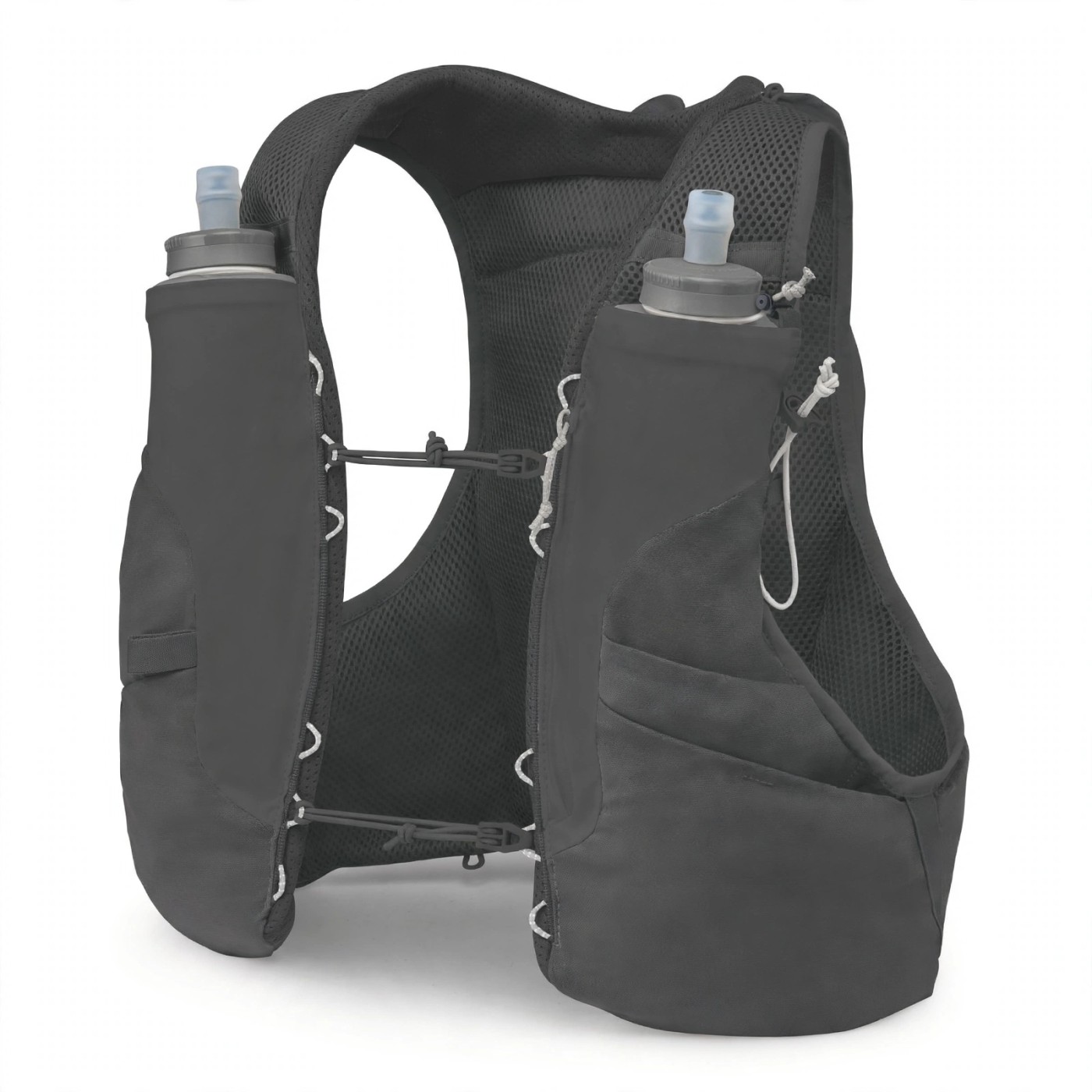
A neck cord can keep a flask from slipping downward as it empties. It does not necessarily prevent the body of a partly filled flask from moving sideways. A separate support wing behind the flask gives the patternmaker another surface to tune. Compare the pocket with and without the wing using the same flask and fill state.
If a wing is removable, check that its edges are comfortable against the body and that reinstallation is obvious. When a taller or wider flask is proposed, confirm that its cap remains reachable and does not press against the chest adjustment.
03
Give the reservoir a defined home
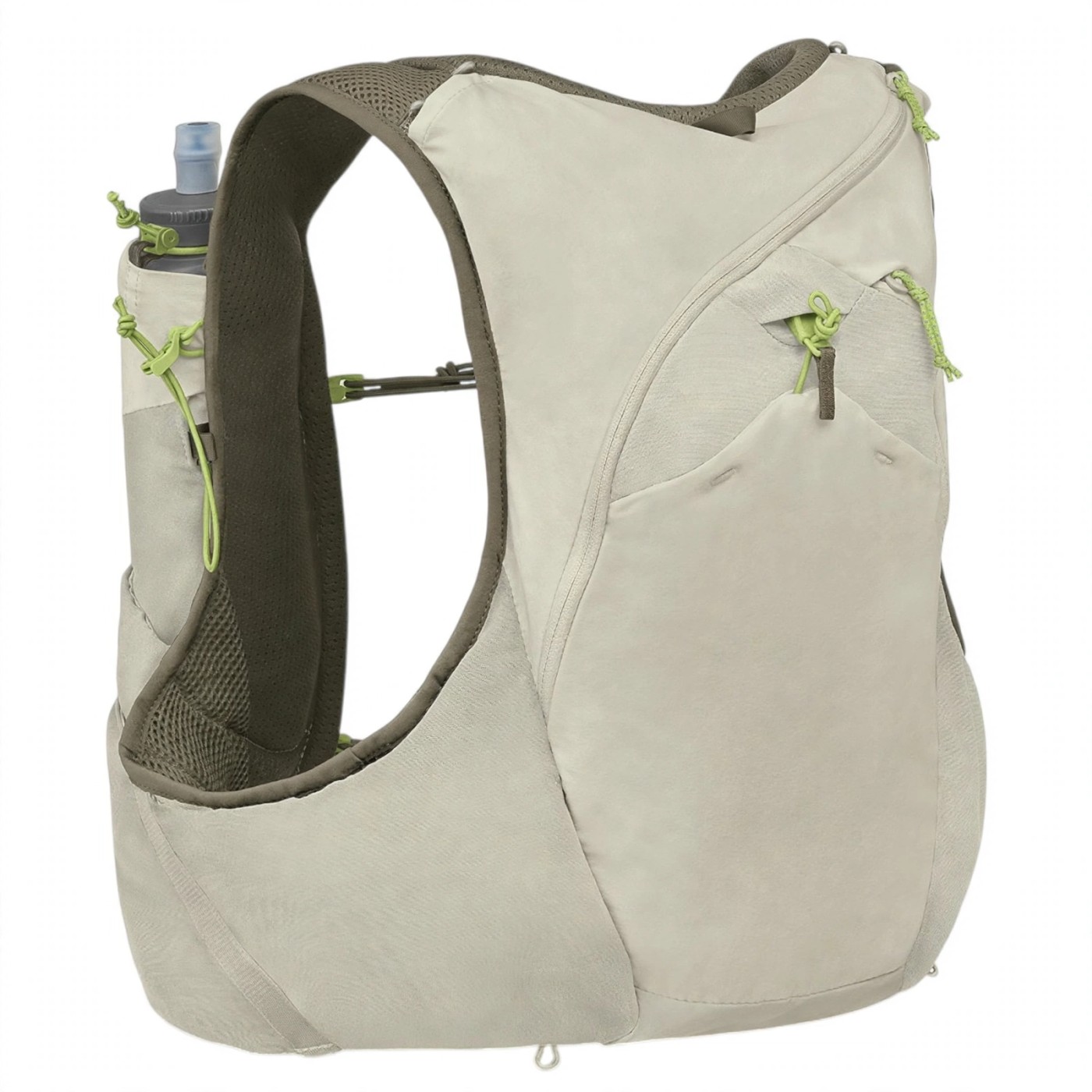
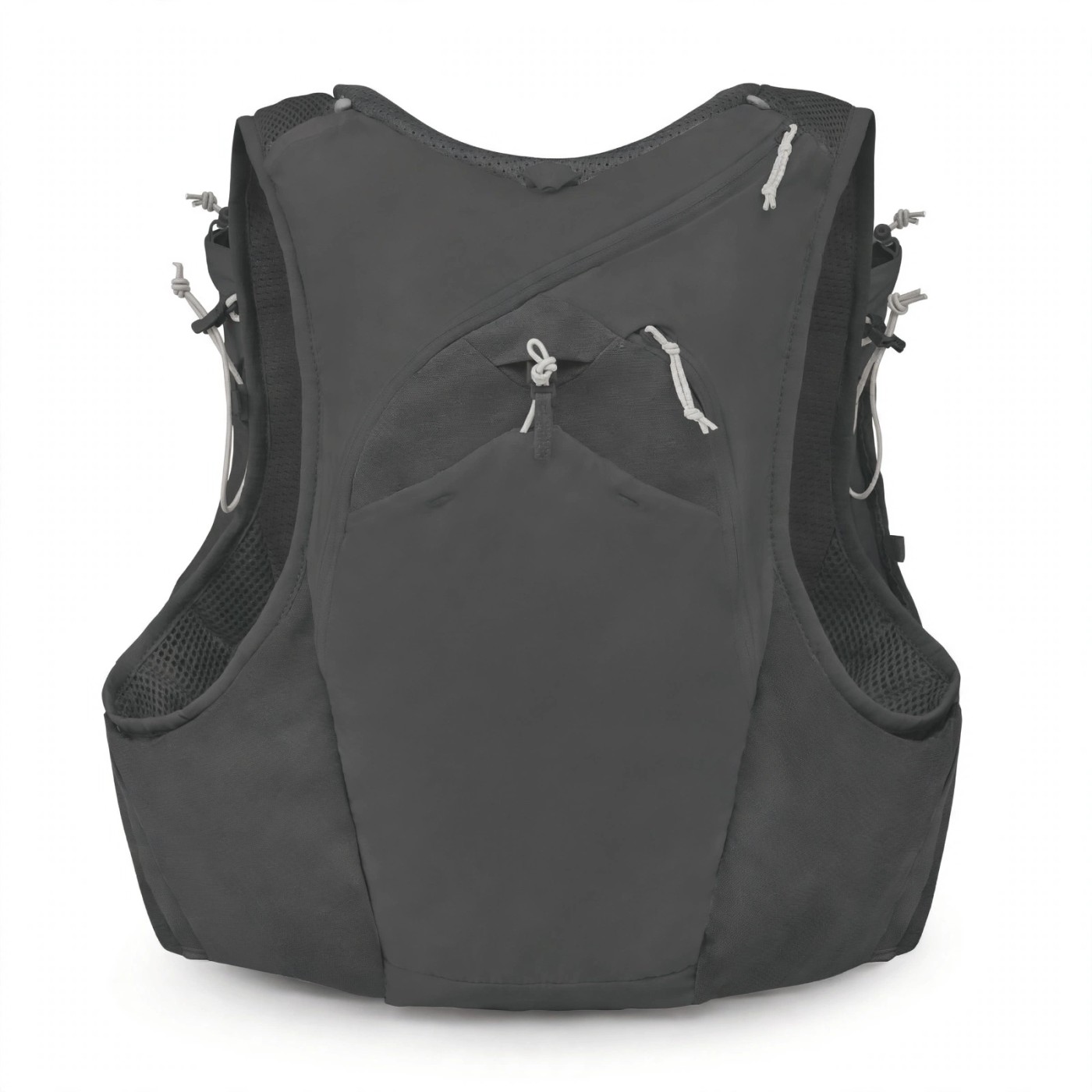
A separate rear sleeve can keep the reservoir from sharing a loose compartment with clothing. Suspend the reservoir from a top point that matches its attachment, then check that the lower edge and outlet are supported without folding. The sleeve opening has to let the user insert and remove the filled component without fighting the zipper or loading the hose connection.
Run the hose through the shoulder area to a repeatable parking point at the front. A magnetic catch is one option; check that it does not release during normal arm movement and that the hose can still be removed for cleaning. With the reservoir out, the idle routing and attachment should not interfere with packing.
04
Separate quick access from closed storage
Open stretch pockets provide fast access to items that are easy to grip. A small zip compartment is a better candidate for keys or a phone than an opening sized mainly for snacks. If a whistle or key tether shares that pocket, assign a parking point where taking one item out will not pull another loose.
At the back, a quick-stash pocket and a closed compartment do different jobs. Check the quick-stash opening with an extra layer fitted; it should not pull the reservoir opening out of shape. Give folded poles their own route and check that the retainers do not block the front flask or zip.
05
Fit the closures in both loading conditions
Two adjustable elastic chest closures can let the pattern accommodate movement at more than one height. The closure still needs enough adjustment when the front flasks are full and the rear sleeve is empty, and when some of the water moves rearward. Compare the pressure near the sternum and along the side panel, not just the apparent tightness.
Structured stretch mesh and a softer edge binding may do different jobs. Specify where the vest should extend and where it should stay stable. Material and finish claims require supplier documentation; the construction alone cannot establish a particular fibre content or water-repellent performance.
06
Approve the configuration change, not only the fit

Run a sample check in two states: front flasks only, and the intended filled reservoir with the remaining front load. Repeat after water is removed from one side. Ask the wearer to retrieve a flask, re-park the valve, open the valuables pocket, put a layer away and remove the reservoir for refilling. Note which steps require a second hand or a change in adjustment.
Use the same garment layers and gear for comparisons. If a movement problem appears, identify whether it starts at the pocket, clasp, hanger or hose exit before tightening the whole harness. These are proposed development checks, not field-test results.
Related guide: Hydration Sleeve Compatibility: Hangers, Filled Shape and Access
Discuss your bag development project
ANSON XIE
General Manager & Founder
Quanzhou Junkai Pengda Special Equipment Co., Ltd.
Email: ansonxie@jkpdtime.com
Phone: +86 177 5095 3355
WhatsApp: +86 177 5095 3355
Factory address: Floors 2–4, Building 1, Phase I, Huixin Intelligent Manufacturing Industrial Park, Hui'an County, Quanzhou, Fujian, China