
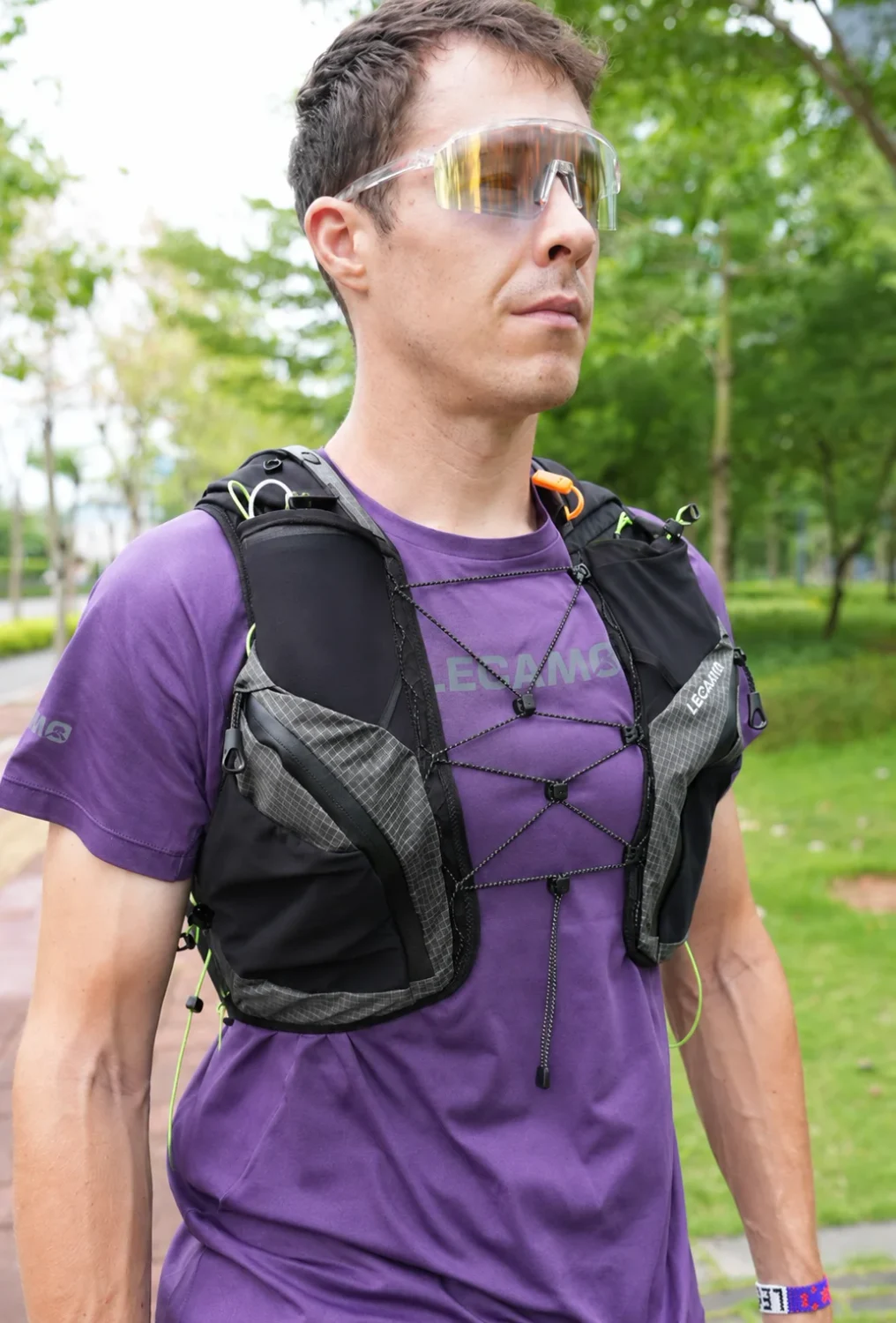
If your chest measurement lands on the boundary between two trail running vest sizes, try both with the gear you will actually carry. A smaller vest can feel secure on a hanger or during an empty fitting but leave little room for a shell or filled front flasks. A larger one can feel better when fully loaded yet allow the upper back to lift after the water and food are gone. The deciding factor is which size stays usable across those states without having to pull its adjustments to an extreme.
For product developers, this is also a way to catch a grading problem. An overlap in the measuring chart is not necessarily an overlap in usable fit. If two neighboring sizes fit the same chest circumference but one places the front pockets too far out or lifts the collar into the neck, another click of tension may not solve it.
01
Use the chart to choose candidates, not a winner
Start with the size guide for the cut you are considering. If two adjacent chest ranges meet or overlap at your measurement, set aside both sizes for a loaded fitting. The chart can identify candidates, but it cannot tell you where the collar, pocket mouths and chest closures will sit once the vest is packed.
Follow the measurement method in the size guide. Then bring both the thinnest top and the outer layer you expect to wear under the vest. Do not add a clothing allowance to a chart based on body measurements. Put on each layer and check what adjustment the loaded vest actually has left.
02
Pack both sizes the same way
Use the same filled front flasks, phone with its case, and rear kit for both candidates. Keep the contents in equivalent locations and put the same amount of water in each flask. If you use a rear reservoir, include it in the comparison instead of evaluating a front-only setup you will not use. A bottle sticking higher out of one vest may reflect the pocket pattern, but it can also reflect a different fill or a different position in the pocket; eliminate those differences before drawing a conclusion.
Set each vest to a comfortable starting position and note where its adjustment sits. Mark the position with a bit of removable tape if you are evaluating prototypes. You are not trying to match the same strap length across sizes. You are trying to see how much room each vest has left to loosen for the thicker layer and tighten after the load reduces. A cord that still has a long free tail may not have meaningful adjustment left if the front panels already touch.
03
Compare the two states that create opposite problems
Full water, full kit and the thicker layer
Start with the fullest load and clothing layer that make sense for the intended use. Close the vest, take a few normal deep breaths and move your arms through a comfortable running motion. Reach for a bottle and return it without unfastening the vest. Notice whether the shoulder line remains in place, whether a filled flask moves into the arm path, and whether a pocket mouth closes off when the adjustment is snug. A comfortable chest measurement alone does not guarantee any of those things.
Less water, less food and the thinner layer
Repeat on the thinner layer with part-full or depleted flasks, a lighter rear load and the same mandatory items still packed. Take a short, controlled walk or jog on an unobstructed surface if you can. Watch where the movement begins: the bottle inside its pocket, the rear body of the bag or the entire harness lifting away. Tightening the chest may make one kind of movement less obvious while introducing pressure or narrowing the reach to a pocket. Judge the adjustment and the location of the moving part separately.
04
Record where the vest sits, not just how snug it feels
Use a front and back reference view for each size. Look at the position of the neck opening, lower side edges, pocket tops and closures. At a shared chest circumference, two wearers can have different shoulder breadth, torso length and front-body shape. A grade that grows mainly around the sides can leave those landmarks in an awkward position even though the tape measurement still falls within range.
Check both sides rather than assuming they will behave alike. A phone on the left and gels on the right can pull the harness differently even with equally filled flasks. Then swap the phone to the other side: if the restriction moves with it, investigate pocket loading before attributing the difference to the size pattern.
For example, imagine the smaller sample holds steady after the bottles empty, but its side edge presses into the arm path when a filled flask is inserted. The larger sample clears that path but lifts at the rear when its load drops. Test whether a different pocket angle solves the first problem while keeping the smaller harness, or whether the larger harness needs a change in rear-panel shape. Do not assume an extra centimeter of body width would fix both. Those are separate revisions with separate observations.
05
Turn the fitting into a decision someone else can repeat
Choose the size that allows the required breathing and reach, keeps the important contact points clear and leaves workable adjustment at both ends of use. If neither option does, try a different cut. Treat the chart as a shortlist until you have compared the two sizes under load.
For a development team, capture the body measurement method, clothing layers, exact load, size labels, adjustment positions and what happened in each state. Review neighboring sizes near their boundary instead of approving one middle size and assuming the two ends will behave. Establish what counts as acceptable movement with the intended wearers and loads before changing the pattern. That makes the next sample a meaningful comparison instead of another empty fitting.
See also trail vest seam comfort for reviewing contact points and soft flask pocket fit for the separate question of whether a flask stays put as it empties.
Discuss your bag development project
ANSON XIE
General Manager & Founder
Quanzhou Junkai Pengda Special Equipment Co., Ltd.
Email: ansonxie@jkpdtime.com
Phone: +86 177 5095 3355
WhatsApp: +86 177 5095 3355
Factory address: Floors 2–4, Building 1, Phase I, Huixin Intelligent Manufacturing Industrial Park, Hui'an County, Quanzhou, Fujian, China