
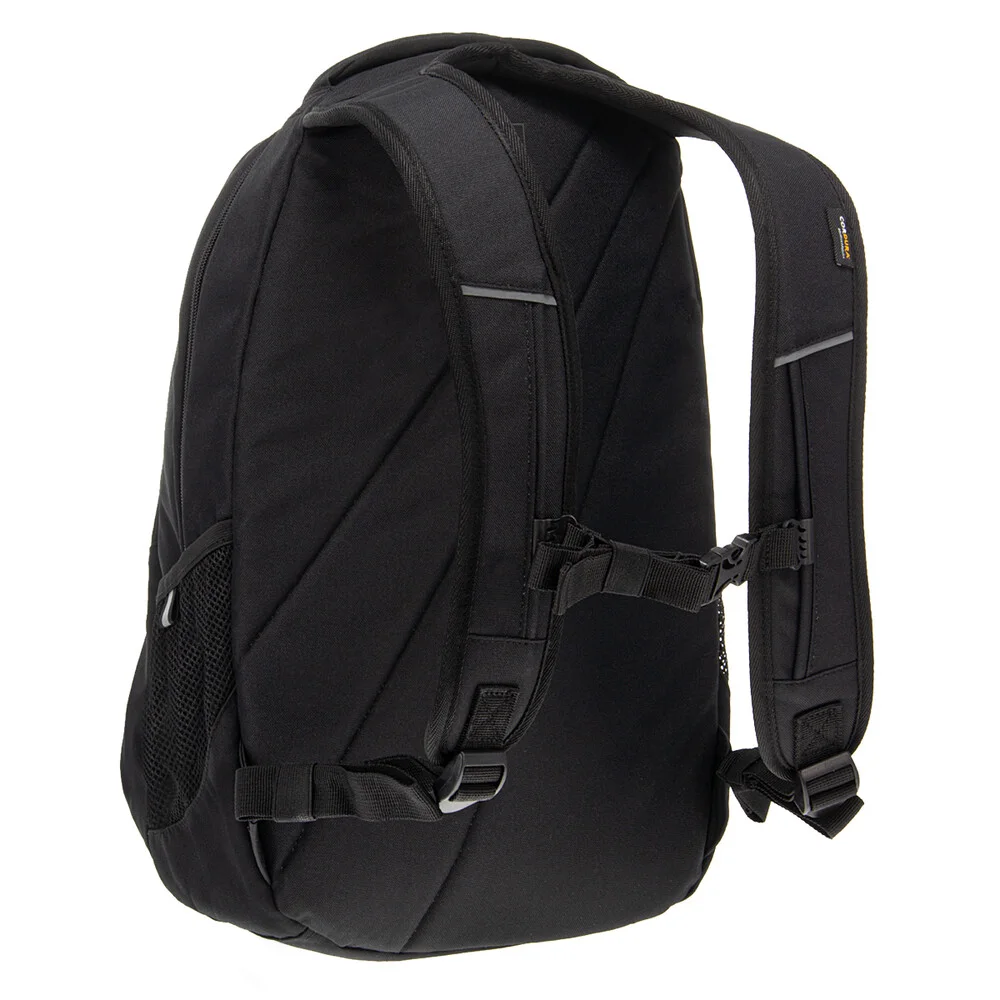
A student backpack can look correct when it leaves sewing and still need a separate packed-storage review. Folding may place a dark zipper tape against a light synthetic trim that never touches it when the bag is upright. If the surfaces remain together, the relevant question is compatibility during contact, not simply whether the backpack passed a quick visual inspection.
The Arsuna student backpack JK-086 is the starting point for the layout discussion. The photograph is product context only: it does not establish the zipper brand, coating chemistry or storage performance of that model. The proposed checks below apply when a development brief introduces contrasting zipper tapes and coated or synthetic trim materials.
01
Identify the staining question before requesting a report
In its zipper care FAQ, YKK Korea describes dye migration involving zipper tape dye and plasticizers, adhesives or oily chemicals in materials such as vinyl chloride, synthetic leather and plastic-coated cloth. It recommends separating articles with paper and careful storage. This is a useful manufacturer warning about material interactions, not a guarantee that any paper or any zipper-material combination will be suitable.
Ask suppliers which exact zipper tape, dye treatment and contacting trim are proposed. The label “synthetic leather” is not enough to identify a formulation, and a photograph cannot establish whether a surface is PVC, PU or another construction. Request traceable material references and the suppliers' compatibility guidance for the intended combination.
Keep several nearby questions separate. A rubbing-colorfastness result addresses its stated rubbing procedure; it should not silently become approval for prolonged static contact with a different material. Likewise, coated fabric blocking concerns surfaces sticking together. A stain can require investigation even if the bag unfolds without sticking.
02
Find the contacts created by the shipping fold
Use a production-representative backpack and follow the proposed packing instruction. Close the compartments, position the shoulder straps, flatten the body and place any protective material exactly as intended. Examine where zipper tape, coated trim, printed surfaces and packing materials meet. Record the contact before the bag is inserted into its final packaging.
Do not inspect only the obvious front pocket. A folded shoulder strap may bring its trim against a zipper on the rear side; a pocket flap may turn inward; adjacent backpacks may touch if their individual protection shifts. These are possible design situations to check, not claims about the pictured product.
Keep a pair-by-pair record
For each relevant contact, record the two material references, colors, exposed faces and location. A simple photograph with a location code is enough to connect the packed arrangement to a sample record. Include the separator or bagging material as another contacting material rather than treating it as chemically invisible.
Distinguish contacts that exist in normal use from contacts created only for shipment. A revised shipping fold may address the latter without changing the product. It cannot resolve a contact that is unavoidable every time the backpack is closed or carried. That distinction helps the buyer choose between a packing revision and a material or design change.
03
Agree on a comparison that can answer the question
Ask the material and zipper suppliers, with a laboratory where appropriate, to help define the evaluation. State the intended storage conditions and the information still missing about transport or warehousing. Record the exposure conditions, duration, contacting faces and assessment method actually used. Do not invent a universal heated-storage recipe for every school bag.
Retain unused references from the same material batches. Prepare clearly identified comparisons for the original contacting pair and any proposed alternative, such as a changed trim or separator. Keep their orientation and exposure records consistent enough to interpret differences. If a standard method is specified, let the laboratory follow that method and report any deviations explicitly.
An accelerated exposure does not automatically prove a particular number of months of warehouse storage. Without a justified correlation, report what was done and what was observed. A shorter development check can help compare proposals while still leaving a broader storage claim unresolved.
04
Assess a mark without erasing the evidence
Agree on the visible acceptance criteria before samples are opened. Inspect the light and dark surfaces against the retained references under consistent viewing conditions. Locate any mark relative to the original contact, and photograph both sides before wiping, washing or applying a cleaner. Cleaning may change the very evidence the supplier needs to investigate.
Record whether the observation is a color change, a surface deposit, damage or an uncertain mark. Do not diagnose migration solely because two surfaces touched. Ask the relevant suppliers or laboratory to investigate competing explanations if the cause is unclear. Preserve the material identity and batch information with the physical samples.
Avoid selective approval
If one color pairing looks acceptable and another does not, record separate decisions. Passing a dark-on-dark combination does not approve a pale trim beside the same tape. Equally, changing a trim's visible color without confirming its material reference may introduce a different construction that needs its own review.
For a hypothetical contrasting-color backpack range, the buyer could approve only the evaluated combinations while holding the unresolved one. The purchase record should identify those boundaries explicitly. “The backpack passed” is too broad if the evidence covers only one colorway and one folded arrangement.
05
Evaluate the separator as part of the packing process
A separator can be a practical candidate when the troublesome contact occurs only during packing. Specify its material, size and placement, then evaluate the revised packed sample. Check that it stays between the intended surfaces through the handling sequence used in the trial. A loose piece that moves away does not provide the protection shown in a carefully arranged photograph.
The trade-off is operational as well as visual. A separator adds a material and a placement step. A different fold may remove the contact but change pack dimensions or presentation. A material substitution may simplify packing while requiring appearance and construction reapproval. Compare these options against the actual unresolved contact, not a blanket preference for more packaging.
Do not describe an unverified separator as a permanent cure. If approval depends on it, make that dependency visible in the packing specification and purchase release. Keep the original failed or unresolved material result intact; the revised packing trial provides additional evidence rather than rewriting the earlier result.
06
Close the decision with traceable purchasing details
Bring together the zipper and trim references, color pairings, sample IDs, exposure records, assessment, packing photographs and final decision. Identify who approves changes and which substitutions require another check. A new tape dye lot, trim formulation or separator supplier should be considered against that agreed change-control scope.
Link the contact-specific decision to the broader export packaging approval. That prevents a later carton-efficiency change from restoring a contact that the approved fold had removed. Keep instructions understandable to the packing team, including the location of any essential separator.
For a student backpack development inquiry, send the proposed color combinations and folded shipping arrangement through the contact page. The useful starting question is which materials will remain in contact and what evidence will support that exact combination. A good-looking unpacked sample is the beginning of that review, not its conclusion.
Discuss your bag development project
ANSON XIE
General Manager & Founder
Quanzhou Junkai Pengda Special Equipment Co., Ltd.
Email: ansonxie@jkpdtime.com
Phone: +86 177 5095 3355
WhatsApp: +86 177 5095 3355
Factory address: Floors 2–4, Building 1, Phase I, Huixin Intelligent Manufacturing Industrial Park, Hui'an County, Quanzhou, Fujian, China