
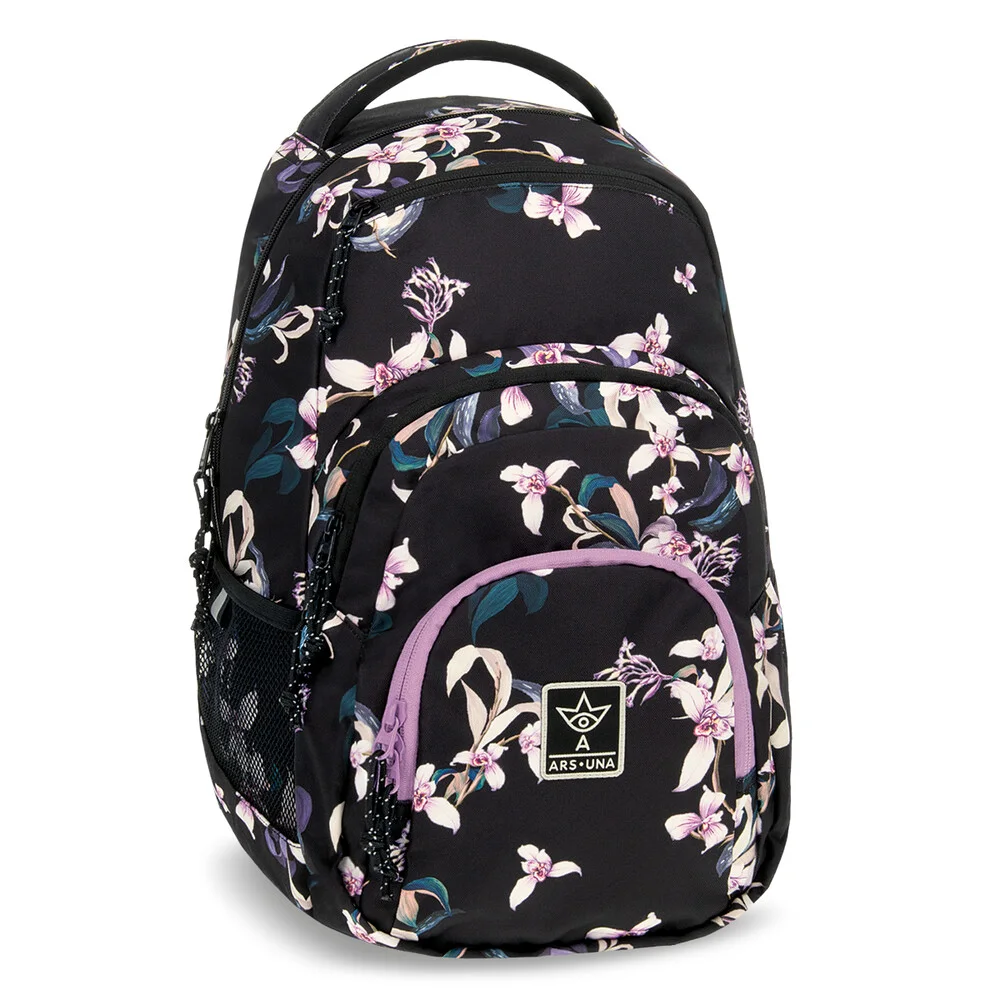
A pocket can match the front panel on the approval sample and look like a replacement part later. The question is not just whether the starting colours agree. It is whether two exposed parts change in a way the buyer can accept. On a school backpack, start with the most conspicuous boundary: the front pocket against the shell, the binding around a printed panel, or a band of webbing across a plain face.
Put two decisions on the development sheet. First, is the colour change of each material acceptable after the agreed exposure? Second, does the combination still work? An acceptable result on the shell alone leaves the second question open. Equally, a print and its binding can move in the same direction and still look like a pair even though both have changed too much individually.
01
Pick a boundary a customer would actually see
Lay out the backpack as it will be sold. On a dark printed bag, the small plain area around a zipper may provide a stronger visual reference than the largest patch of print. Follow that edge across the pocket corners. Note exactly which materials touch: the shell print, a folded binding, the zipper tape or an applied strip. Do not label all of them “black trim.” They can be different purchasing items with different colour specifications.
Mark the boundary on a front-view photograph and add a swatch key. For a multicolour print, identify a repeat with the relevant colours; a specimen cut entirely from the dark background cannot describe what happened to a pale motif. Keep an unexposed piece of each submitted material. Record the face, lot, finish and intended placement before the samples leave the cutting table. If the front pocket comes from the same roll as the shell, record that too. Duplicating identical specimens under different part names is less useful than investigating a genuinely different trim.
02
Ask what the light-exposure report actually covers
AATCC TM16.3 describes xenon-arc options for textile colourfastness to light. Its public scope distinguishes alternating light and dark from continuous-light options. It also cautions that the relationship to exposure in use has to be established by the contracting parties. A method name without an option and exposure endpoint is therefore a poor basis for comparing two supplier reports.
For the lab request, list the component codes, colourways and specimen faces. Agree with the laboratory on a suitable method, option, endpoint, assessment and reporting convention, and put the agreed details on the request. Ask whether a narrow binding or zipper tape provides a suitable specimen. If it does not, ask what can be submitted from the same production material and how the limitation will appear in the report. A wider piece in a similar colour from another source is not the same specimen.
Keep the result attached to the tested material. A report on plain shell fabric is not evidence about the printed face applied later. A report on one colourway is not automatically a release for the range. Nor does a colour change result establish that the textile has retained its breaking strength. Avoid turning a particular laboratory exposure into a promise that a backpack will keep its colour for a school year.
03
Read each part first, then rebuild the pair
When the specimens return, check the IDs against the sample request before making a judgement. Compare each exposed piece with its own retained control under the agreed viewing conditions. Then place the exposed shell and exposed trim side by side in their intended orientation. Keep the unexposed pair beside them. This second layout is a design review, not a substitute for the lab's individual assessments.
Imagine that the shell looks slightly warmer after exposure while the binding looks cooler. The initial pair may have matched closely; the new boundary may now read as a stripe. A single average grade or a photo of one isolated specimen would miss the practical issue. Conversely, deliberately contrasting trim does not need to match the shell. The buyer needs to decide whether the contrast remains intentional, not whether two different colours have become identical.
Keep a change in appearance separate from a change in colour
Turn a ribbed tape while leaving the shell still. If the apparent difference reverses as the tape turns, document the viewing direction and recheck the pair consistently before blaming the colourant. On a shiny print, record the finish as part of the specimen identity. A phone photo can help identify a boundary, but different lighting and camera processing make two separately captured images a weak release reference.
04
Choose the smallest useful correction
If the shell meets the agreed criterion and only the trim creates an objectionable mismatch, ask for an alternative trim in the same construction and verify the revised pair. Changing the entire shell to chase one narrow edge can disrupt other approved features. If the print itself changes unacceptably, switching to darker binding only hides the boundary; it does not correct the print. If both parts meet their individual requirements but the pair fails the design review, consider specifying deliberate contrast instead of demanding a tighter initial match.
Make the decision at the correct level. A revised zipper tape may affect more than colour: it returns as part of a zipper assembly and must still work in the approved pocket. A binding of a different construction may fold differently around a corner. Put the revised parts into a sewn sample before closing the change. Keep the original sample available until the buyer has seen which boundary improved and what else changed.
05
Write the release so it survives a reorder
Use a short record that another developer can follow: style and colourway, component and lot IDs, report reference and conditions, individual results, exposed-pair decision, and a photograph showing the location on the bag. Name the person who accepts a borderline appearance and say whether approval applies to that lot or to a defined ongoing control. A change of print route, trim supplier or exposed fabric is a reason to reopen the affected decision, not to discard unrelated approvals.
For a new colourway, start with initial shade approval before spending time on exposure comparisons. The questions are sequential: does the new student backpack look right at release, and do the materials that meet on its face remain a convincing combination under the conditions the buyer specified?
Discuss your bag development project
ANSON XIE
General Manager & Founder
Quanzhou Junkai Pengda Special Equipment Co., Ltd.
Email: ansonxie@jkpdtime.com
Phone: +86 177 5095 3355
WhatsApp: +86 177 5095 3355
Factory address: Floors 2–4, Building 1, Phase I, Huixin Intelligent Manufacturing Industrial Park, Hui'an County, Quanzhou, Fujian, China