
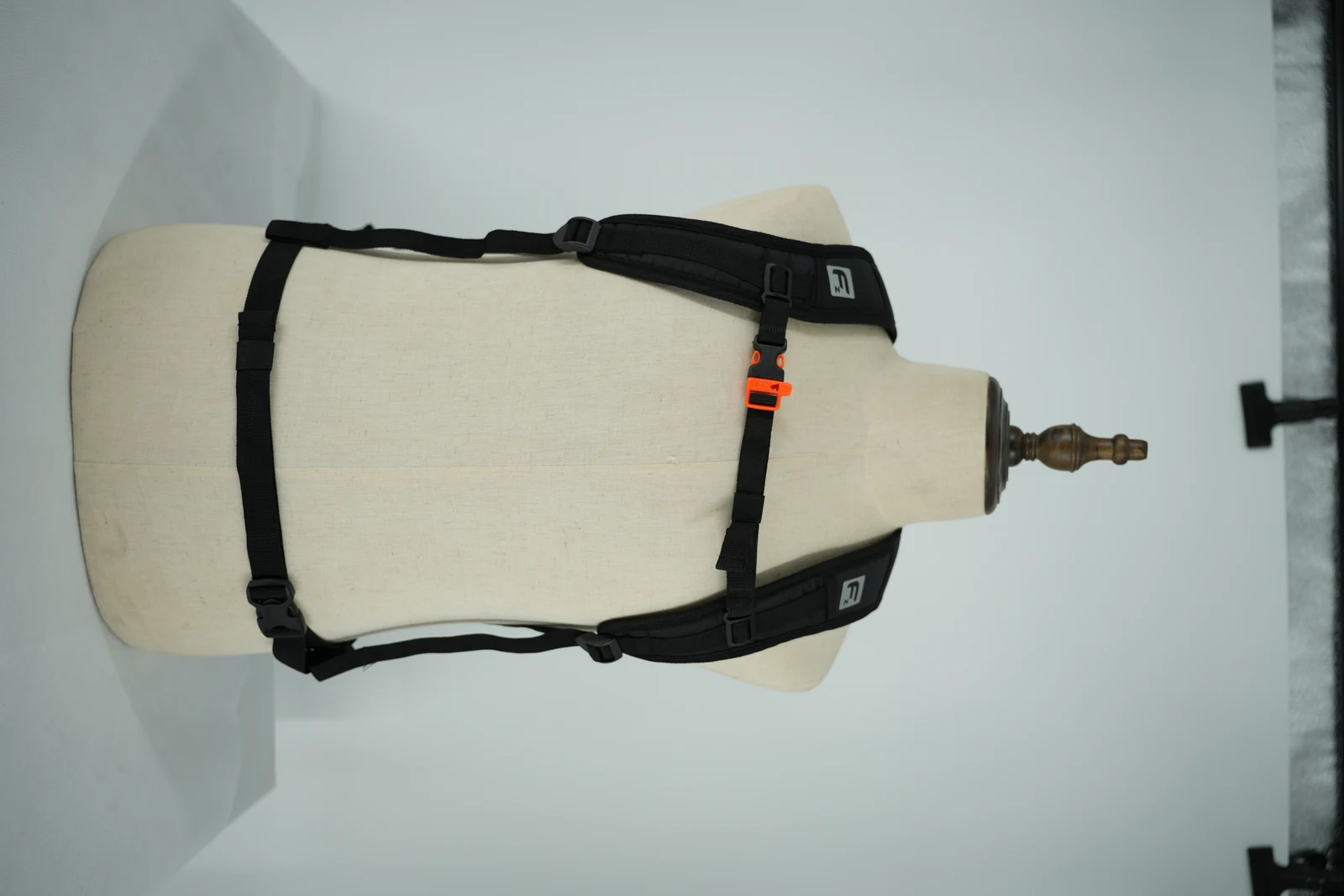
Chest and waist straps on a sports backpack need different jobs. The chest strap connects the shoulder straps; a lower belt controls another part of the relationship between the pack and the body. Effective transfer of load to the hips depends on the complete carrying structure and its fit, not simply on the presence of a belt.
Define stability and load-transfer goals separately before specifying connection points, contact areas and materials. A mannequin shows the layout. It is not a human fit trial or evidence of comfort, ventilation or measured load transfer.
01
Let the chest strap manage the shoulder straps
A chest strap connects the left and right shoulder straps and changes their relationship at the front of the body. It should work with the shoulder-harness route rather than being tightened continually to compensate for an unsuitable harness shape. Start with a shoulder arrangement appropriate to the intended user.
REI's daypack guidance distinguishes the functions: the chest strap connects the harness, while a hipbelt can help transfer some weight toward the hips. This general distinction is useful in a brief, but it does not establish that every narrow waist-level strap performs the same load-carrying task.
02
Separate lower restraint from load support
A strap intended to limit lower-pack movement needs a different development discussion from a belt intended to receive load. For the former, the intended movements and connection position matter. For the latter, consider pack support, the load path and the way the belt fits the body as a complete arrangement.
Adding width or a soft pad is not sufficient evidence of load transfer. Each material change should serve a defined structural role and be assessed under a specified loaded condition. Avoid turning a component's appearance into a claim about the carrying system. A belt can be visibly present while its contribution remains unverified.
03
Locate the belt through the position of the whole pack
Follow the lower belt from its attachment on the pack to its front closure on the sample. The front view shows the belt position. It cannot represent the movement, torso length or waist-and-hip shape of the intended users, and it should not be treated as a fitted-body result.
Compare the belt position on the intended range of people with the same agreed contents. If the whole bag sits too high or low, changing the belt's closed length may not resolve the issue. Reconsider shoulder-strap length, body length and connection location together instead of changing a single adjustment in isolation.
04
Put material where the task requires it
For a lighter construction, discuss webbing, contact pads and connection areas separately rather than adding thick layers across the entire back. An area primarily used for positional restraint needs defined contact conditions. An area expected to support load needs an appropriate structural plan before padding is selected.
If the sample uses mesh on the back, that construction alone does not demonstrate airflow, moisture movement or performance when compressed against the body. Material selection should account for actual coverage, loading and contact. The image is not evidence of a tested high-ventilation carrying system, regardless of the visible holes.
05
Review movement beyond the buckled display
The mannequin-front view shows a chest-level strap and a separate lower belt. Real use also includes raising the arms, turning, putting the bag on and releasing it. Consider whether either strap occupies space needed for a common movement and whether the two adjustment areas are easy to distinguish.
The adjustment sequence should follow the chosen carrying structure. Do not apply a heavily loaded backpacking-pack routine automatically to every sports bag. For a design without a corresponding load-support system, no percentage reduction in shoulder load should be promised merely because the lower belt can be tightened.
06
Match procurement language to the intended role
Keep the approved sample identifiable
The brief should distinguish target contents and load, required stability, the lower belt's planned job and the intended users. Photographs, material information and sample revision should describe the same condition. An orderly arrangement on a mannequin is a reference for layout, not a completed human-use evaluation.
These recommendations do not claim that JKPD has tested load transfer or ventilation for the pictured item. Company-library images retain original markings without implying a brand partnership. For more development topics, visit the JKPD blog.
Related: removable waist belt interface. See the photographed product reference.
Discuss your bag development project
ANSON XIE
General Manager & Founder
Quanzhou Junkai Pengda Special Equipment Co., Ltd.
Email: ansonxie@jkpdtime.com
Phone: +86 177 5095 3355
WhatsApp: +86 177 5095 3355
Factory address: Floors 2–4, Building 1, Phase I, Huixin Intelligent Manufacturing Industrial Park, Hui'an County, Quanzhou, Fujian, China