
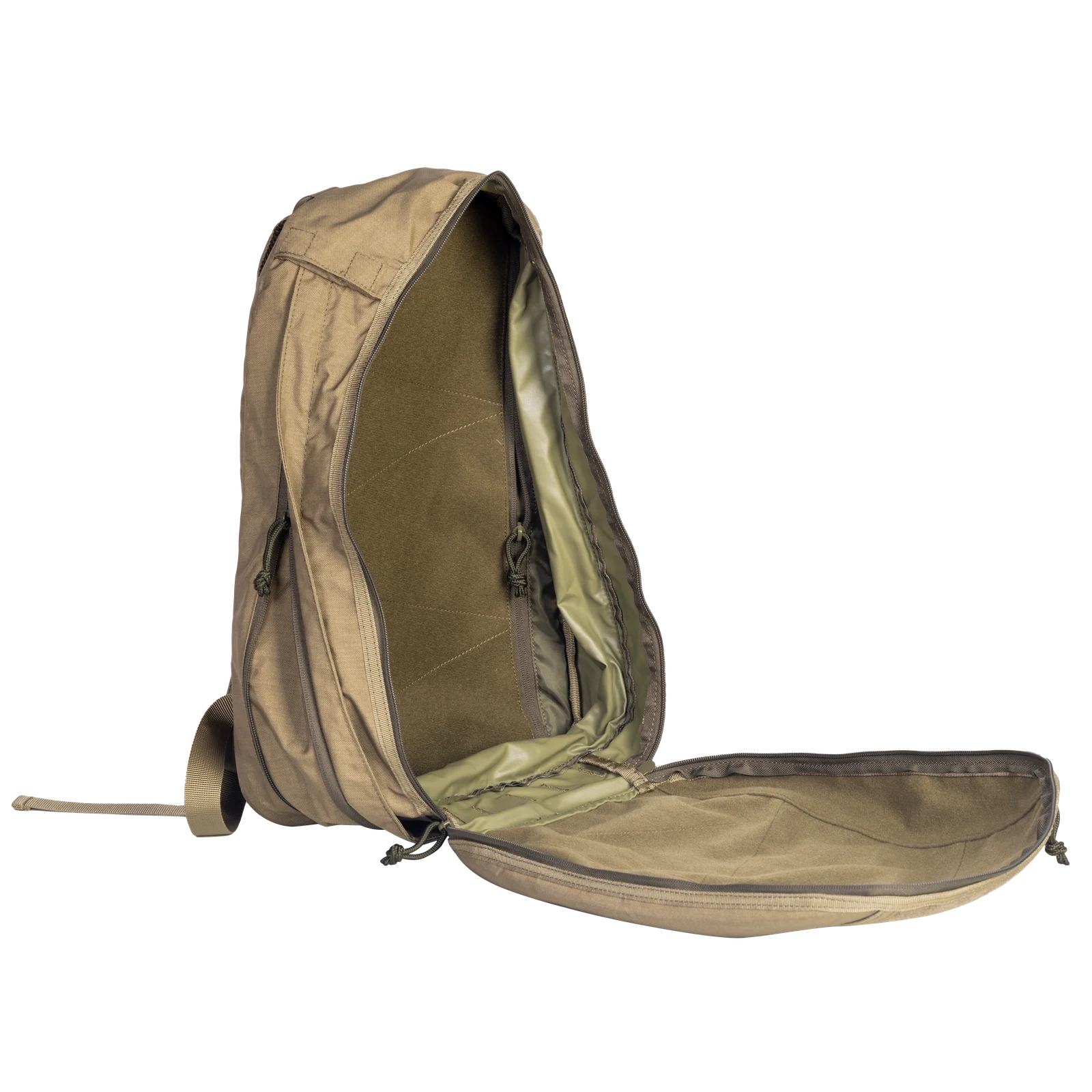
A modular pack interior needs a plan for wall area, packed module depth and hand access. An empty compartment can look spacious while a full arrangement of pouches obstructs closure or individual access. Treat the finished packing layout as an assembly rather than a set of matching rectangles.
Development priorities: map the usable field; measure modules when packed; preserve hand and zipper routes; review internal pockets and modules together.
01
Map usable wall space on the finished bag
Side seams, binding, zippers and curved upper edges can limit module placement. Mark the usable region on a photograph of the finished empty compartment. Identify edges and openings that should remain clear instead of using the flat pattern dimensions as the entire layout area.
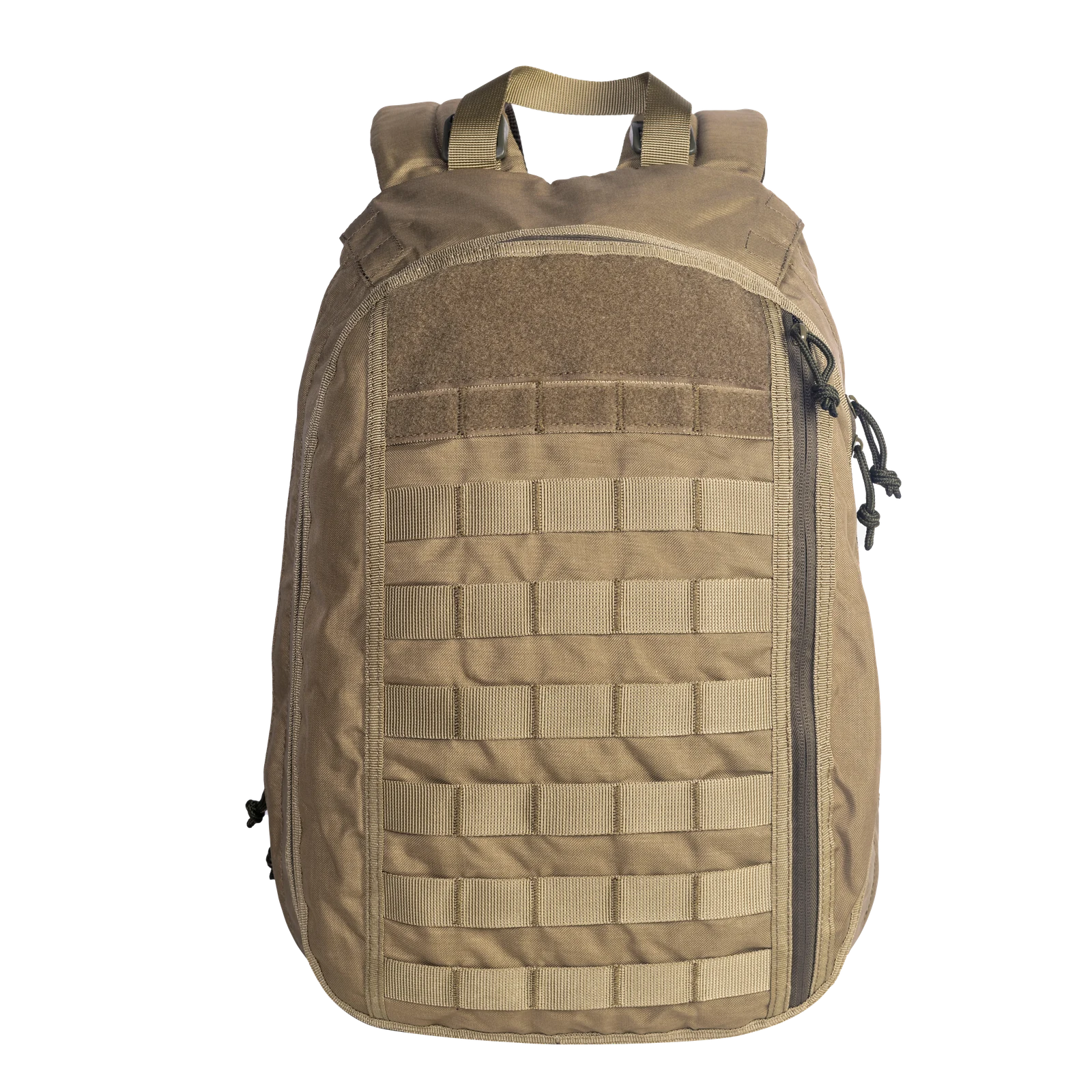
A manufacturer organizer-panel example illustrates a separate panel with a hook-and-loop back. It does not establish compatibility between that product and the company sample shown here. Pairing and fit require the corresponding components.
State the purpose of each proposed module before arranging it. A pouch removed as a complete unit needs a different access route from one opened while attached. This decision affects placement even when both pouches have the same fixing footprint.
02
Use packed modules to establish depth
A flattened pouch does not represent its occupied space. Two modules with similar back panels can bulge differently once filled. Place the intended packed modules in the proposed layout and inspect their relationship to each other and the centre of the compartment.
This empty-compartment view shows the interior wall, sides and lowered front panel. It provides a layout reference, but contains no installed modules. Surface appearance alone does not identify a fastening grade or establish load performance.
Begin trial placement with the actual packed pouches. Record the removal direction of each one. If a module catches an adjacent object during removal, consider placement or opening direction before increasing the fixing area. More attachment surface does not necessarily create more access.
Also inspect the front panel as the bag closes. A layout can fit across the wall while projecting too far into the closure space. Keep the planned contents unchanged during comparisons so a lighter packing arrangement is not mistaken for a better pattern.
03
Preserve routes for hands and closures
A gap between modules has to work for fingers and zipper pulls, not only for visual separation. Different opening directions may need different clearances. An orderly layout can still force the user to move several items before reaching one.
Ask a reviewer to remove a selected object, replace it and close its pouch without relocating neighbouring modules. Record any additional release or removal steps. Then decide whether those steps meet the intended workflow rather than assuming every extra action is acceptable.
The useful output is an identifiable obstruction and a proposed revision. For example, a pull tab hidden behind an adjacent pouch suggests a placement issue. A general request for more room provides less guidance about which part of the layout needs to change.
04
Review separate pockets with modules installed
An internal pocket may lie flat only because it is empty. If it will hold a booklet or other object, pack it while the modules are also filled. Observe the direction in which it projects and whether the intended access corridor remains available.
05
Revisit the layout after material changes
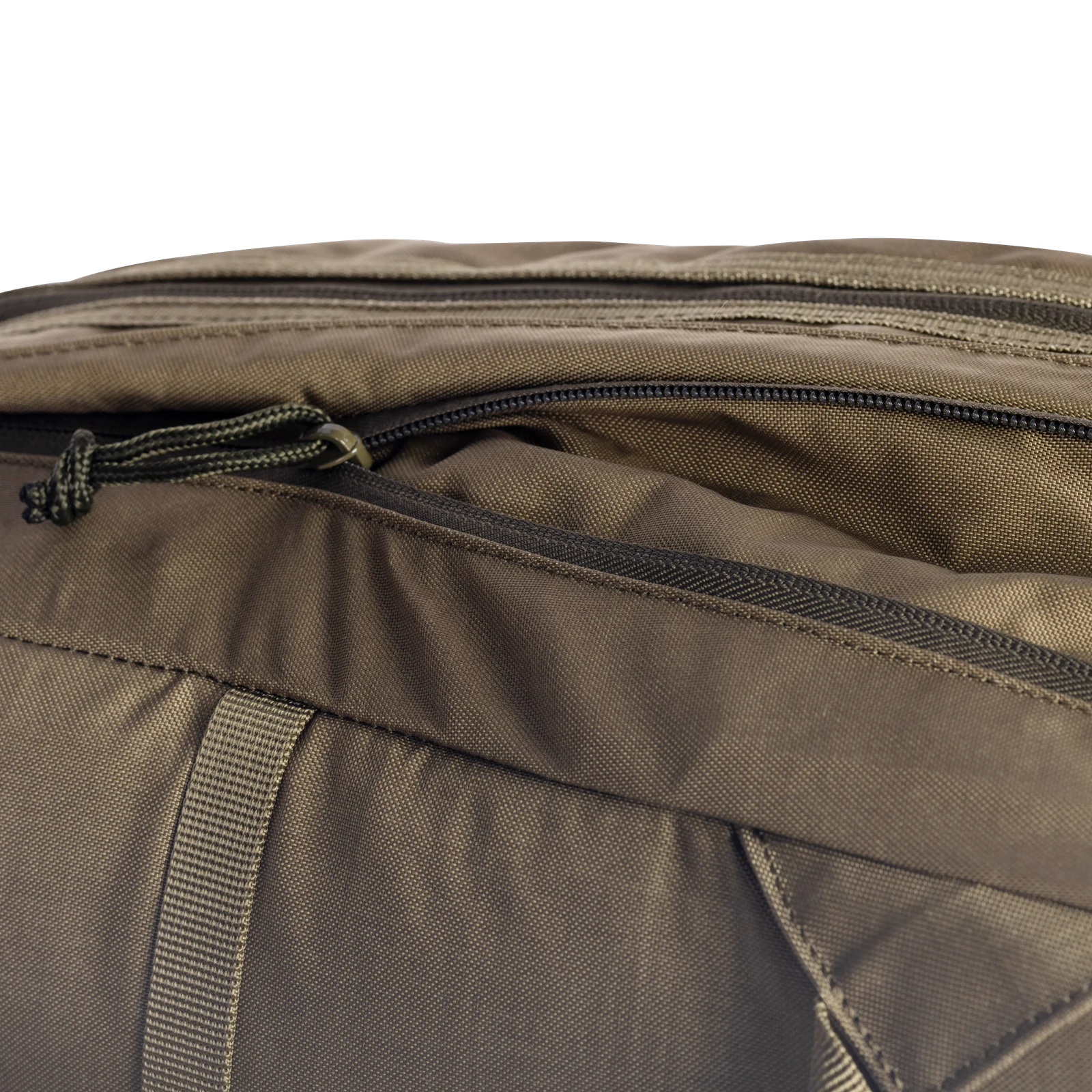
A softer wall or thinner lining can change its shape after modules are attached and packed. Review the fixing region, pocket and main compartment together after substitution. Colour and loose-swatch feel are insufficient to approve the complete arrangement.
Identify fastening materials and matched components in supplier documentation. This article addresses space planning, not connection testing, and supplies no unverified module-weight limit. If a performance requirement exists, define the intended assembly and obtain suitable evidence.
06
Approve the layout as a version
Keep the approved sample identifiable
Keep an item list, module dimensions and packed depths, placement photographs, access sequence and sample version. When a module changes size or opening direction, check neighbouring positions as well. Approval should describe a repeatable arrangement rather than an attractive empty interior.
This is general storage-development guidance, with no advice on selecting or using medical supplies. The images are existing company product photographs. Find further construction discussions in the JKPD blog.
Related: tactical bag hook and loop closures. See the photographed product reference.
Discuss your bag development project
ANSON XIE
General Manager & Founder
Quanzhou Junkai Pengda Special Equipment Co., Ltd.
Email: ansonxie@jkpdtime.com
Phone: +86 177 5095 3355
WhatsApp: +86 177 5095 3355
Factory address: Floors 2–4, Building 1, Phase I, Huixin Intelligent Manufacturing Industrial Park, Hui'an County, Quanzhou, Fujian, China