
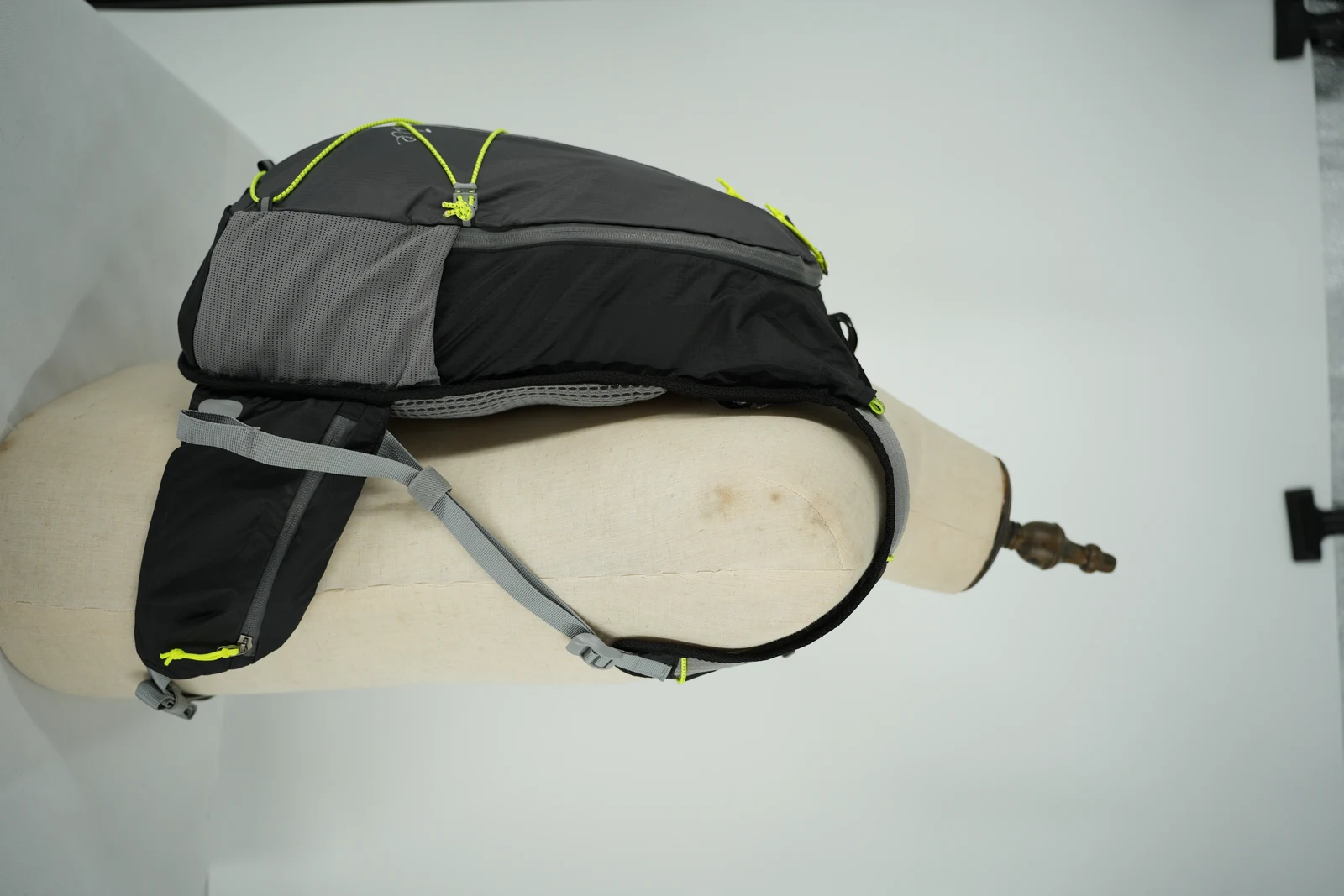
A hip pocket can put small essentials within reach on a hydration backpack. Plan the thickness of the contents, the pocket shape after belt adjustment and the action of closing it again. An object that fits when the pocket lies flat still needs suitable access when the pocket sits against the side of the body.
Assign target objects and a use situation to each pocket. Coordinate depth, opening and belt attachment around gripping, retrieving, returning and closing the contents.
01
Choose the kind of stop the pocket serves
Taking a packaged snack during a short pause differs from retrieving keys or earphones after sitting down. Choose the principal situation first. Establish whether the contents need individual packaging, whether they can be recognized through it and where the remaining items stay after one is removed.
When a pocket has several tasks, arrange the contents around their order of use. A frequently needed item placed beside the opening should remain accessible after the belt is adjusted and the wearer changes position. This is a development objective that needs a loaded sample, rather than a conclusion drawn from the empty product.
02
Account for rigid objects at the side of the body
The side photograph shows the pocket extending forward from the lower part of the pack. A rigid case, device or other fixed-shape item produces a local projection. Consider the item's outline and corners together with the part of the pocket that meets the wearer.
Compare the empty pocket, the normal contents and the intended fuller condition. If a local hard area meets the body, compare moving the item, changing the depth or revising the contact layer. Record how each option affects retrieval as well as movement space, so a softer appearance does not become the sole approval criterion.
03
Leave room for fingers after opening the zipper
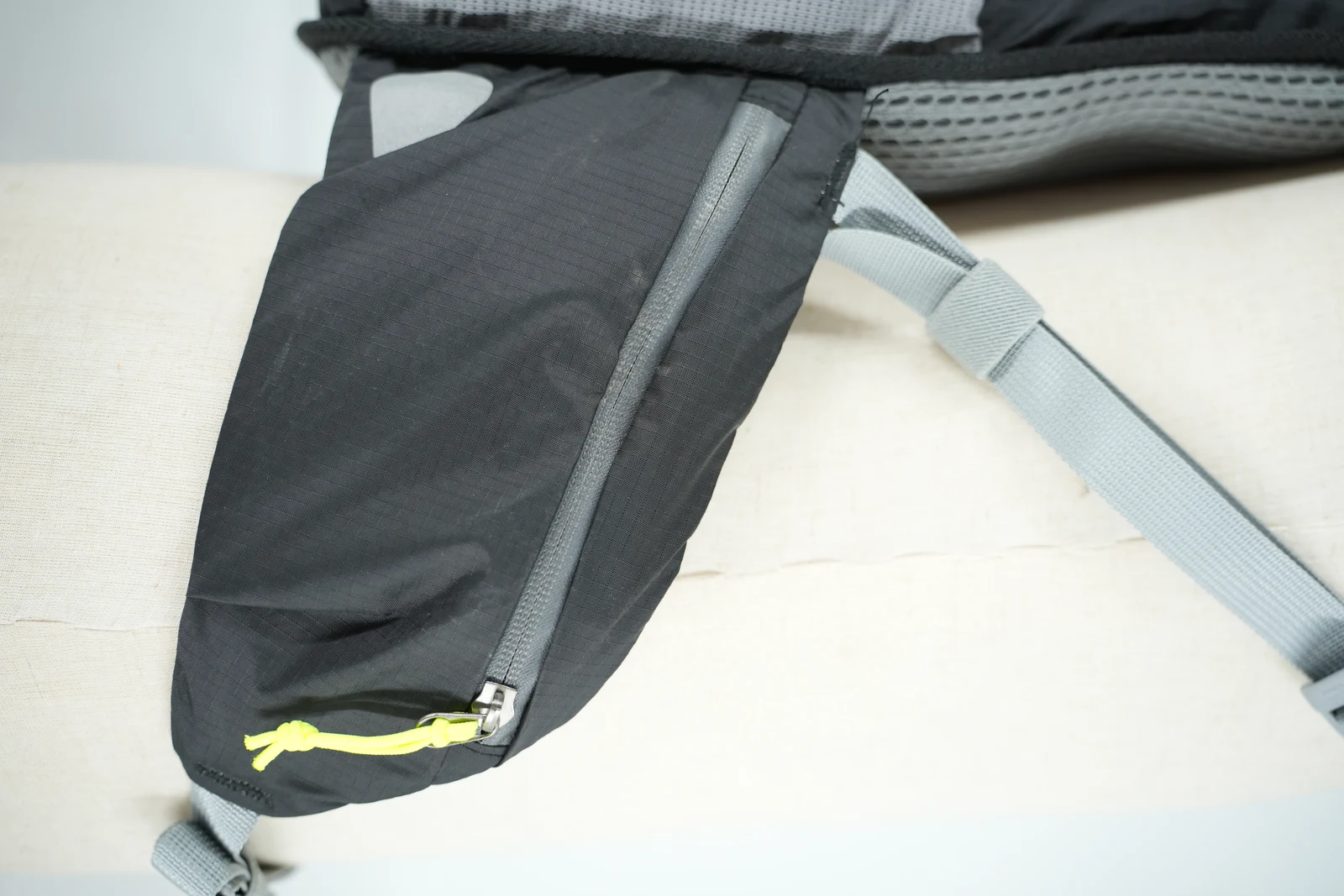
The detail photograph identifies the zipper, edge construction and pull cord. Review access from finding the pull through to gripping the object. Then examine the return action, including whether the user needs another hand to support the pocket while placing the item back inside.
The location of the remaining contents matters after the first item is removed. A deeper pocket may need a more extensive opening, while a shallower one needs an appropriate way to retain its contents while open. Compare these features as a combination for the selected task rather than specifying depth independently of the opening.
04
Reserve space for bending and stepping
A waist-level pocket sits near the moving boundary between the torso and legs. Develop its position with the intended actions in mind. Loaded samples can be compared while bending, sitting, stepping and putting the pack on, recording where a pocket edge or rigid object creates unwanted contact.
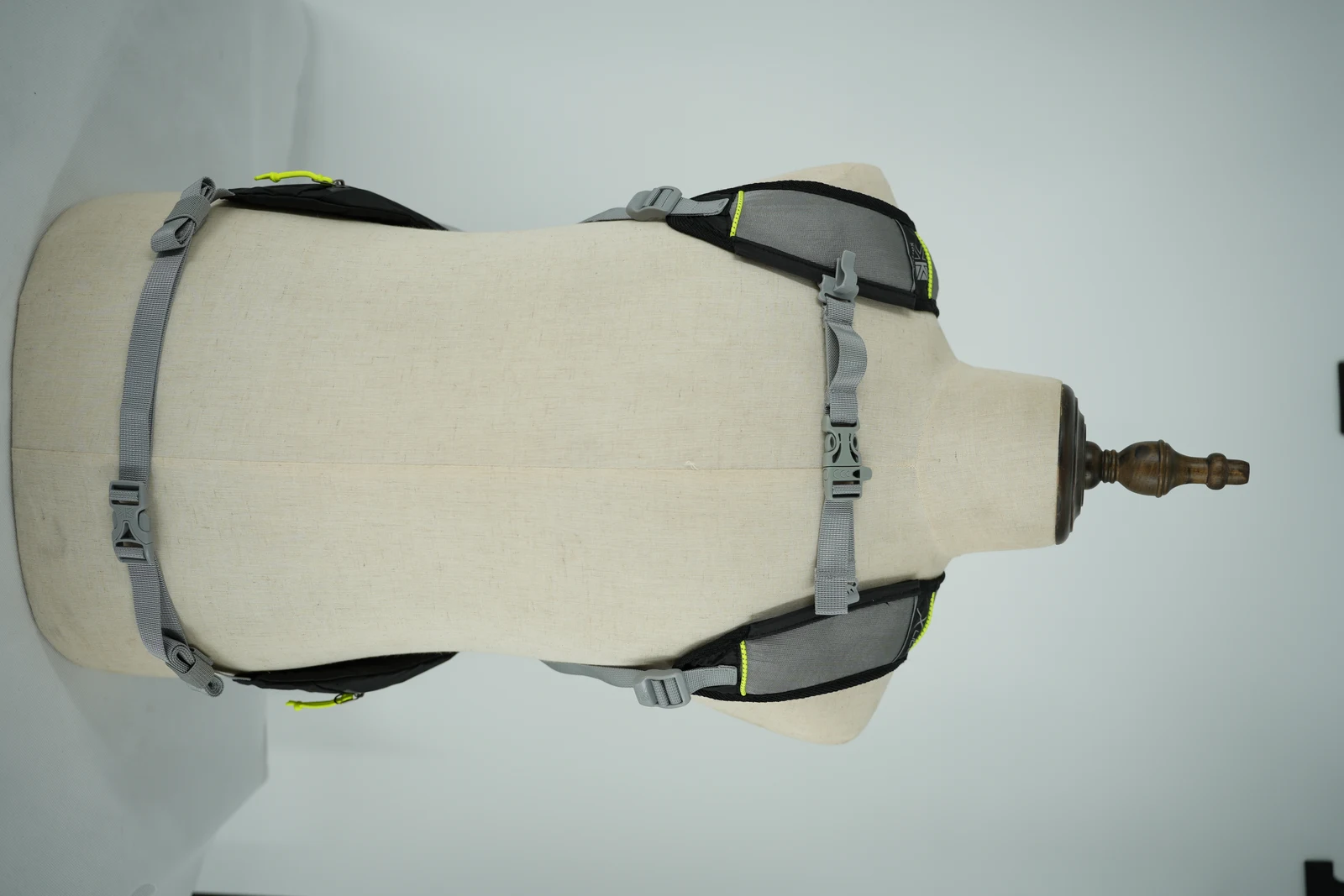
The mannequin provides a positional reference. Fit assessment needs the intended users and a record of belt setting and pack height. Keeping those conditions consistent helps the team understand whether a change comes from the revised pocket position or simply from different contents or a different adjustment during the comparison.
05
Include closure in the retrieval task
After removing an item, the user still has to return the pull and restore the opening. Define the pull's resting end and grip, and examine whether the pocket and front belt closure occupy the same operating area. Both components should remain recognizable in the intended use condition.
A brief calling for one-handed access should be evaluated through the complete action. Specify the objects, quantity, body position and whether gloves are involved. Opening a zipper is only one step in that requirement. Approval should describe the actual demonstrated sequence so a later revision can be compared on the same basis.
06
Put material choices in the relevant zones
Keep the approved sample identifiable
Discuss the outer wall, body-facing area and opening edge separately. The outer wall has to accommodate the intended objects, the contact area has to suit its use conditions, and the opening edge has to work while being gripped and after closure. Their needs may justify different local constructions.
For procurement, retain the contents list, loaded photographs, belt setting and sample revision. The images establish a visible arrangement. Confirm material composition and any abrasion or water-resistance requirements through the relevant specifications and sample evidence. More product-development topics are available on the JKPD blog.
Related: sports backpack waist belt role. See the photographed product reference.
Discuss your bag development project
ANSON XIE
General Manager & Founder
Quanzhou Junkai Pengda Special Equipment Co., Ltd.
Email: ansonxie@jkpdtime.com
Phone: +86 177 5095 3355
WhatsApp: +86 177 5095 3355
Factory address: Floors 2–4, Building 1, Phase I, Huixin Intelligent Manufacturing Industrial Park, Hui'an County, Quanzhou, Fujian, China