
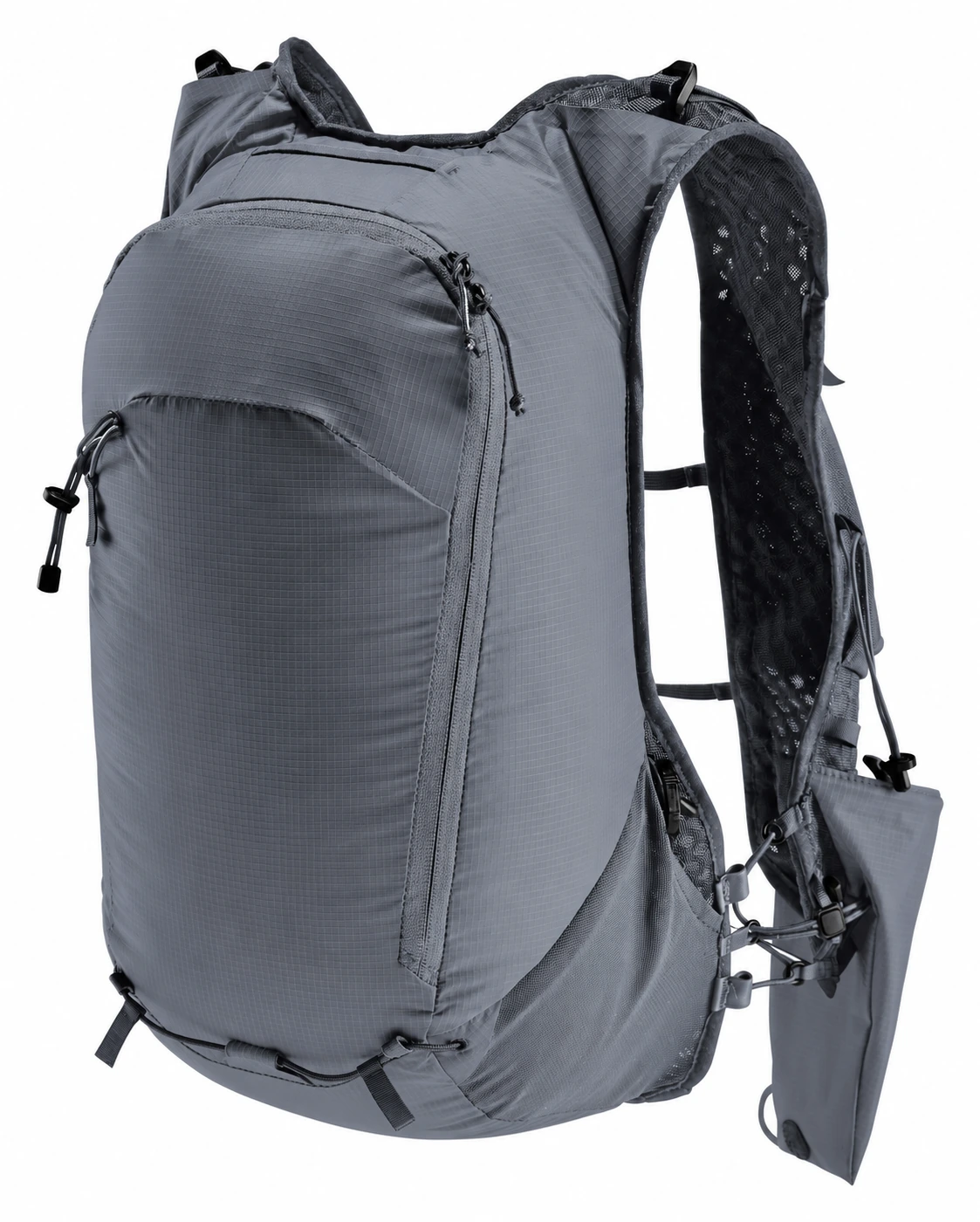
Hero photograph: Jassebosse. Original source · CC BY-SA 4.0. Brand elements were cleaned with AI. The adapted photograph is provided under the same license. Photographs show closed exterior examples; they do not establish unseen construction, opening angles, material performance or a JKPD manufacturing relationship.
A U-shaped zipper can offer access to the middle of a top-loading hiking pack without disturbing everything above it. The claim is worth testing with a bulky layer, a loaded exterior pocket and the pack resting where the flap has somewhere to go. A large opening in an empty studio sample doesn't show whether someone can get that layer out and close the pack again.
Key takeaways
- Put a bulky layer in the middle.
- Leave room for the flap to move.
- Return the layer, close the zip and reset compression.
01
What belongs behind the front opening?
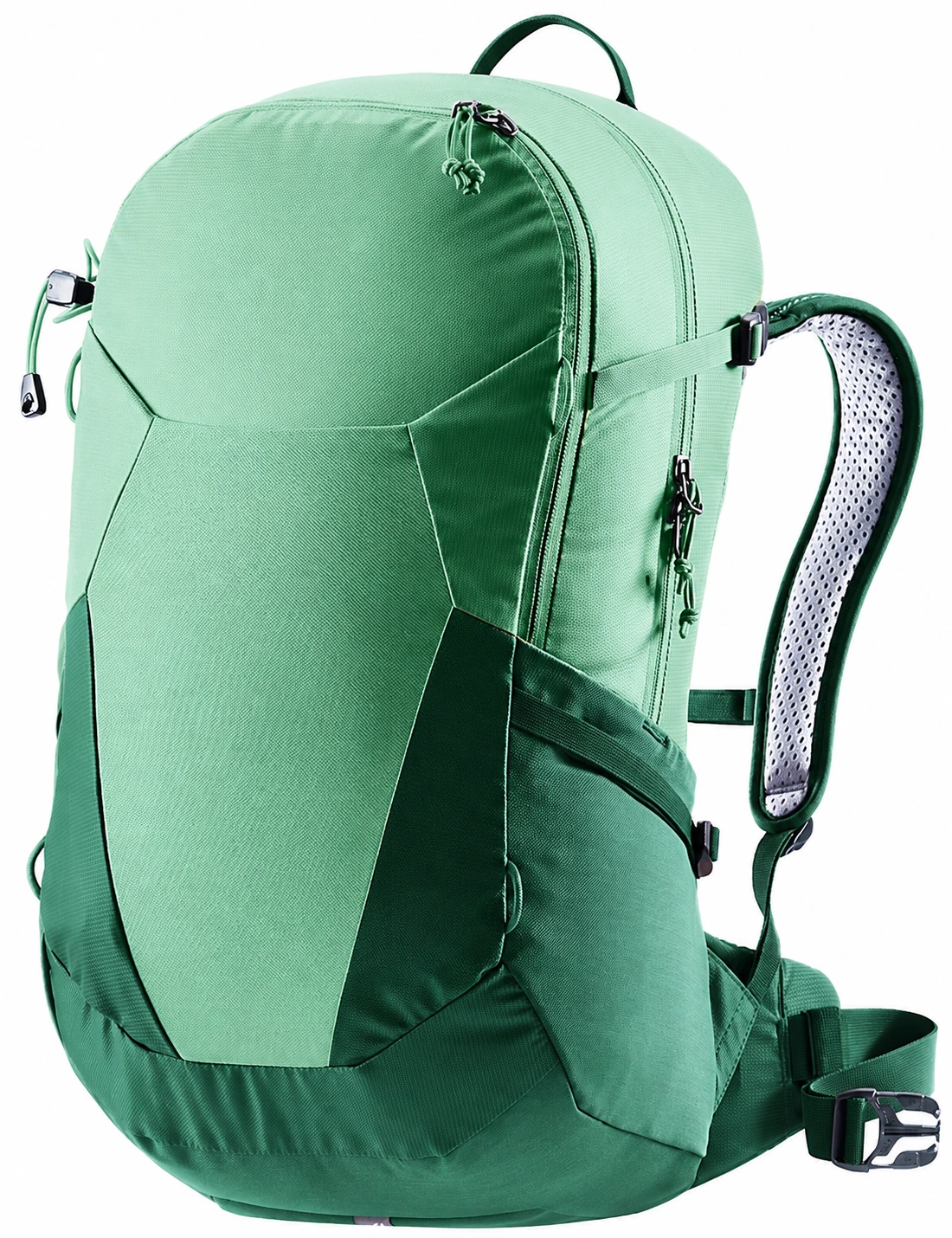
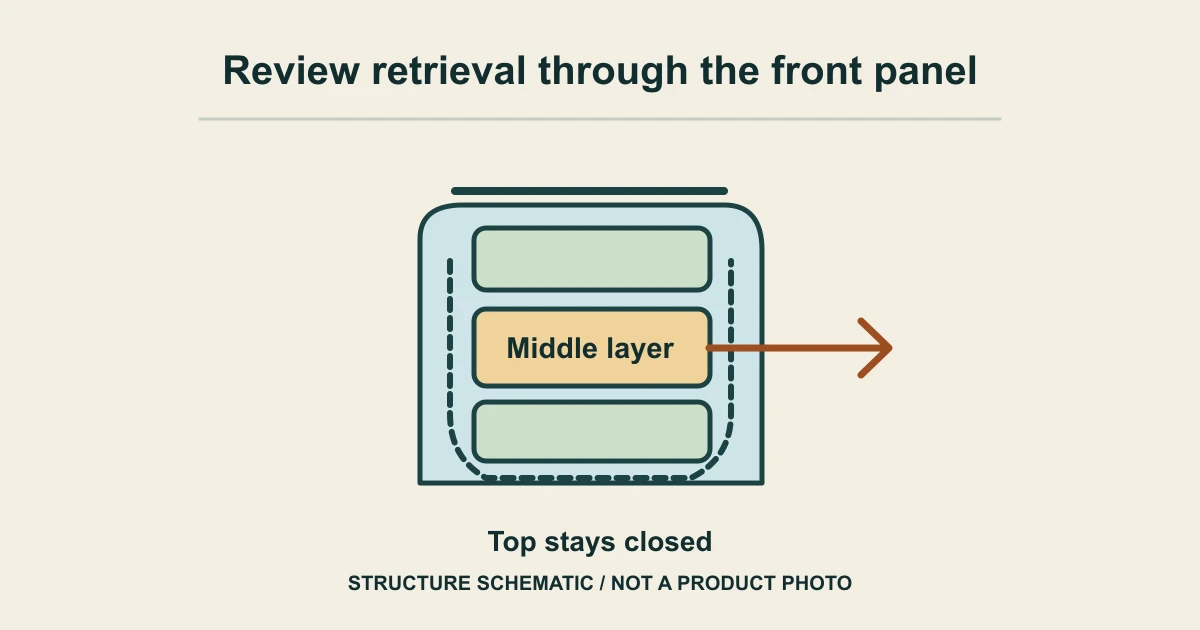
Choose an item that really benefits from a second route: an insulating layer beneath lighter supplies, for example. Put it where a hand approaching through the front could plausibly grip it. Start with the top secured. A phone belongs in a smaller access review unless the design specifically calls for it to be carried in the main compartment.
Repeat with the same layer behind another pouch. Notice how much of the opening remains useful when the target is farther back. The design may support reaching one part of the load rather than exposing the entire pack. Describe the benefit in those terms if that is what the sample shows.
02
Where will the flap go?
Place the filled pack where it can rest securely. Consider whether the contact surface is dry or wet and which parts of the bag the user can reasonably set down there. Open the U-zip far enough for the task. Check for room to fold or swing the panel and decide whether the user has to hold it while reaching.
Keep the packing stack in view
With the front open, check whether loose items move toward the opening and whether the target can come out past them. Observe the burden on the free hand. The clamshell opening guide discusses restraint and partial opening; here the specific challenge is retrieving gear from the middle of an upright packing stack at a stop.
03
Does compression obstruct the route?
Mark the zipper sweep and compression webbing on the sample sketch. Load the exterior pocket as intended and follow the normal tightening instructions. Try opening the front, retrieving the layer, returning it and closing before restoring any released webbing. Record whether a strap blocks the pull directly or shapes the packed body enough to make the edges hard to bring together.
Try the same operation with the exterior pocket less full. If the problem disappears, the body panel and pocket loading may matter more than the slider. If it persists with the front unloaded, return to the geometry of the corners and the available hand room. ASTM D2061 covers zipper strength tests; it does not evaluate retrieval in a compressed pack.
04
How do you know when the task is finished?
The layer must go back through the same route, the zip must fully close and any compression that was released must be reset. Ask the tester to do all three without help. An apparently fast opening can turn into extra work if the refolded layer now protrudes or the flap must be held under tension to reunite the edges.
Record which items moved, whether opening the top became necessary and what the wearer did with the removed layer while closing. Run the task from a stable stopped position. Don't present access as a feature to operate while walking just because the pack was easier to open on the ground.
05
What makes the review comparable?
Give both samples the same gear list, placement sketch and compression settings. Use the same bulky layer, with the same fold, and compare each completed operation. If two openings only differ in how many items must be moved, that is useful enough to document without inventing a universal time-to-access target.
Treat top-loading and front access as complementary. Let each do the job it does best, and map a usable path into and out of the middle of the load before approving the advertised benefit.
Discuss your bag development project
ANSON XIE
General Manager & Founder
Quanzhou Junkai Pengda Special Equipment Co., Ltd.
Email: ansonxie@jkpdtime.com
Phone: +86 177 5095 3355
WhatsApp: +86 177 5095 3355
Factory address: Floors 2–4, Building 1, Phase I, Huixin Intelligent Manufacturing Industrial Park, Hui'an County, Quanzhou, Fujian, China