
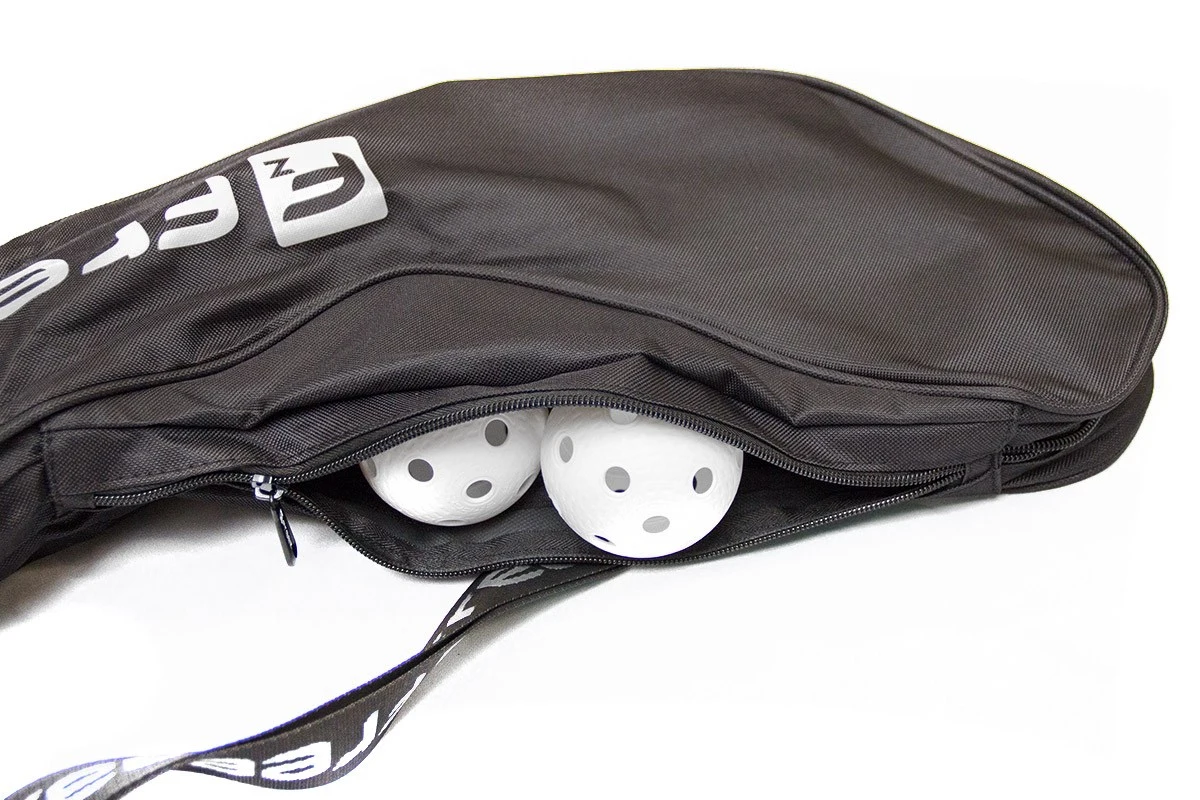
A ball pocket on a stick bag should make retrieving a ball and packing the sticks two distinct tasks. Its purpose is not simply to add a small compartment to a long bag. The user needs to find the ball, grip it, close the pocket again and avoid unnecessarily rearranging the long equipment in the main section.
Define how many balls are retrieved at a time, where the bag rests and which way the opening faces. The visible balls establish a photographed condition, not maximum capacity or a sealed independent compartment.
01
Define when the balls are needed
Taking balls out together before training allows the user to put the bag down and reserve some working space. An occasional retrieval during a journey may favor a smaller opening and a simpler return to the closed condition. Identify the principal task before choosing the opening direction and pocket depth.
Placing the pocket near the blade end can group related equipment in one area, but it also makes the occupied space around the blades relevant. Flat dimensions of an empty pocket cannot establish that a filled pocket and a loaded main compartment remain independent. Compare the combination rather than assigning each space a role in isolation.
02
Leave room for a hand, not only a ball
Retrieval requires a grip around the object, not merely an opening through which the ball can be squeezed. The photograph shows parts of the contents and the opening around them. It does not show a hand removing a ball or demonstrate convenient operation.
Use the intended ball during development and observe where the remaining contents settle after the first one is removed. If a ball falls below the accessible part of the opening, compare a different opening extent, pocket depth or arrangement. A longer zipper pull cannot by itself solve a lack of space for the fingers.
03
Make the closure routes distinguishable
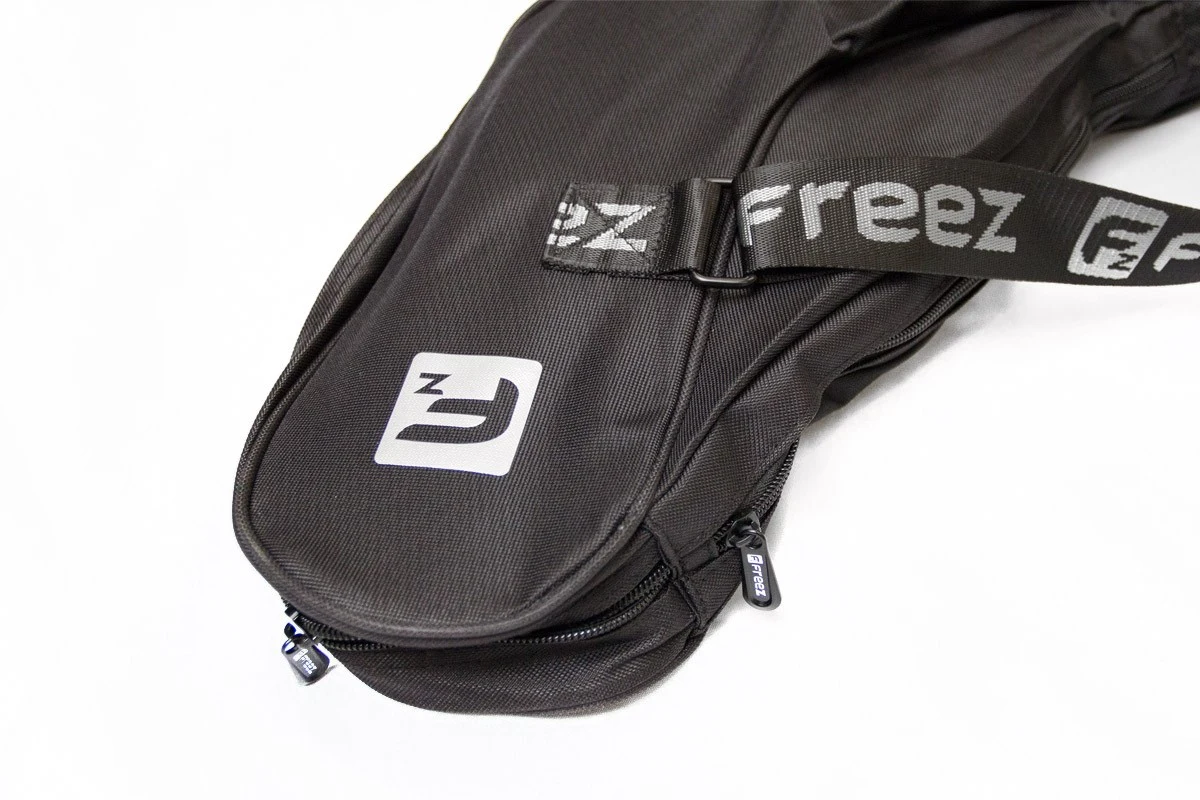
The exterior detail places edge zippers, pulls and a shoulder-strap attachment around the blade end. The user should be able to identify the ball-pocket route separately from another opening, instead of releasing a section that does not need to move for the immediate task.
Pull parking positions and the direction of each opening can provide useful cues. If different tabs are specified, compare whether adjacent pulls cover each other and whether a strap sits over the entry. The distinction should remain understandable when the bag changes direction, not only when it lies in the exact orientation used for a catalog image.
04
Compare loaded projection with the strap position
A ball has a fixed shape and creates a local projection in a soft pocket. When a strap attachment is nearby, compare the loaded pocket wall with the strap and its connection. An empty pocket lying flat does not represent the same spatial arrangement.
If the contents push the entry outward, compare a different arrangement, revised depth or attachment location. Whether this reduces main-compartment space or presses against a stick requires a view of the corresponding internal construction. The outside photograph does not establish the layer arrangement or prove that two sections never interact.
05
Choose a resting direction for retrieval
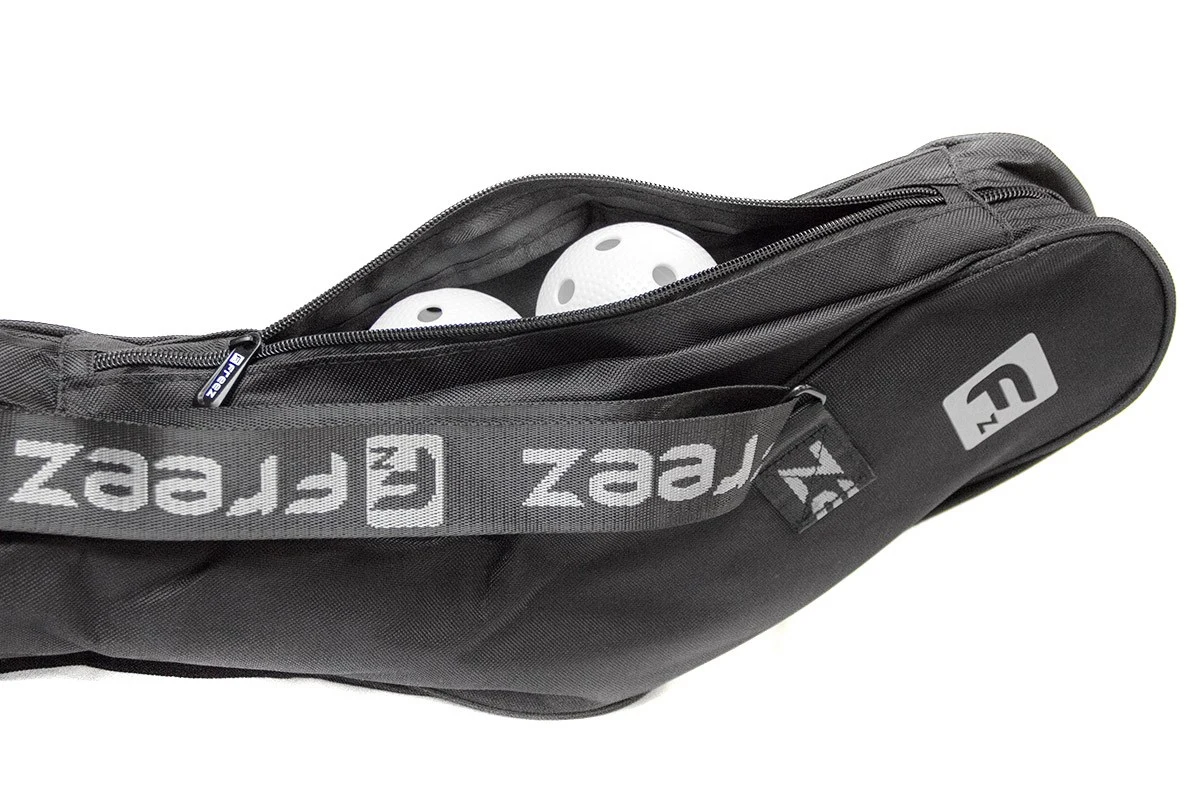
A long stick bag may lie flat, lean against something or be supported by a hand. An opening facing upward creates a different retrieval action from one facing sideways. Specify the intended position in the brief and use that position in the sample demonstration.
These are static photographs. They do not show whether the contents move out when the bag tilts. If the brief requires one ball to be removed while the others stay in place, compare that action with the agreed quantity inside. A partly opened zipper alone is not evidence of an effective retention feature.
06
Keep the interior reachable for cleaning
A bag used alongside training equipment needs a defined cleaning and drying arrangement. Examine whether a hand can reach the bottom and corners, or whether a lining can be brought outward for access. Confirm those possibilities against the actual construction rather than assuming that every small pocket can be turned out.
Holes in a ball do not ventilate the bag around it. A separate zipper route also does not establish waterproof isolation. Base material and care descriptions on confirmed information for the sample; neither can be identified from these photographs. This keeps the practical cleaning task separate from unsupported performance language.
07
Hand over the complete retrieval sequence
Keep the approved sample identifiable
Record the sequence of placing the bag down, recognizing the correct entry, taking the target ball, restoring the closure and carrying the equipment again. Keep the ball type and quantity consistent when comparing revisions. The result should be judged by the amount of rearranging the task requires, not by pocket count alone.
This article addresses short retrieval tasks; the companion stick-fit topic addresses the long equipment's outline. Company-authorized library images retain their original markings and do not imply a third-party brand partnership. For more product-development topics, see the JKPD blog.
Related: floorball stick bag blade clearance. See the photographed product reference.
Discuss your bag development project
ANSON XIE
General Manager & Founder
Quanzhou Junkai Pengda Special Equipment Co., Ltd.
Email: ansonxie@jkpdtime.com
Phone: +86 177 5095 3355
WhatsApp: +86 177 5095 3355
Factory address: Floors 2–4, Building 1, Phase I, Huixin Intelligent Manufacturing Industrial Park, Hui'an County, Quanzhou, Fujian, China