
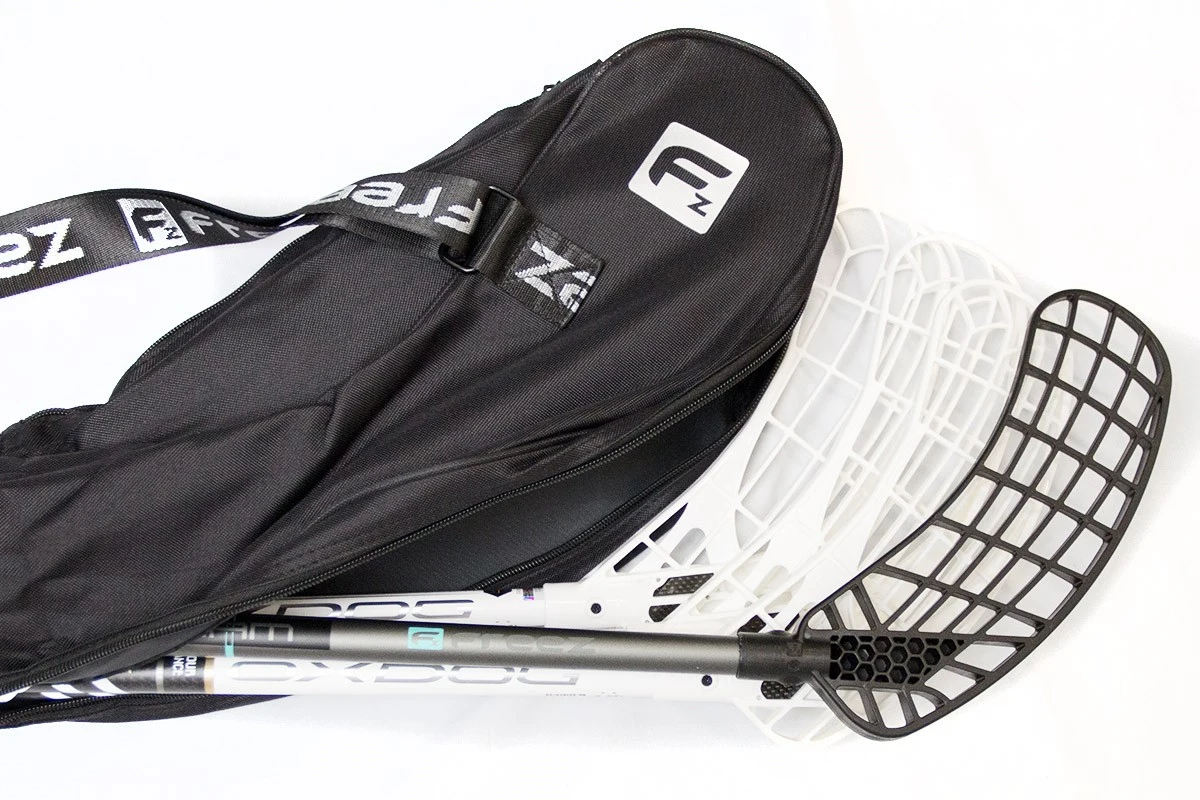
A floorball stick bag needs to accommodate the shaft length, the blade outline and the movement used to put the stick inside. Checking one overall length can miss a blade that cannot turn through the opening or a loaded end that presses against the closure. Start with the intended equipment rather than a drawing of a long sleeve.
Define the target stick combination first. Discuss the narrow end, shaft section and blade section separately, and distinguish storage space from the opening used to reach it. The pictured equipment does not establish a rated quantity or protection claim.
01
Why is overall length not the usable length?
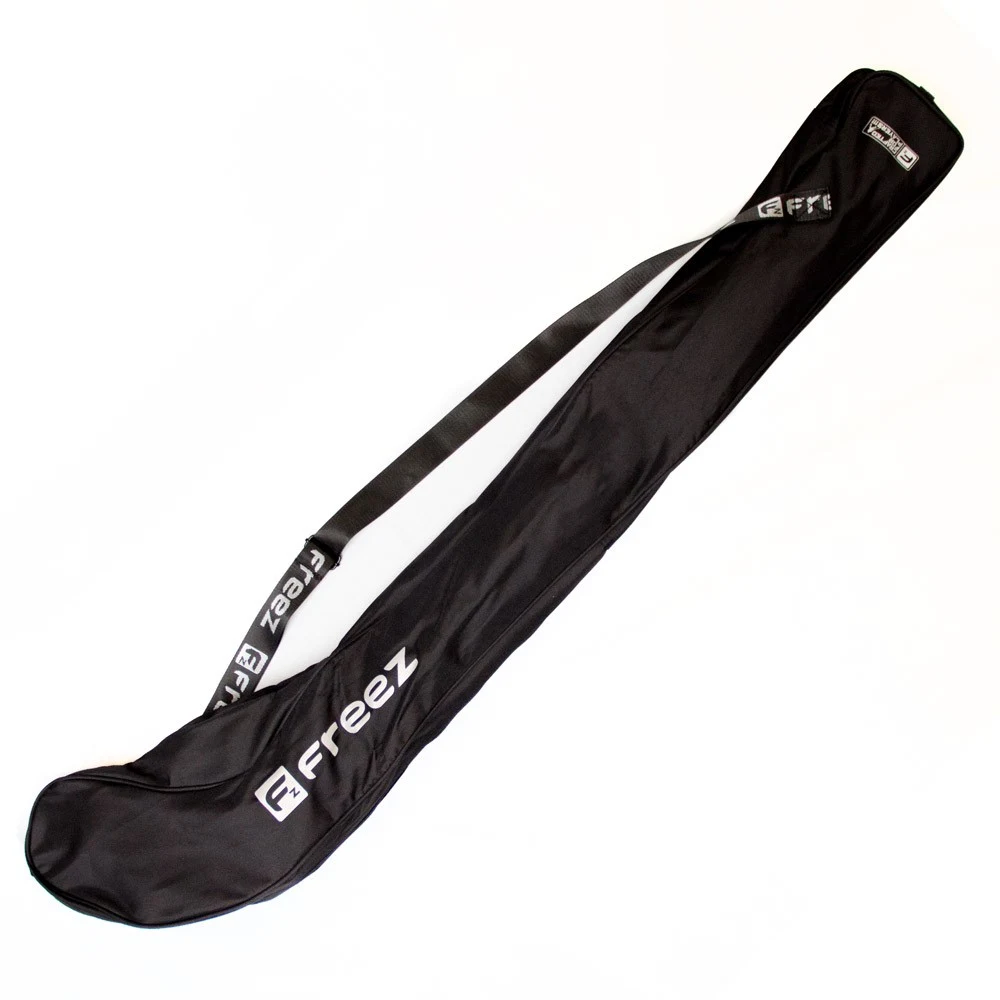
The outside length includes end seams, curved corners and space occupied by the closure. It is not the same as the straight space available to a stick when the bag is closed. Mark the external outline and the position of the intended equipment separately in the development reference.
Keep the real blade and grip-end shapes during comparison. A straight rod of the same length can indicate length but cannot reveal a restriction at the blade turn or the transition into the opening. No scale appears in these photographs, and a number in a source filename is not treated as a verified finished dimension.
02
Plan the blade outline before stacking several sticks
A curved blade occupies space to the side of the shaft. The wider blade-end outline in the overall photograph differs from the straight shaft section. These regions therefore need separate discussion instead of treating the whole product as a sleeve of uniform width.
For several sticks, agree on the actual arrangement before deciding how much depth is required. Blades pointing the same way and blades arranged differently can produce different thick areas and removal sequences. The number visible in a promotional photograph should not become the bag's rated carrying quantity without a matched, closed sample.
03
Let the blade pass through the opening
A large enough internal cavity does not guarantee convenient insertion. Consider whether the blade needs to turn after entering, whether that turn meets the opening edge and whether the user can hold the remaining equipment clear. Opening length and its change of direction should serve that movement.
Compare a broad opening near the blade end with feeding sticks through a narrower entry if those are options in the brief. Record the space and handling sequence each requires. The photograph shows an opened condition, not the complete insertion process, so it is not described as evidence of a validated quick-loading feature.
04
Leave useful space at the narrow end
The narrow end can disappear from a conversation focused on the larger blade section. Check where the intended combination rests after closure, whether the grip covering sits against a seam and whether handling moves the sticks toward one end. These questions require a loaded sample rather than an empty outline.
Simply making the bag longer is not a complete solution. An unsupported length of soft material changes the carrying outline and needs additional placement space. Compare the actual equipment positions and the principal carrying direction. There is no universal clearance allowance established by these images, and this article does not invent one.
05
Choose materials around the actual contact areas
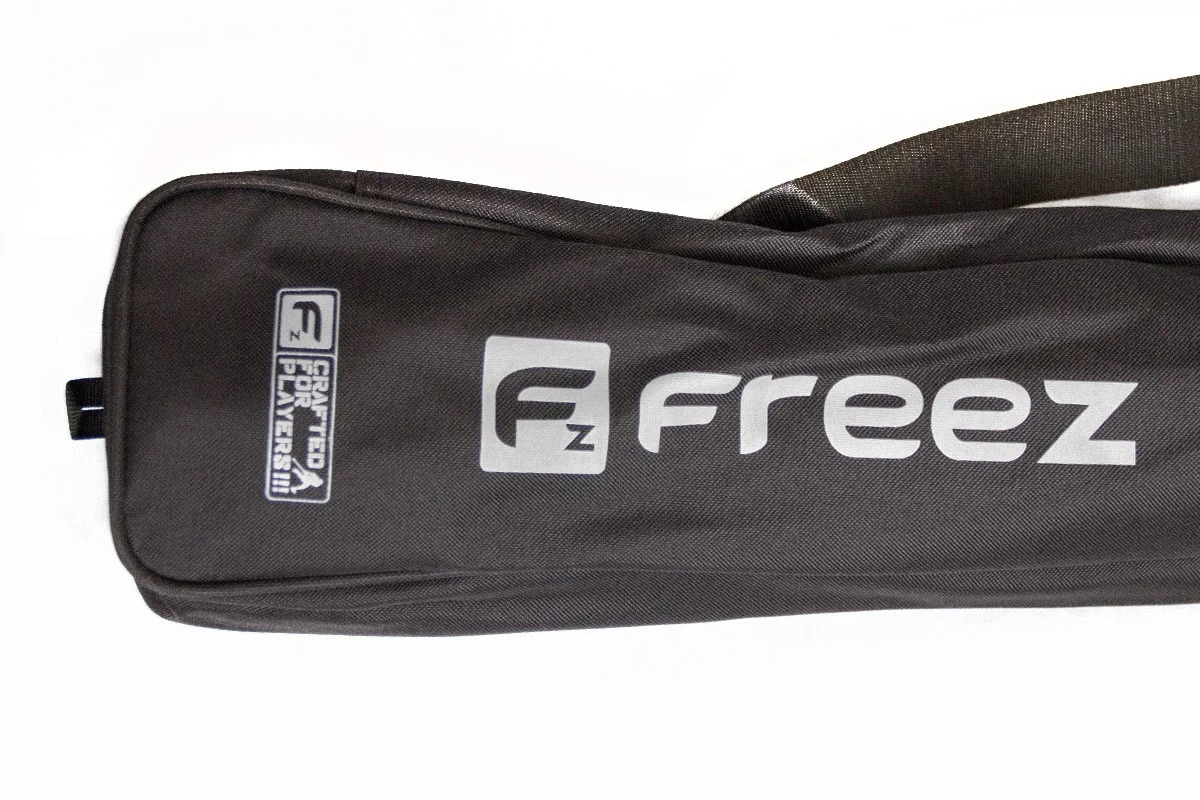
The blade and shaft sections may meet the lining differently. Once their positions are defined, discuss the outer layer, lining and local reinforcement at contact edges and end seams. Adding thickness everywhere can consume usable space without addressing the particular place where contact occurs.
If a soft lining is proposed, consider how debris brought in with the equipment will be removed and how much room the lining occupies. Appearance cannot confirm fiber content, thickness or impact protection. A dedicated stick bag should also not be represented as a rigid transport case merely because it follows the equipment's outline.
06
Keep an equipment reference in the OEM/ODM handover
Keep the approved sample identifiable
Provide the target stick models or physical samples, intended quantity, arrangement and views of the open and closed bag. When the pattern, lining or zipper position changes, return to that same equipment set. Otherwise, a different combination can conceal the effect of a construction change and make approval difficult to interpret.
The International Floorball Federation's development information provides context for the sport. Similar names across stick sports do not establish identical equipment or a shared bag pattern. These are original development recommendations, not a report of a JKPD fit test. Company-library photographs retain their original markings and do not imply a brand partnership. For related development topics, visit the JKPD blog.
Related: floorball stick bag ball pocket. See the photographed product reference.
Discuss your bag development project
ANSON XIE
General Manager & Founder
Quanzhou Junkai Pengda Special Equipment Co., Ltd.
Email: ansonxie@jkpdtime.com
Phone: +86 177 5095 3355
WhatsApp: +86 177 5095 3355
Factory address: Floors 2–4, Building 1, Phase I, Huixin Intelligent Manufacturing Industrial Park, Hui'an County, Quanzhou, Fujian, China