
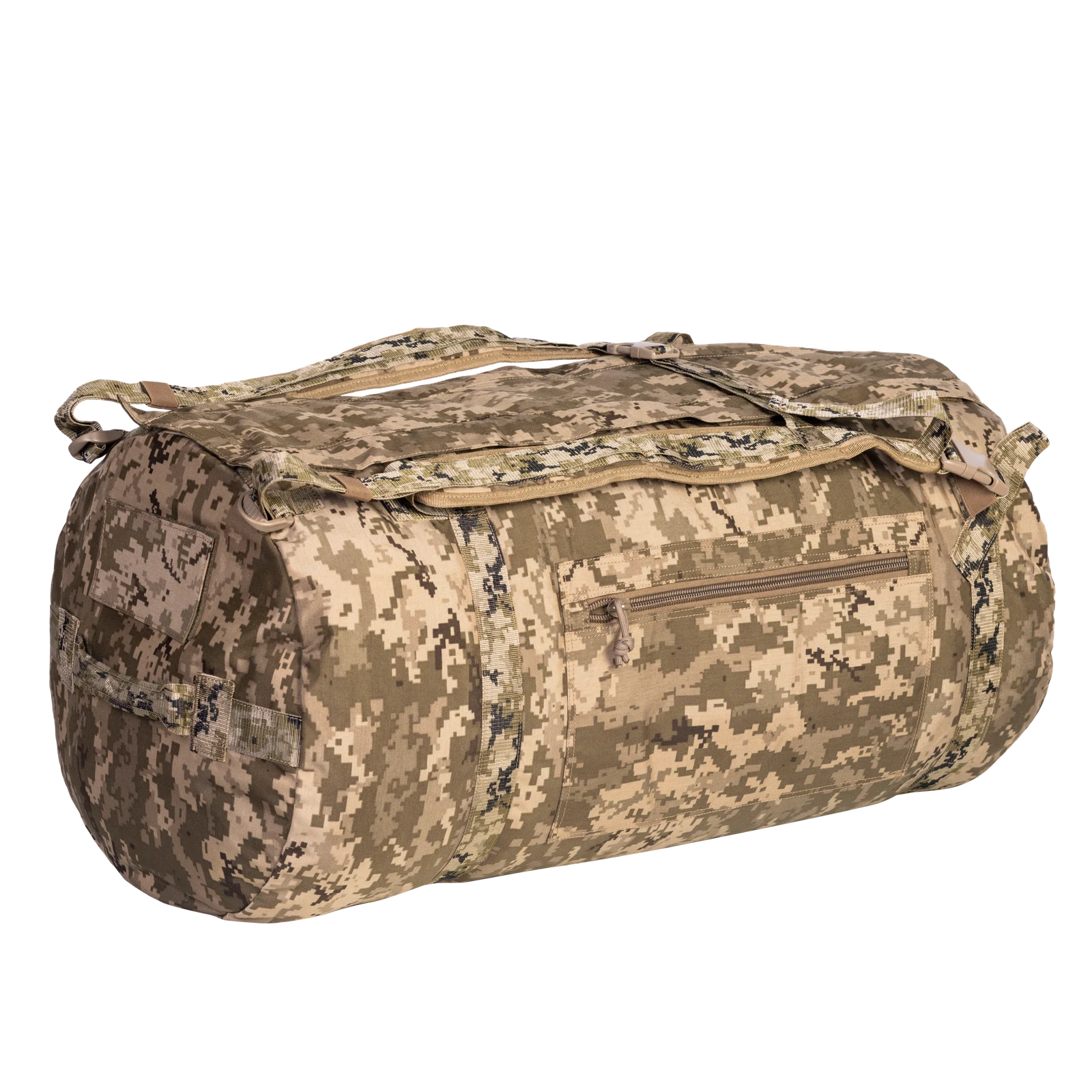
Plan a cylindrical transport bag in upright, horizontal and actual access conditions. An upright product view can hide what happens when an opening faces the surface, contents settle toward another wall or the user has to turn the whole bag repeatedly to reach an item.
Development priorities: define the main placement; assign frequently used items; inspect side access after rotation; record display shape separately from a packed use condition.
01
Define where the bag will be opened
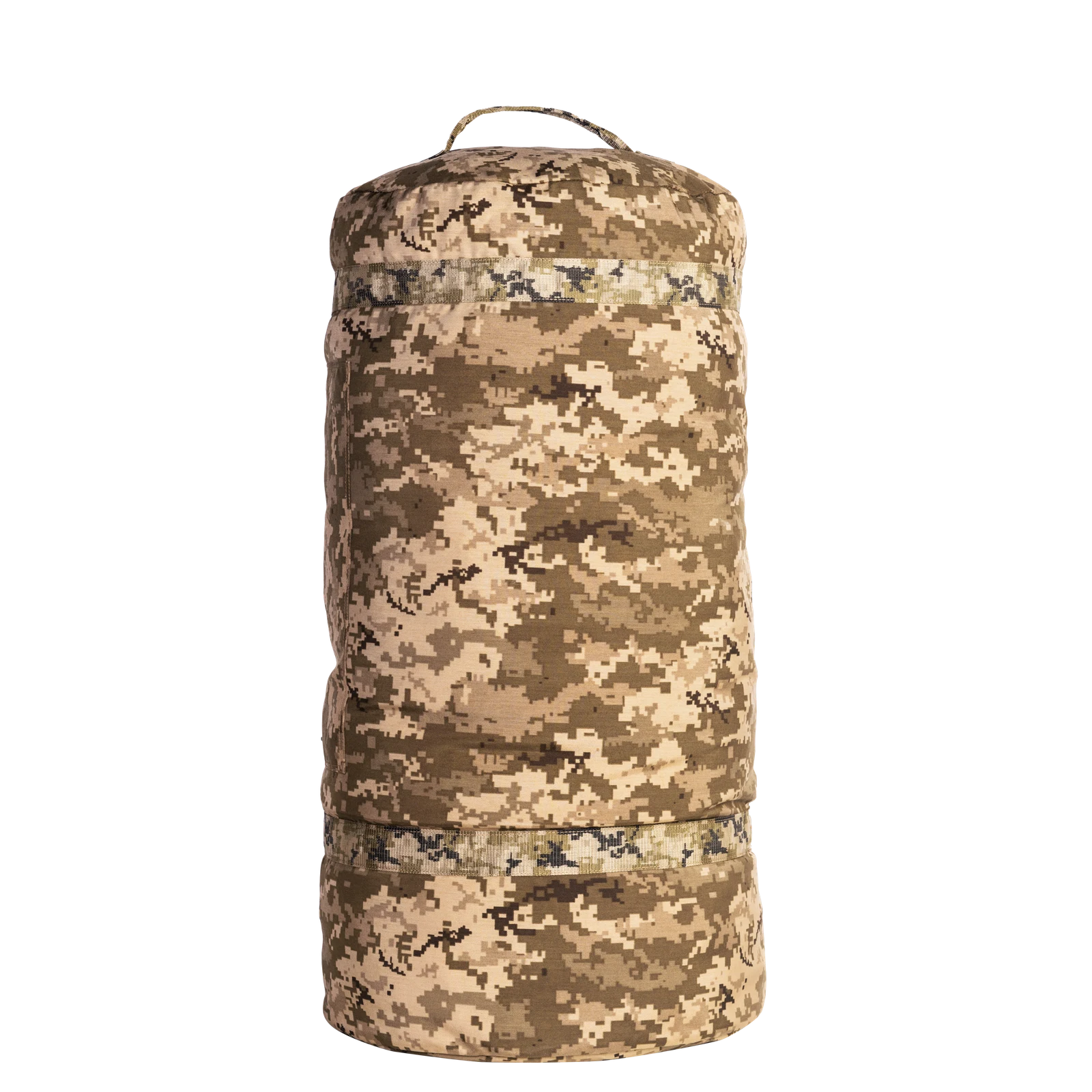
A vehicle, table and ground-level setting offer different space. State the main location, available footprint and access direction before allocating compartments. The cylindrical silhouette alone does not determine where useful openings should go.
This upright view contains no visible packing arrangement. It establishes neither unsupported standing stability when loaded nor carrying or protective performance. Keep the displayed condition identified when using it as a development reference.
A practical brief should also say whether the bag is opened while still attached to something or after it has been placed down. These are different handling sequences. Agreeing one main sequence makes later sample comments easier to interpret.
02
Use access order to assign positions
List frequently needed items, items only needed after arrival and objects requiring separate packaging. Pack the planned arrangement, place the bag as intended and complete the access sequence. Fitting the objects inside is only the start of the layout decision.
For an item assigned near an opening, check whether it remains reachable after the bag changes orientation. If every retrieval requires lifting and turning the complete bag, compare changes to item placement, opening arrangement or sequence rather than assuming extra volume will help.
Record which objects must move before the selected item comes out. That makes a revision specific: move this group nearer this opening, for example. A general request for easier access gives the sample room less information about the actual obstruction.
03
Inspect the side zipper in the placed condition
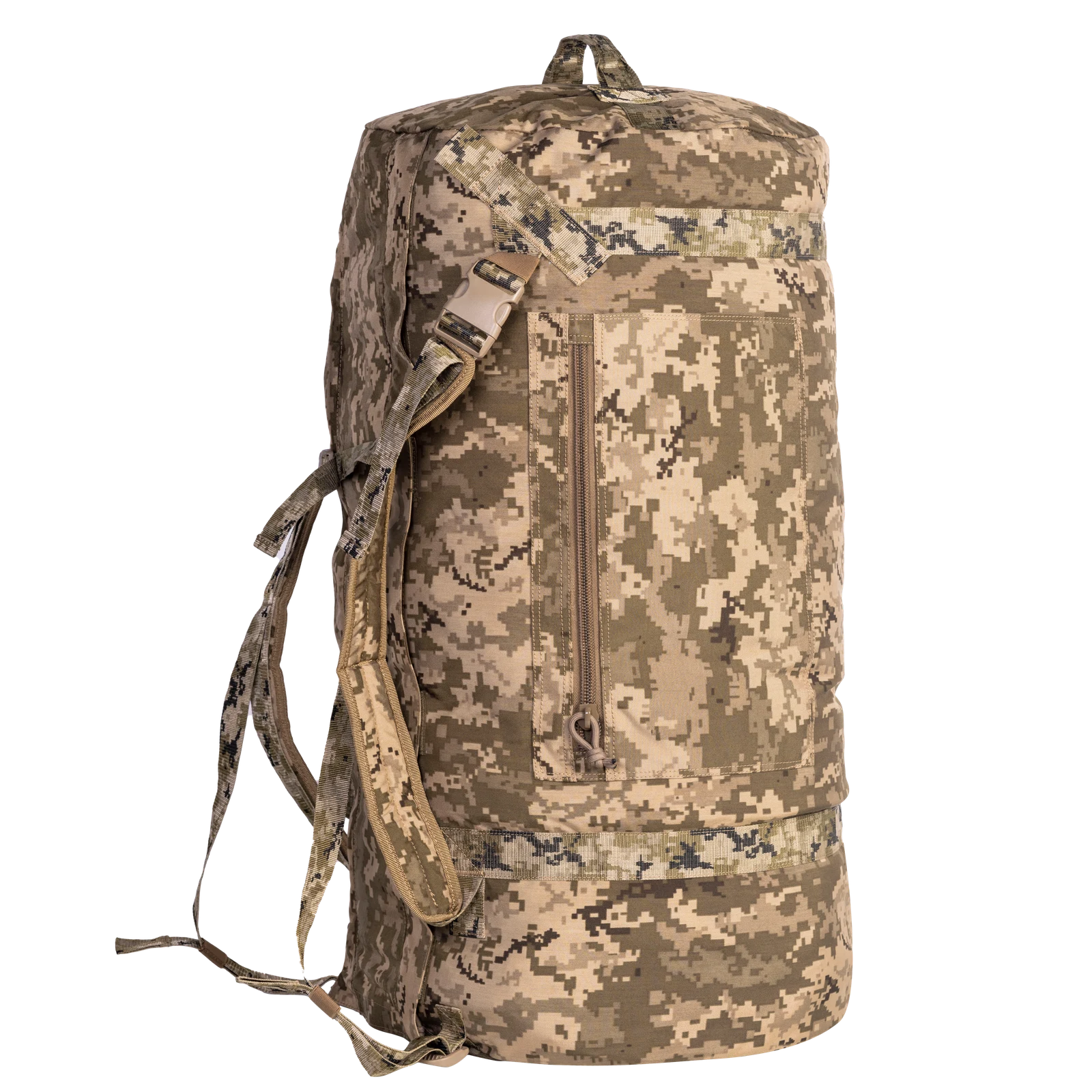
The side view shows a vertical zipper and shoulder straps, but not the full pocket depth. Place the sample in its main use orientation. Observe whether the pull sits underneath, a strap crosses the opening or the intended item cannot be removed along the planned direction.
An exterior photograph does not establish which separate compartment a zipper serves. Nor does an external seam prove the presence of a divided lower compartment. Confirm compartment count and purpose from the actual interior before writing them into procurement or product descriptions.
Keep the zipper position and supporting hand visible in sample records. A photograph taken after someone has lifted the bag into a convenient position should not silently stand in for the condition users are expected to handle.
04
Organize soft contents around defined objects
A flexible cylindrical body changes shape with its contents. Allocate space for fixed-shape objects first, then organize the planned soft items around the remaining spaces. A loosely placed garment should not be treated as a permanent support component.
Use the intended objects to inspect corners and projecting edges against the wall, closures and body-contact region. No impact or puncture performance is established here. Any required protection needs its own construction definition and evidence.
05
Specify the support used during horizontal access
The horizontal photograph records the relationship between the body, side opening and straps. A sample review can observe turning or rolling under a consistent load and state whether a hand or placing surface supports the bag. These are proposed review conditions, not completed test results.
If unsupported access is required, evaluate that physical arrangement. A still product photograph cannot establish it. Avoid hiding a strap solely for a tidy display if that position cannot be reproduced during the intended use.
06
Hand over a repeatable placement arrangement
Keep the approved sample identifiable
Keep the contents, packing order, main placement, opening direction and sample version together. Repeat the same arrangement after changes to depth or materials so that a different packing method is not mistaken for a construction improvement.
Related: travel backpack packed dimensions review. See the photographed product reference.
Discuss your bag development project
ANSON XIE
General Manager & Founder
Quanzhou Junkai Pengda Special Equipment Co., Ltd.
Email: ansonxie@jkpdtime.com
Phone: +86 177 5095 3355
WhatsApp: +86 177 5095 3355
Factory address: Floors 2–4, Building 1, Phase I, Huixin Intelligent Manufacturing Industrial Park, Hui'an County, Quanzhou, Fujian, China