
Develop cycling pack front storage in the intended body and hand position. A panel that looks flat during an upright fitting may contact the wearer differently when the arms reach forward, the torso leans or clothing thickness changes. The useful starting point is a defined posture and a real packing list.
Development priorities: agree the reference posture; assess panel shape with actual contents; inspect arm and edge relationships; separate stationary access and tube handling from riding evaluation.
01
Which posture is the design reference?
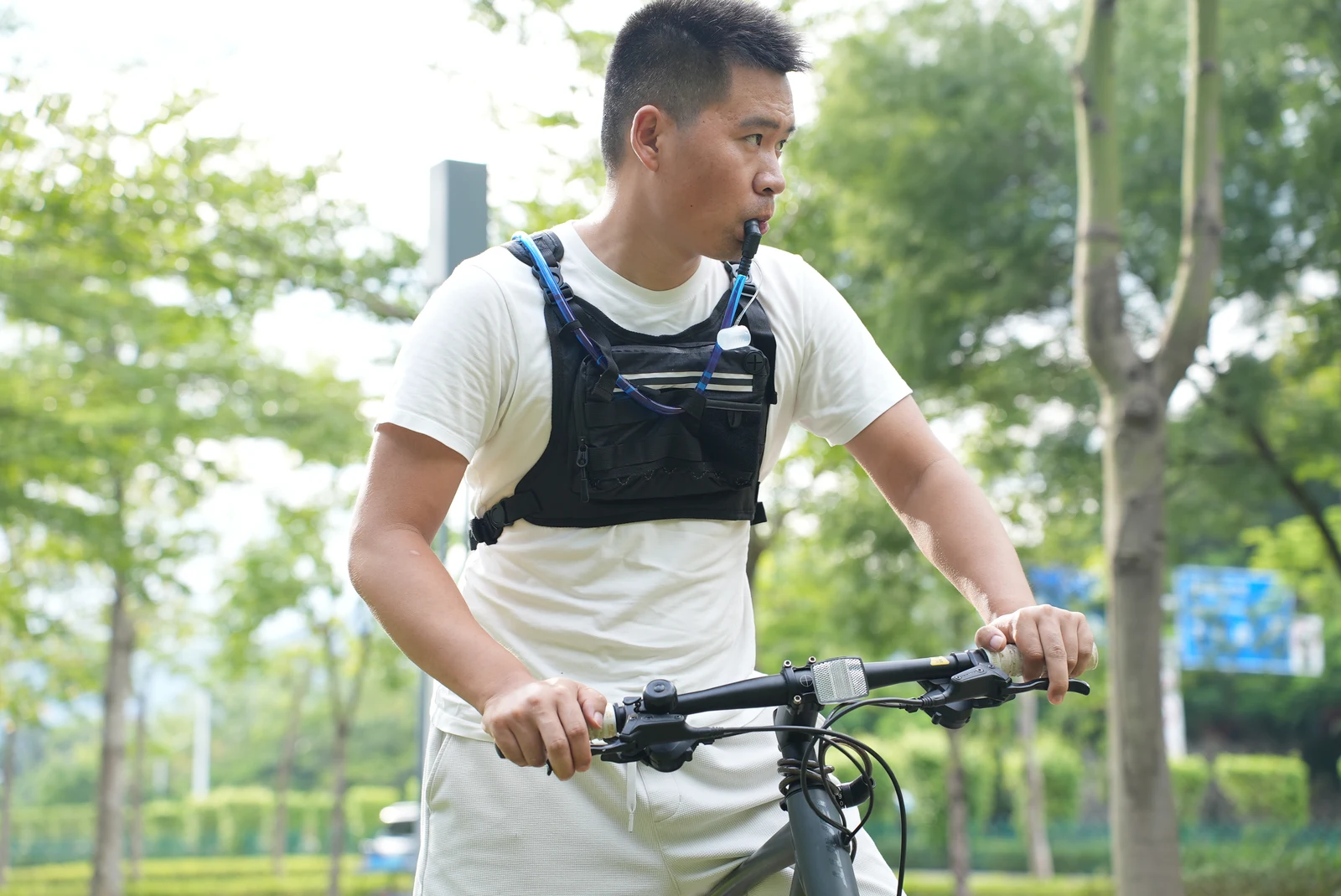
Handlebar position and body posture vary between users and applications. Identify the intended use, then make a stationary observation with the actual bicycle or a setup that reproduces the relevant hand position. An upright display image cannot confirm fit for every riding situation.
The photograph shows hands near a handlebar, a panel across the chest and a tube near the shoulder. It records component positions. It does not establish that the bicycle is moving, or demonstrate long-duration comfort, stability or safe operation.
Save the reference position with the sample record. If a later fitting uses a different reach or torso position, identify that change before attributing the result to a new fabric or revised panel outline. This keeps design discussions tied to a reproducible condition.
02
Develop packed shape, not only the outline
Objects add local thickness and can change how panel edges face the body. Define the intended contents, then observe the empty panel, the planned full arrangement and the condition after a frequently used item is removed.
For example, a proposed phone application needs the target device and case. Check insertion, closure and edge positions using that actual combination. The supplied images do not show a specific phone fit and cannot establish device compatibility.
Avoid approving an empty pocket as the final contact condition. A seam that lies flat without contents may sit differently once a rigid object is present. Name the object and its orientation in the brief so the sample room can reproduce the issue.
03
Review front and rear adjustment together
Shoulder and side adjustments influence the position of the front panel. When moving a front pocket, inspect the rear pack at the same time rather than tightening the front and overlooking a change behind the wearer.
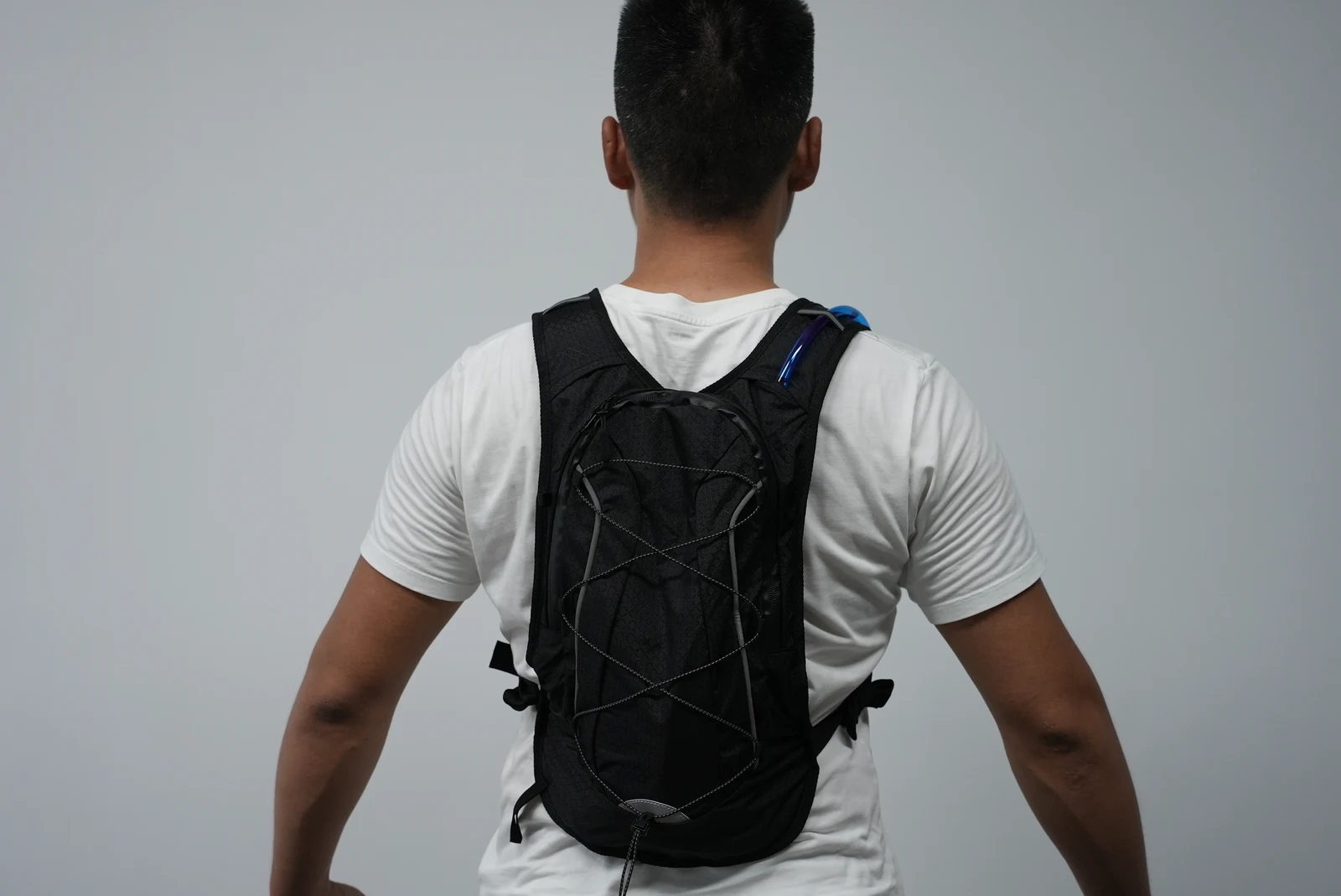
If users need different adjustment ranges, record those requirements with the corresponding size and clothing. A single arrangement on one model should not become an unsupported claim of universal fit. Confirm the intended range through the appropriate sample process.
04
Match panel edges and materials to movement
Review the chest-panel edge while the arms reach forward and the torso changes angle. If concentrated contact occurs, identify whether it comes from an object, binding or connection point. Then consider pocket position, local contour or material changes rather than adding thickness everywhere.
Compare lightweight materials by area: flexibility, deformation and the feel of sewn edges may matter in different ways. The visible dark grid pattern establishes none of the fiber, abrasion or water-repellency properties. Tie those requirements to an identifiable material and supplier documentation.
05
Confirm access while stationary
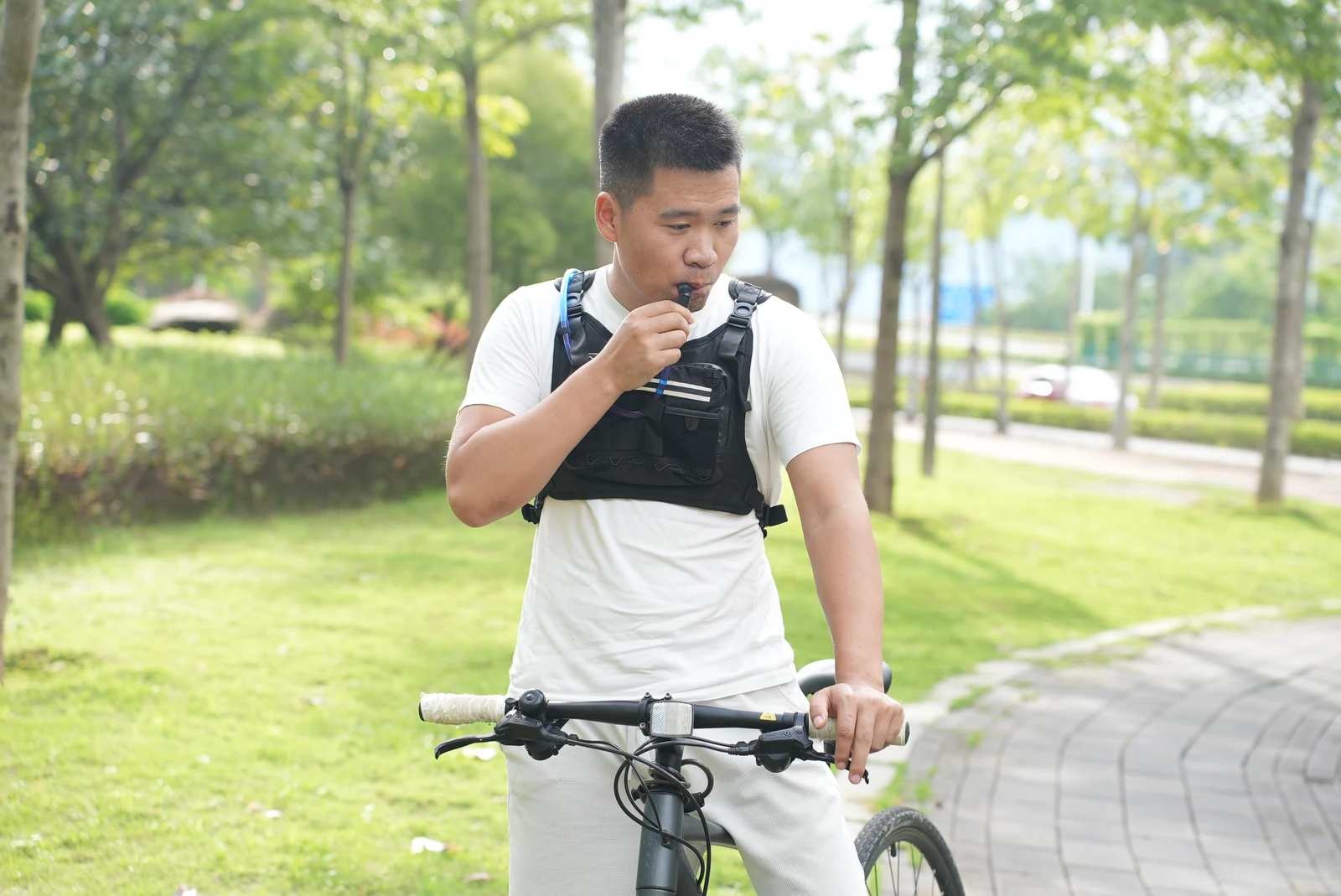
Start with opening, removal, replacement and closure after the user has stopped safely. Note whether access requires releasing a connection or readjusting the panel. Decide whether that sequence meets the intended use before describing the pocket as convenient.
06
Write an actionable OEM/ODM brief
Keep the approved sample identifiable
Provide clothing, hand-position reference, carried objects and adjustment photographs. Identify the priority problem, such as a hard-to-locate opening, lower-edge pressure or panel movement after access. State which components may change so a local issue does not automatically trigger an unrelated redesign.
Keep approvals tied to one size and sample version. Distinguish observed conditions from those still requiring confirmation. These company-library photographs support construction discussion; the article reports no ride-test data. Explore further topics in the JKPD development blog.
Related: Front pocket layering. See the photographed product reference.
Discuss your bag development project
ANSON XIE
General Manager & Founder
Quanzhou Junkai Pengda Special Equipment Co., Ltd.
Email: ansonxie@jkpdtime.com
Phone: +86 177 5095 3355
WhatsApp: +86 177 5095 3355
Factory address: Floors 2–4, Building 1, Phase I, Huixin Intelligent Manufacturing Industrial Park, Hui'an County, Quanzhou, Fujian, China