
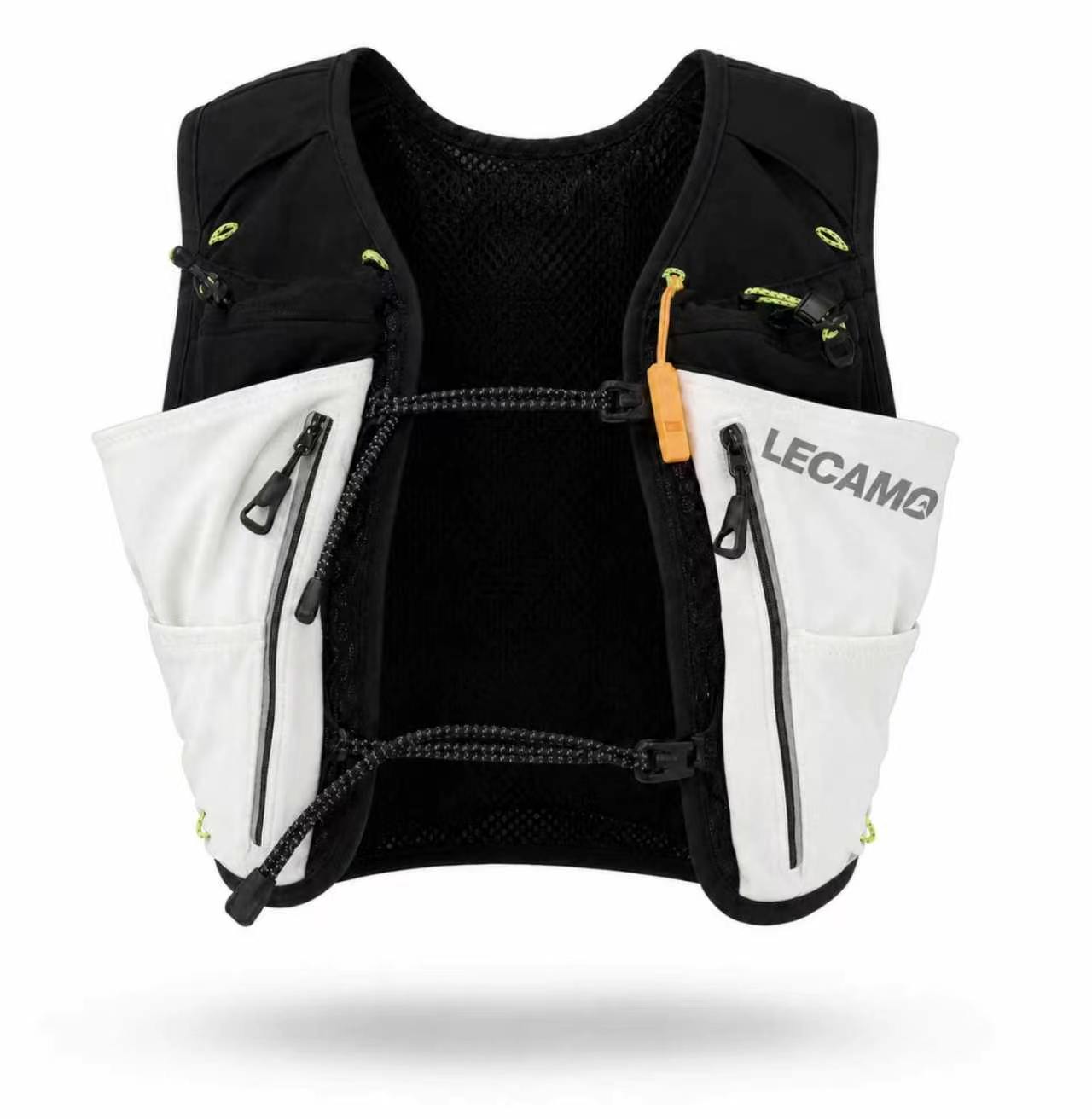
A trail vest needs clear access paths for different items, not simply a high pocket count. With flasks, small objects and reserve equipment loaded together, the user still needs to locate the correct opening and use the available space in each layer.
01
Assign a task before adding a pocket
Front storage often supports access during a run, but one location does not suit every item. Repeatedly used food, occasional small objects and reserve items needing a closure should each have a defined operation before the opening and pocket shape are selected.
REI’s hydration vest guide includes convenient pockets and suitable fit among selection considerations. Development should ask a further question: does that convenience remain when the full intended kit is present?
Create an item-position list that states whether an object is returned immediately, whether its pocket needs closing and whether the user can see the opening. This turns “add another pocket” into a specific access task.
02
How can flask and small-item pockets interfere?
Overlapping pockets may share a panel or expand into the same region. A small object can fit alone yet become harder to reach once a flask is inserted. Review simultaneous loading rather than approving the two pockets separately.
The shoulder photo shows a box-shaped object in a mesh pocket above a flask pocket. It establishes that visible arrangement, not universal item compatibility or retention during running.

If both pockets need to work independently, consider separate bottoms, opening directions or shaped allowance. Do not rely on one fabric layer stretching indefinitely. Also check whether the revision pushes contents into the arm’s path.
Give the flask its own intended retention arrangement and review the small-item pocket for its actual contents. A full flask should not become an accidental structural support for another object: drinking, removal and refilling can change that contact condition.
03
Should a phone sit against the body or outside the flask?
Review rigid-item position, contact pressure, retrieval and moisture exposure together. One wearer’s preference is not a universal placement rule. Include the phone case, item shape and orientation in the loading conditions.
For an inner position, observe body contact and whether retrieval pulls the vest out of place. For an outer position, observe the effect of bulging on retention and arm clearance. Keep the device, clothing and other contents consistent when comparing the alternatives.
04
Why separate an open pocket from a zipped pocket?
An open pocket can provide a direct access path; a closure can support a different retention task. Nearby openings should not be treated as interchangeable. Finding the edge, opening it intentionally and reaching the inner zipper are separate operations.

The photographs show an outer-pocket edge being pulled open and a visible inner zipped pocket. Review whether contents in the outer layer obstruct that zipper. Check whether retrieving an inner item also disturbs or removes another object.

A closure does not establish water protection. Zipper appearance, closely fitted fabric and neat seams cannot guarantee protection of electronics from sweat or rain. Define a separate protective arrangement and supporting evidence where the brief requires it.
05
Select lightweight fabrics by layer
A small-item pocket may prioritize identification and access resistance. An outer storage layer needs suitable loaded shape and recovery. A body-facing layer needs appropriate contact behavior, damp-condition behavior and seam placement.
Compare the complete layered assembly when reducing weight, including zipper tapes, bindings, pocket bottoms and reinforcement. Removing a divider may save material while making two pockets compete for space. Adding one requires a fresh review of weight and access.
List fabric references, composition, mass per area and any required extension or recovery conditions separately. Mesh appearance cannot identify composition or establish the breathability of a fully loaded vest.
06
Close the review with a repeatable sequence
Retain the reviewed sample configuration
With the intended kit loaded, retrieve a flask, reach the small-item pocket, operate the zipper and return the items. Record whether an adjacent pocket must be emptied or an adjustment changed. Repeat after some contents have been consumed or removed.
Approve the final item-position list, pocket purposes and material list together. These photos explain layouts and the text proposes development checks. They do not establish capacity, material performance or dynamic retention results. Submit the intended kit and access requirements through the JKPD project inquiry page.
Related development guide: Soft-flask pocket fit and fill states. See the photographed product reference.
Discuss your bag development project
ANSON XIE
General Manager & Founder
Quanzhou Junkai Pengda Special Equipment Co., Ltd.
Email: ansonxie@jkpdtime.com
Phone: +86 177 5095 3355
WhatsApp: +86 177 5095 3355
Factory address: Floors 2–4, Building 1, Phase I, Huixin Intelligent Manufacturing Industrial Park, Hui'an County, Quanzhou, Fujian, China