
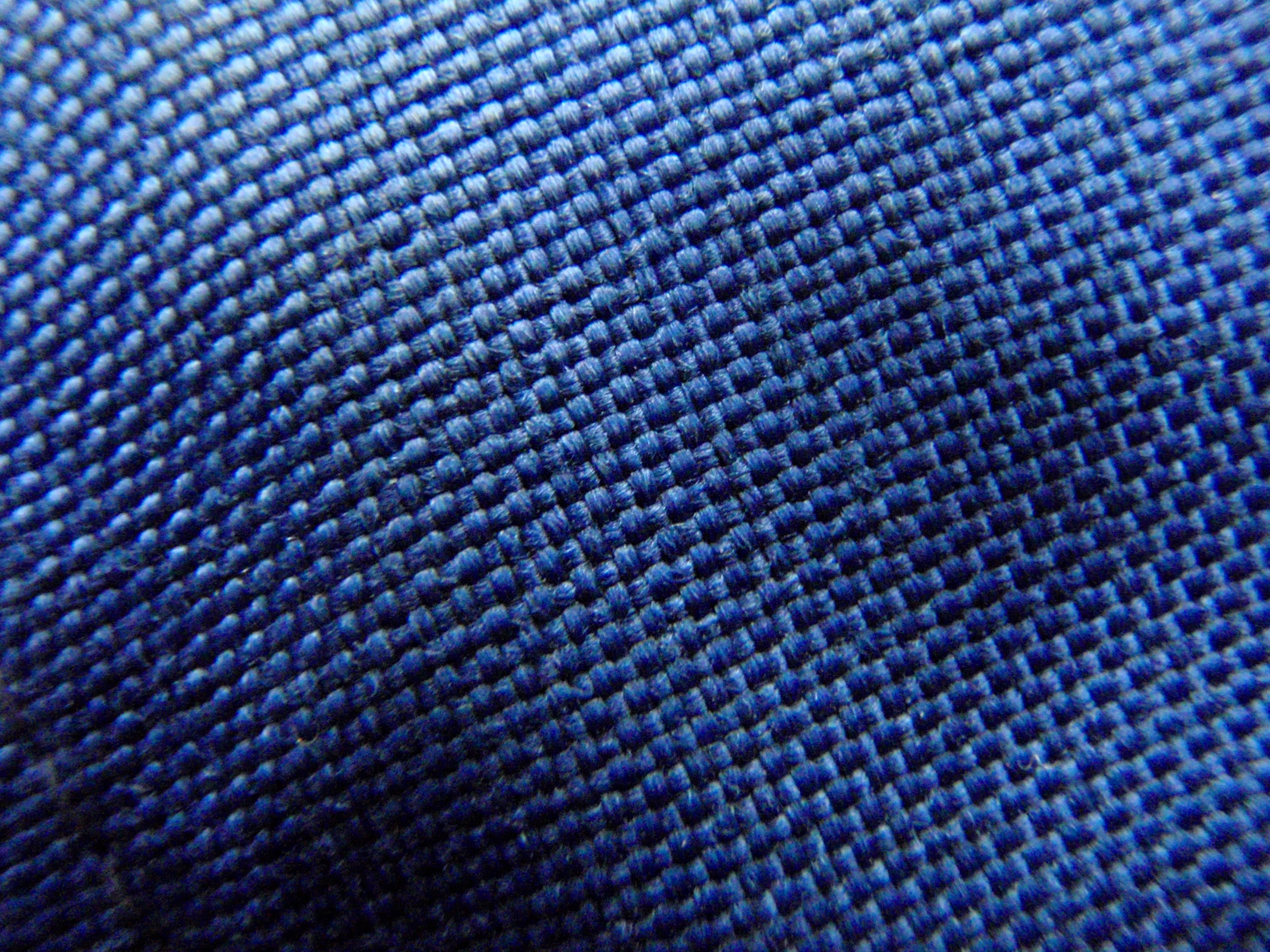
Photo: Apapadop; contrast correction in 2013 by A7N8X. CC BY-SA 3.0 · Original source. Unmodified for this article. The image remains under its stated license; no endorsement or JKPD material use is implied.

01
Identify the family before comparing fabrics
Start with the fabric family and article number. The Classic product page describes high-tenacity, air-jet textured nylon 6,6 filament yarns in a 330D–1000D range. That description belongs to Classic; it is not a formula for the entire brand.
The NYCO page describes nylon 6,6 staple fiber blended with cotton. The re/cor portfolio distinguishes RN66, RN6 and RPET. These involve different fiber routes. A request for CORDURA therefore still needs a family, composition declaration and identifiable fabric article.
02
Separate yarn technology from the visual reference
Air-jet texturing describes a yarn-processing route, not a coating name or a finished-bag performance result. The blue photograph helps show interlacing and surface texture. Its author identifies it as CORDURA but supplies no family, yarn specification or fabric article. It cannot establish that the material is a particular 500D Classic.
Keep a desired surface effect separate from material identity. Use a tactile sample, close-up and color reference for appearance; use supplier and manufacturer documentation for identity. Similar-looking cloths should not become interchangeable by default.
03
Record denier, fabric mass and thickness separately
The supplier glossary defines denier as fiber weight per unit length. A yarn specification cannot replace finished fabric mass per area, thickness or test results. List finished mass, width, thickness, weave, face and reverse treatments, and measurement state separately.
Do not change an entire bag solely because 1000D is a larger number than 500D. A more useful development comparison keeps pattern, lining and attachments identifiable, then reviews empty-bag mass, folding feel, corner shape and sewn areas before project-specific performance verification.
04
Make the finishing version traceable
Classic’s official description includes finished, coated and laminated options. Brand and denier alone do not identify the delivered cloth. Ask whether the face has a water-repellent finish, whether the reverse is coated or laminated, how the treatment version is identified and which delivery state the reported properties cover.
Keep face and reverse samples linked to color, batch and data sheet. A base-cloth report is insufficient identification for an ordered coated article. A finishing change should trigger a review of the approval basis, including any separate seam and opening requirements.
05
Compare materials against defined bag regions
Give the base, main panels, folding zones and attachment areas identifiable tasks before deciding whether one cloth should serve them all. Compare equivalent coupons from candidate fabrics without assuming a family suits every base or a denier establishes load capability.
Review assembly using the proposed face fabric, lining, reinforcement and thread combination. Record corner formation, binding coverage and visible distortion near attachments. These are proposed sample checks, not claims that JKPD has already run a particular experiment.
06
Use the brand video as orientation, then specify the current article
The official 2012 training video is supplementary background on the material family. Auto-generated captions may contain brand-name spelling errors. Current composition and specification decisions should use the manufacturer pages checked for this article and the proposed fabric article’s documentation.
A supplier brief should identify application area, manufacturer family, fabric article, composition, yarn specification, finished mass and width, weave, finishing revision, color and batch traceability. Attach the required test method, sample state and acceptance criteria separately. This makes the purchase identifiable beyond the brand name.
Related video:CORDURA(R) Brand Fabric - Informational Video — CORDURA® Brand
Supplementary viewing: historical brand training. Captions may contain spelling errors. Use current manufacturer data for specifications.
Share application requirements, candidate fabric articles and available records through the JKPD inquiry page.
For a separate performance question, see how to review fabric abrasion reports.
Discuss your bag development project
ANSON XIE
General Manager & Founder
Quanzhou Junkai Pengda Special Equipment Co., Ltd.
Email: ansonxie@jkpdtime.com
Phone: +86 177 5095 3355
WhatsApp: +86 177 5095 3355
Factory address: Floors 2–4, Building 1, Phase I, Huixin Intelligent Manufacturing Industrial Park, Hui'an County, Quanzhou, Fujian, China