
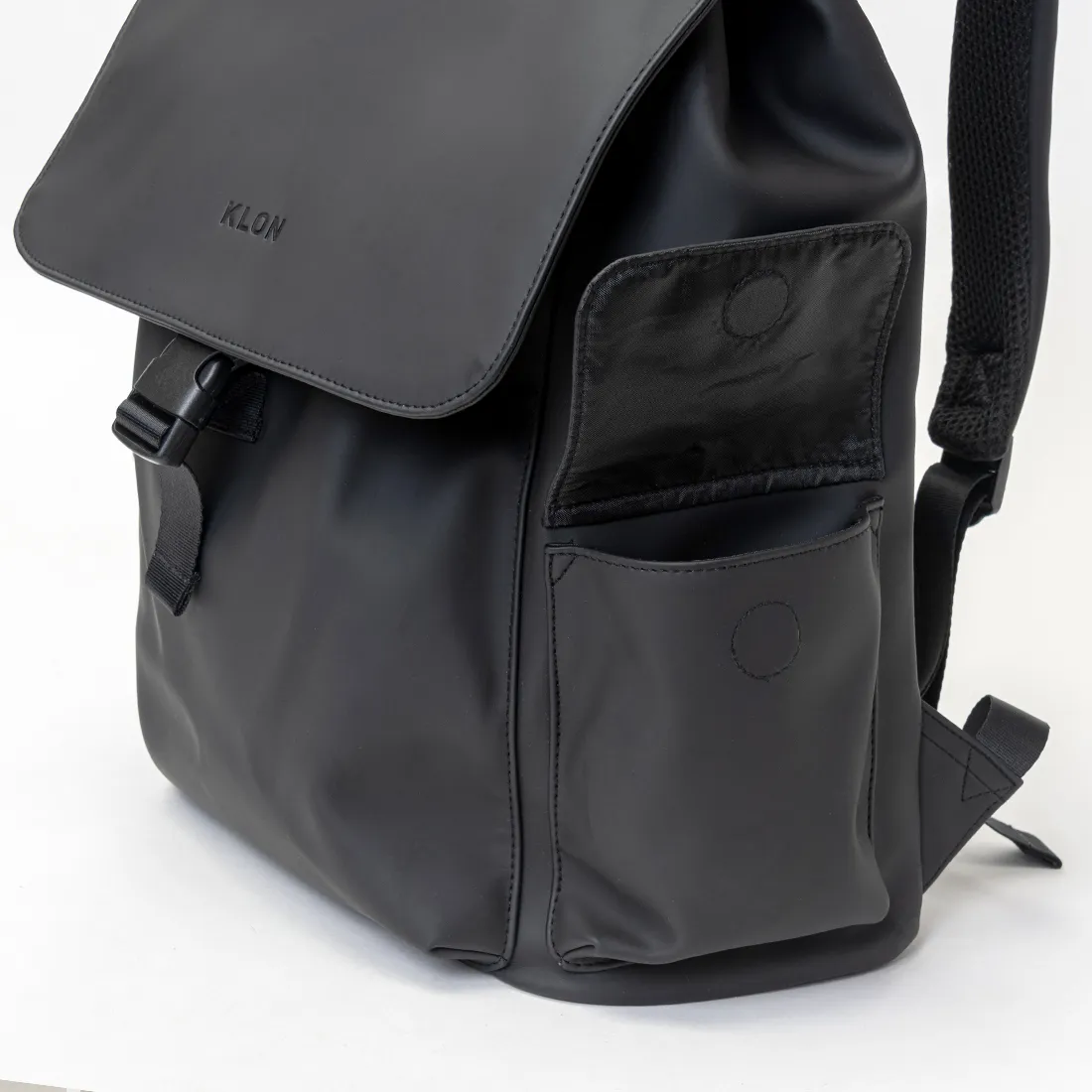
A commuter backpack’s side flap pocket can serve a small-item task separate from the main compartment. First define what should be accessible while the large main flap stays closed. Then arrange the side opening, the resting position of its flap and the direction of the intended contents around that local task.
Assign a principal item and a use situation to the side pocket. Develop opening, gripping, returning and closing as one independent sequence. Confirm the pocket shape with the main compartment packed for normal use.
01
Define the task with the main flap closed
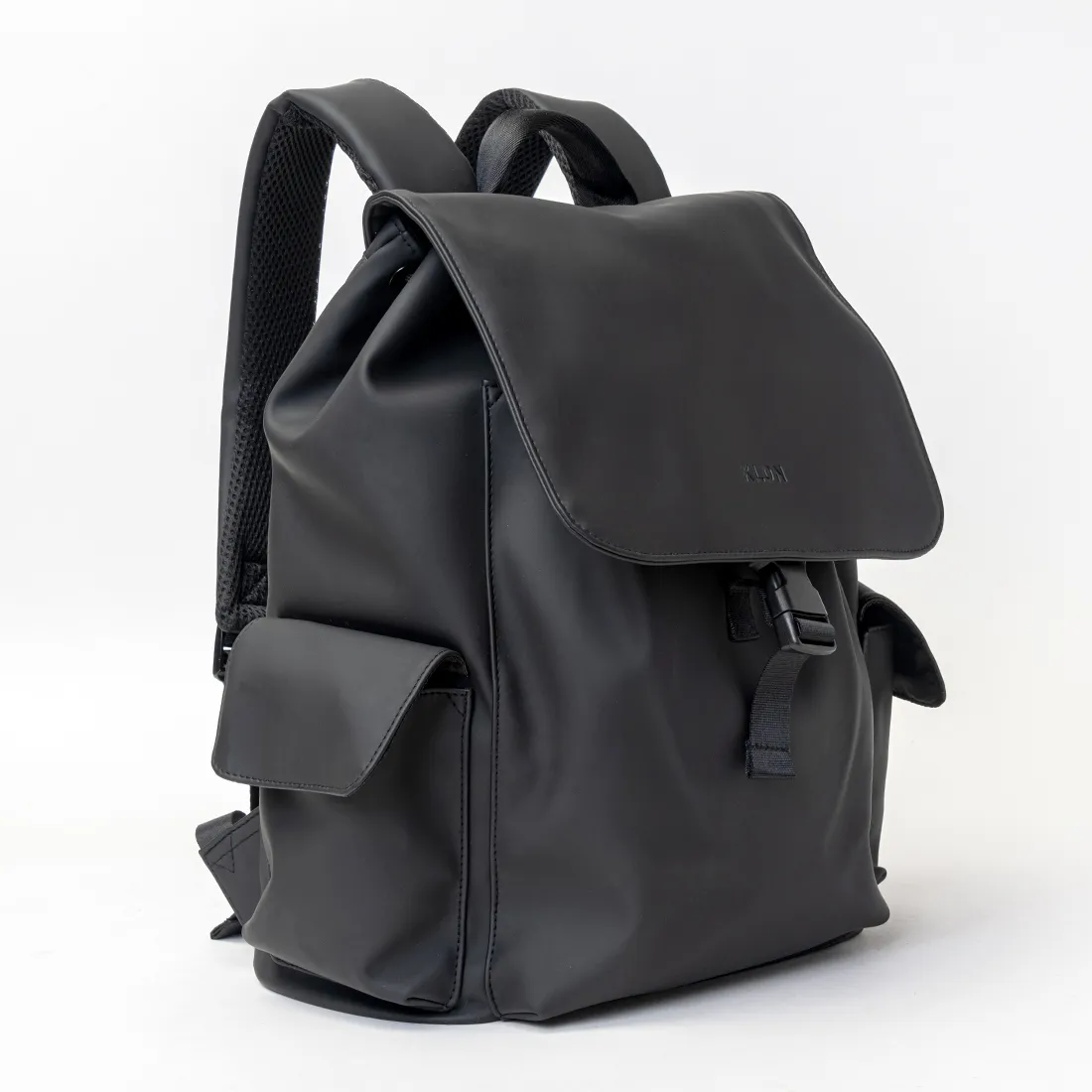
Independent operation is a useful reason to discuss this layout. The oblique photograph shows the smaller side flap beside the large main flap. Assigning a frequently needed item to a side pocket gives the development team a specific local-access objective.
Choose a principal task, such as retrieving an earphone case or a small packet of everyday supplies during a pause. Record whether the user sets the bag down or turns it toward the front of the body. That posture determines the direction from which the hand approaches the flap and the space available to move it.
02
Orient the contents around the grip
Item orientation should leave a useful place for the fingers to grip. Once the object fits inside, it still needs to be reachable without searching the entire pocket. A case, a key sleeve and a soft packet can create different retrieval tasks, even when each occupies a similar-looking amount of space.
Compare the principal item alone with a proposed combination of small items. If they press against each other and complicate retrieval, revise their allocation or internal arrangement before increasing pocket depth. The product photographs provide no internal measurements or verified compatibility with a particular case, so those decisions require the target objects and a sample.
03
Give the open flap a place to rest
The hand needs a route past the open flap into the pocket. The detail photograph shows the flap raised above the mouth. In the intended handling posture, establish whether one hand must keep holding the flap and where the other hand can grip the contents.
If the brief calls for the flap to remain in a particular position, implement that requirement on the development sample. Describe the circular stitched areas in the photograph only by their visible form. The closure type, magnetic behavior or retaining capability requires component information and verification rather than identification by appearance.
04
Allow for the packed main compartment
The main compartment and side pocket occupy neighboring body areas. Pack the main compartment before reviewing the side pocket’s operating shape. A rigid object on the inside can alter the shared wall, while a thick small item in the side pocket adds projection on the outside. Both tasks need their intended space.
The oblique photograph supports a discussion of the empty outline. Once the target contents are selected, repeat that viewing direction to compare the mouth, flap landing area and finger route. A useful revision identifies a change in depth or attachment area, giving the sample team more direction than a request for greater capacity alone.
05
Make returning and closing observable
Returning the contents should leave them inside the area that the flap can cover. Then bring the flap back to its intended landing position. Observe whether an object corner sits beneath the edge, whether the pocket mouth rolls inward and whether the user can see or feel the closing location.
Where a tidy silhouette is central to the product, compare the empty pocket with the normal contents. Stronger retention or rain-protection requirements need separate construction decisions and evidence. The presence of a flap establishes a visible layout, but not those performance outcomes.
06
Hand over an independent access task
Keep the approved sample identifiable
A short task record can state the principal item, its direction, the handling posture and the main-compartment contents. Add photographs of opening, removal, return and closure. This gives the development team one complete sequence that the side pocket should perform independently.
Procurement information should identify the pocket material, flap-edge finish, closure component and finished dimensions. Original library marks remain visible; the images describe construction without implying a partnership or endorsement from the marked brand. More practical bag-development topics are available on the JKPD blog.
Related: backpack side pouch envelope. See the photographed product reference.
Discuss your bag development project
ANSON XIE
General Manager & Founder
Quanzhou Junkai Pengda Special Equipment Co., Ltd.
Email: ansonxie@jkpdtime.com
Phone: +86 177 5095 3355
WhatsApp: +86 177 5095 3355
Factory address: Floors 2–4, Building 1, Phase I, Huixin Intelligent Manufacturing Industrial Park, Hui'an County, Quanzhou, Fujian, China