
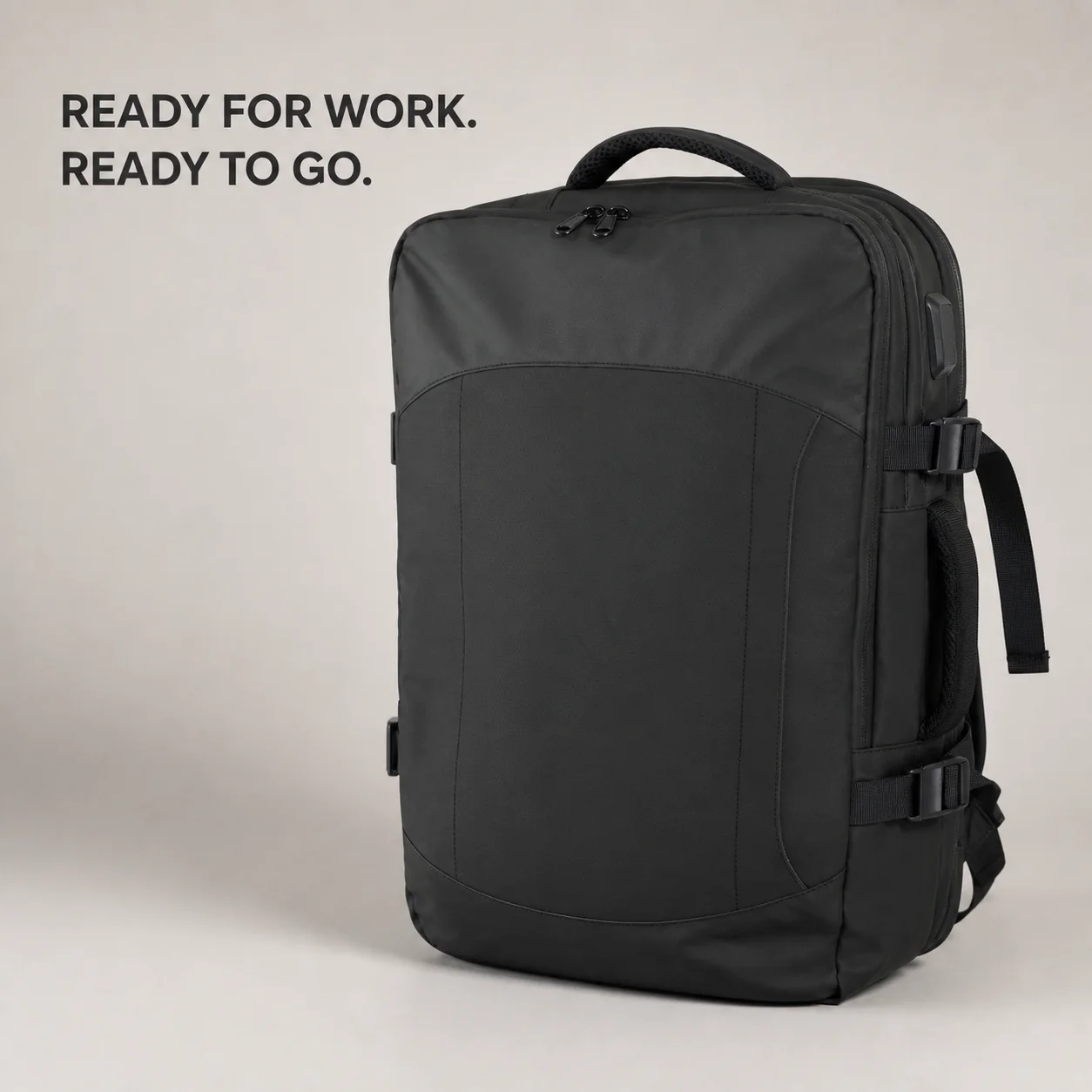
A material list that says black sewing thread is not ready for purchasing. It leaves the supplier, construction, size and finish undecided. Two cones can look similar beside a fabric swatch and produce different results in the same backpack seam.
For a business backpack, thread approval should connect a purchasing reference to a sewn result. The visible front panel, a lined laptop pocket and a thick handle connection do not necessarily need the same specification. Start with those locations, then build a short trial record that production can follow.
01
Map the sewing jobs before choosing a cone
List the actual seam locations rather than giving the entire backpack one vague requirement. Separate visible topstitching, panel joining, lining assembly, binding and reinforced attachments. Note the intended material layers and whether the thread will remain exposed to contact during use.
A neat-looking topstitch is an appearance decision as well as a construction decision. On a business bag, a slight contrast or change in shine may be intentional. That does not mean the same thread should automatically move into every hidden seam.
Give each location a drawing reference and identify which supplier recommendation will be tried there. If one thread is proposed across several operations, include representative thin and thick combinations in the trial. The aim is to avoid unnecessary variants without pretending all seams are identical.
Keep this map alongside the backpack technical pack. It should tell the sample room where to use each approved reference, not prescribe unsupported strength claims from a photograph.
02
Ask for an identifiable thread specification
Request the supplier name, product reference, fiber and construction, size designation, color code and relevant finish. Copy the size system exactly as the supplier states it. An isolated number is not enough if different purchasing teams use different naming systems.
The Coats sewing-thread bulletin separates substrate, construction and finish when classifying thread. It also distinguishes sewing behavior from properties such as tensile strength and elasticity. Those distinctions help explain why a fiber name alone cannot complete a bag specification.
Ask the supplier which technical information applies to the exact candidate, rather than attaching a general product-family brochure. Where a claimed property matters to the project, record the method and conditions behind it. Do not turn a thread-level value into a finished-backpack load rating.
Availability belongs in the discussion too. Confirm the intended color and size can be supplied together for the order, and identify any proposed alternate before sampling. A purchasing substitution after approval is a new decision, even when the shade looks close.
03
Review color on a sewn panel
Approve the thread against the actual shell fabric and intended stitch appearance. Compare a sewn sample with the agreed reference under consistent lighting. A cone presents a large mass of color; a line of stitches presents a different visual balance against the panel.
Include the relevant fabric colorways instead of assuming one dark thread will disappear equally on all of them. Record whether the design calls for a matching or contrasting effect. Keep photos for location and revision records, but retain the physical reference for a meaningful color comparison.
Review the reverse face where it remains visible or accessible. If needle and bobbin threads have separate specifications, record both. The buyer should know whether the approval covers only the exterior appearance or the full assembled detail.
A useful approval identifies the thread reference, fabric reference, seam location and physical sample. “Match the black sample” leaves too much room for an unrecorded change.
04
Run the trial on the intended material stack
Use the planned layers, including backing, foam or tape where the construction calls for them. Give the sewing specialist the supplier information and ask for a compatible setup. This guide does not prescribe one needle, tension setting or thread size for every business backpack.
Record the trial conditions so a revised sample can be compared fairly. When a defect appears, avoid changing several variables at once without labeling the resulting combinations. An attractive second swatch is less useful if nobody knows which change produced it.
Inspect the face and reverse for the agreed appearance and stitch-formation requirements. Review corners and thickness transitions as well as straight runs. If the panel distorts, investigate the combination rather than immediately blaming the thread; our seam puckering guide addresses that separate diagnosis.
Where seam performance matters, agree suitable verification of the sewn construction with the buyer and relevant specialist. Keep appearance approval and performance results separate. A hand pull during a meeting may help locate a concern, but it is not a defined test report.
05
Move from coupons to the finished bag
Review the approved thread combination in an assembled backpack. A small coupon can expose sewing issues, yet it cannot reproduce every junction, opening or contact point. Use it to narrow the choice, then confirm the relevant operations on the complete sample.
Check visible transitions where an operator changes seam direction or finishes a line. Look inside pockets and around binding ends for accessible tails or rough finishing. State what needs correction and where, instead of rejecting the whole specification with a general comment such as poor workmanship.
Include the intended cleaning or finishing steps in the development review when they could affect the sewn result. Ask for evidence appropriate to the final care claim. Do not assume a supplier statement about thread alone also covers shell coatings, lining or decoration.
Retain the approved coupon and assembled sample under linked IDs. If a thread change also requires a different setup or affects the appearance, describe the approved revision clearly. That prevents the sample room and production line from working from different references.
06
Control the production handover
Before release, compare the received thread labels with the approved list and keep batch traceability appropriate to the order. Store the reference sample where the team can use it, and distinguish approved alternates from candidates that were merely discussed.
Review the first finished units at the relevant seam locations. Record which reference and setup produced them, together with any open issue. Repeat the affected checks after an agreed material substitution or process change, rather than treating the first approval as permanent permission for every variation.
For an OEM inquiry, send the seam map, material references, intended appearance and verification requirements together. The practical question is not which thread is strongest in isolation. It is which identified combination can meet this backpack’s requirements and be reproduced throughout the order.
FAQ
Questions buyers often ask
Should a thicker thread replace a failed seam?
Not without investigating the failure and its conditions. Review the material stack, seam construction, sewing setup and requirement first. Trial any proposed thread change on the actual assembly and verify the relevant result rather than using thickness as a shortcut.
Can the same color code justify a different supplier?
No. Treat the alternate as a separate reference. Compare the sewn appearance and relevant technical characteristics, confirm compatibility with the intended operation, and record approval before production uses it.
Discuss your bag development project
ANSON XIE
General Manager & Founder
Quanzhou Junkai Pengda Special Equipment Co., Ltd.
Email: ansonxie@jkpdtime.com
Phone: +86 177 5095 3355
WhatsApp: +86 177 5095 3355
Factory address: Floors 2–4, Building 1, Phase I, Huixin Intelligent Manufacturing Industrial Park, Hui'an County, Quanzhou, Fujian, China