
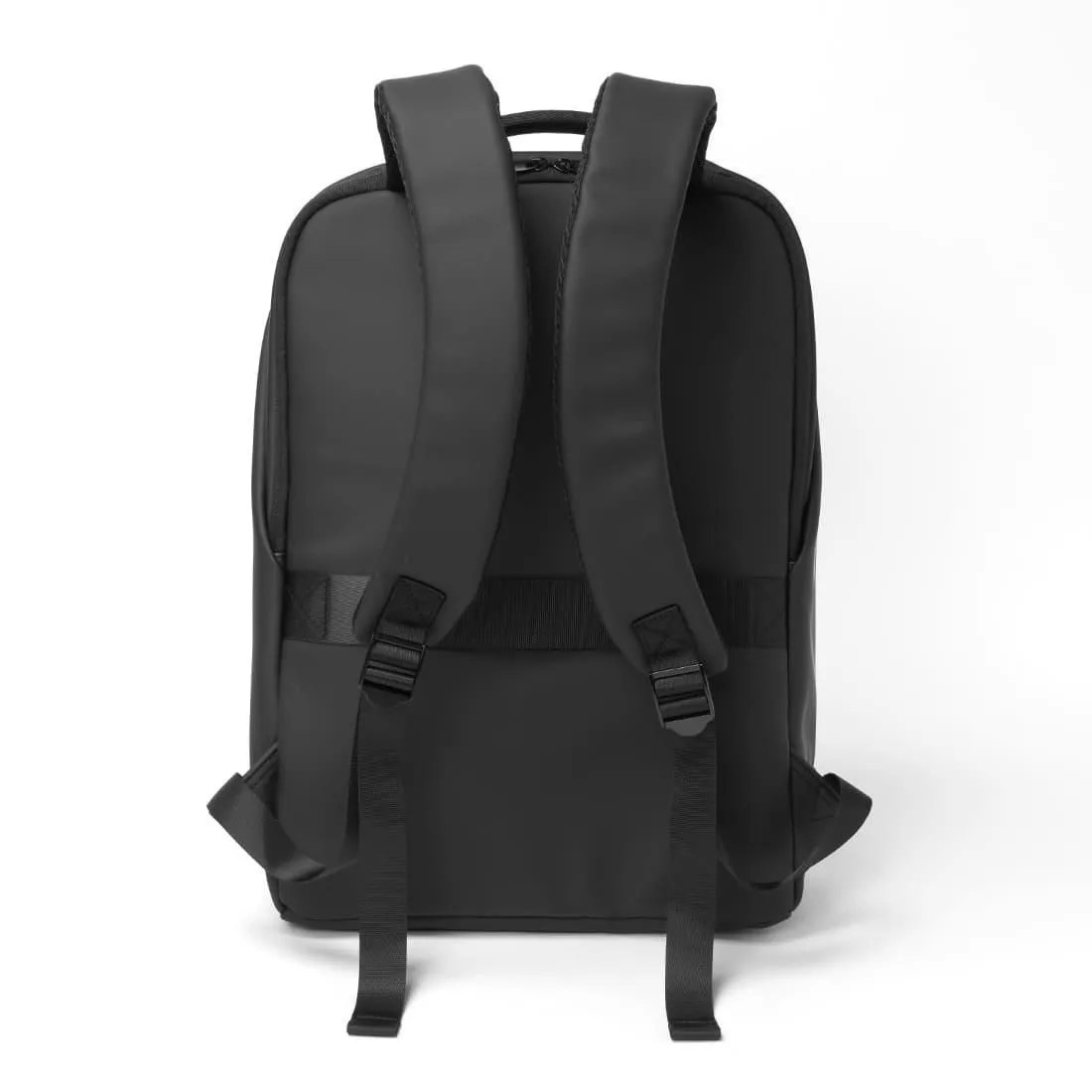
A rear-access business backpack needs a suitable place to open. Develop its placement direction, panel movement and shoulder-strap resting positions alongside the internal storage. A wide-looking opening alone does not establish convenient access beside a seat or on a desk.
Plan the whole task: select a resting surface, park the straps, open the panel, retrieve the item, return it and close the bag. Use the intended contents throughout the sequence to establish the space required at each stage.
01
Define how the bag is placed
The rear opening must be exposed before the user can work along its zipper. Choose the main situation first: beside an office desk, inside accommodation or next to a seat during a short stop. The available surface determines whether the body can lie flat and where the open panel can rest.
The Lowepro Flipside 400 AW III product page describes taking the bag off, laying it down and unzipping its back panel. This external example connects rear access with a placement sequence. Its camera organization differs from the business backpack pictured here, so its other features should not be transferred to this design.
02
Include the open panel in the workspace
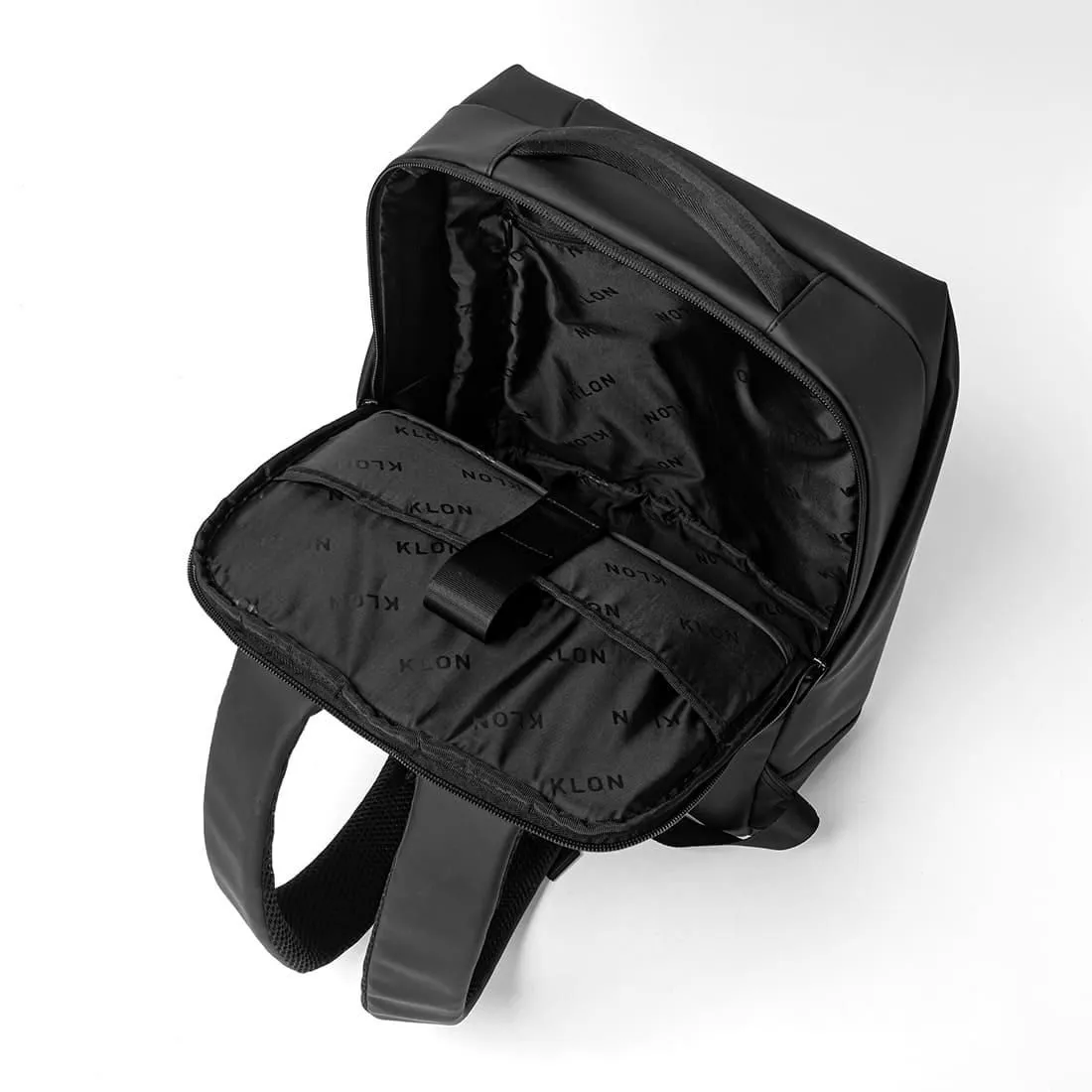
An open panel occupies space beyond the body of the bag. The empty-compartment photograph shows the panel folded outward, with an inner sleeve moving with it. Treat the body and open panel as one operating area when deciding whether the intended desk or other surface is suitable.
For a narrow resting area, compare partial opening with fuller access. Identify which objects can be retrieved through a limited opening and which need the panel moved farther away. Different storage tasks may require different amounts of space and different supporting hand movements; describe those conditions alongside the layout.
03
Arrange contents that move with the panel
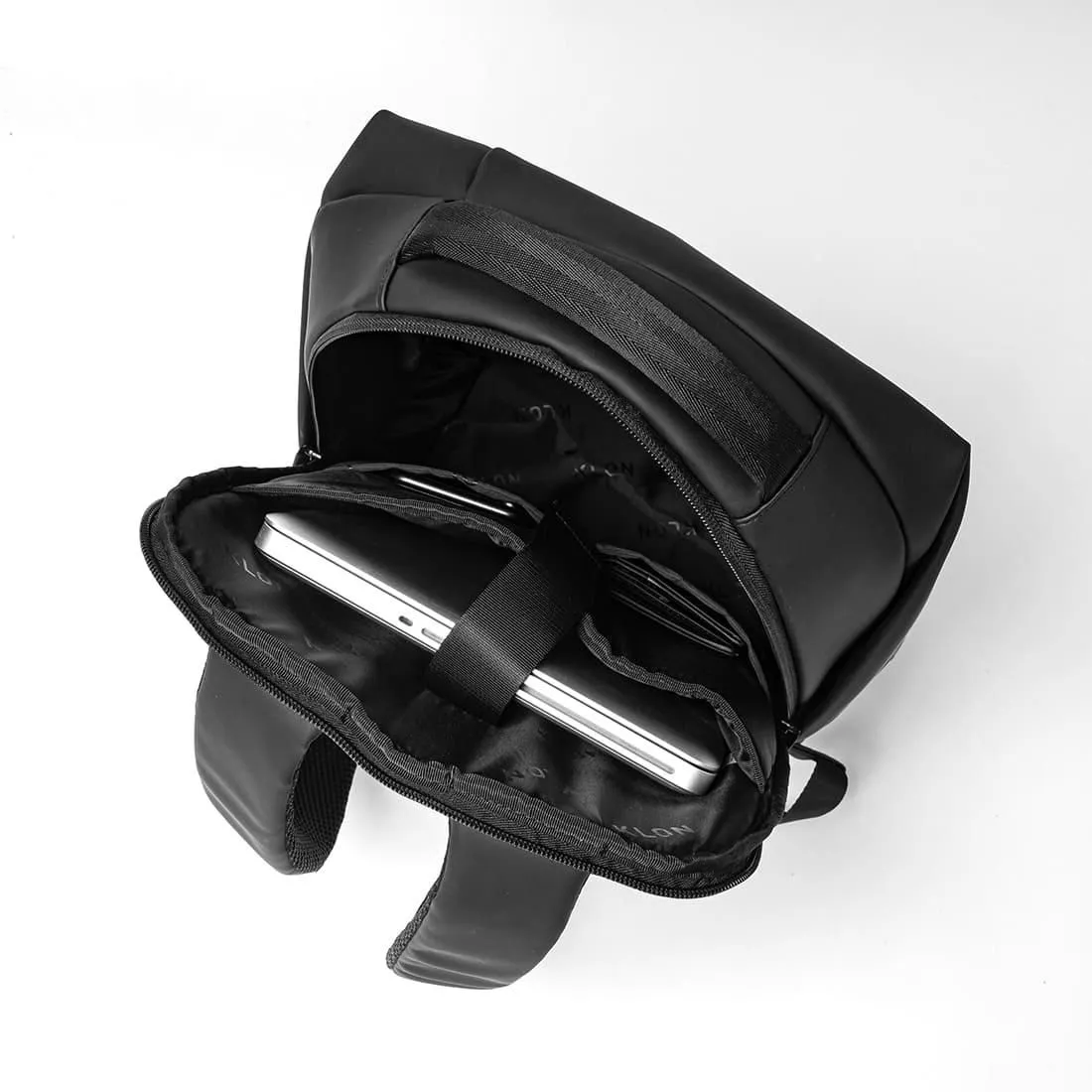
A panel-mounted sleeve changes orientation during opening. The empty photograph shows webbing above the sleeve, while the loaded photograph shows the position of a device. These views establish the visible layout. They do not establish the fastening mechanism, device size or retention performance.
Place the intended device in a development sample using the proposed method, then move the panel slowly through the opening sequence. Note whether a restraint must be released first, whether it crosses the gripping area and where the open panel rests. These actions give a more useful direction for development than enlarging the sleeve without defining the retrieval task.
04
Park the straps outside the zipper route
The rear opening and shoulder straps occupy neighboring areas. Before opening, the straps need to rest clear of the active zipper route. Start with the naturally placed bag and locate the shoulder straps, adjustment tails and zipper pulls. The aim is a predictable preparation step that avoids repeated rearrangement during retrieval.
The return sequence matters too. After replacing the contents and closing the panel, restore the straps for carrying. If a project needs a dedicated strap-parking feature, specify it on the sample. The existing photographs do not establish magnets, hidden storage or an automatic gathering mechanism.
05
Choose the resting surface with the materials
When the exterior becomes the resting surface, consider its actual contact conditions. A desk, seat and outdoor ground present different surfaces and dirt. Define the principal setting before asking for cleanability or appearance-retention requirements, and select materials using the relevant supplier information.
The photographs cannot establish a coating, abrasion rating or compatible cleaning agent. Rear access alone also does not establish a security or device-protection rating. Any such claim requires the complete construction and supporting evidence. These decisions belong in the project specification rather than being inferred from the opening location.
06
Hand over the retrieval sequence
Keep the approved sample identifiable
After choosing the main item to retrieve, document placement, opening, removal and closing. Keep the contents, resting-surface conditions and strap arrangement visible in the development record. The next revision can then address the particular movement that needs improvement.
Procurement requirements can include the closed outline and the workspace needed while open. Enter materials, dimensions and restraints from the confirmed revision. Original marks remain in the library images; they do not imply a brand partnership or endorsement. More product-development articles are available on the JKPD blog.
Related: clamshell opening restraint. See the photographed product reference.
Discuss your bag development project
ANSON XIE
General Manager & Founder
Quanzhou Junkai Pengda Special Equipment Co., Ltd.
Email: ansonxie@jkpdtime.com
Phone: +86 177 5095 3355
WhatsApp: +86 177 5095 3355
Factory address: Floors 2–4, Building 1, Phase I, Huixin Intelligent Manufacturing Industrial Park, Hui'an County, Quanzhou, Fujian, China