
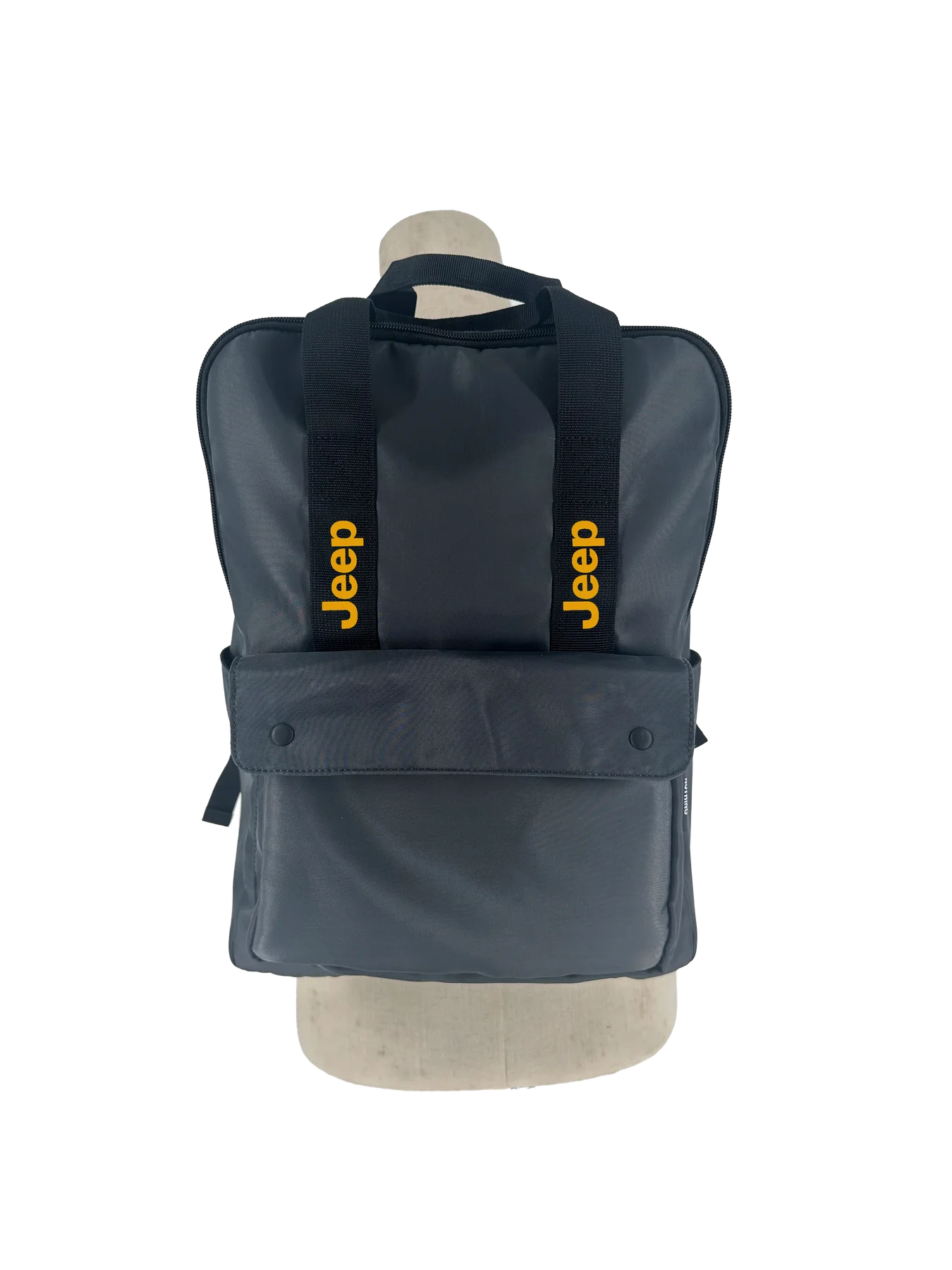
A business backpack can leave final inspection looking clean and arrive with a mark beside a metal zipper. Before changing the finish or blaming the carton, preserve the packed arrangement and identify what touched the affected area. A darkened metal surface, a colored mark on fabric and a waxy-looking patch are observations to investigate separately, not interchangeable proof of corrosion.
This guide considers a proposed metal-zipper option for a business backpack. The JKPD product photograph is a shape reference, not evidence that its zipper has a particular alloy or that it developed a defect. The review below is a proposed purchasing and sample-development process; it does not report a completed storage test or prescribe a universal shelf life.
01
Establish the actual metal and surrounding materials
Start with the zipper supplier's component identification. Record the chain, slider, stops and their specified finishes rather than describing the whole assembly as silver hardware. A metallic appearance does not establish a copper alloy, and different components in the same assembly may need different compatibility advice. Keep an unused assembly from the relevant supply lot for comparison.
Map the surfaces around it in the folded shipping position: shell face, lining, leather trim if present, protective sheet and packing tie. Record which surfaces touch directly and which merely occupy the same enclosed space. A drawing of the backpack standing upright will not show a zipper pressed against a pale panel when the bag is folded flat.
Ask procurement to connect each material to its supplier reference and lot. This is narrower than requesting every chemical used throughout the supply chain. The immediate purpose is to give the zipper and textile suppliers enough information to review the particular contact combination and any recent finishing or packaging change.
02
Photograph the package before disturbing the evidence
When a sample shows a mark, photograph the outside package, the folded bag and the affected surfaces in sequence. Label the orientation so the receiving team can reproduce the contact. Note whether the mark follows the chain, sits beneath a tie, or appears away from the fastening entirely. Preserve the original packing materials with the sample.
Do not polish the zipper or apply a cleaner before the initial review. Cleaning changes the condition that suppliers need to inspect, and an attractive cleaned sample does not establish that the process is corrected. If cleaning is later proposed, obtain material-compatible instructions and document that trial separately from the original evidence.
Describe appearance without guessing the cause
Use distinct entries for a changed metal color, a fabric stain, loose surface residue and an operating problem. Record the location and extent of each. Photos under consistent lighting help locate a change, but retain physical references for a disputed appearance decision. A phone's automatic exposure can make a small shade difference appear larger or disappear.
03
Review moisture and process history with the suppliers
YKK Korea's metal-fastener guidance explains that residual chemicals in adjacent materials can react with copper-alloy fastening parts, and that heat and moisture can accelerate discoloration. It also discusses fabric staining and wax transfer as separate concerns. Those cautions justify a compatibility review; they do not diagnose an unidentified stain on a backpack.
For the affected production route, ask whether any wet treatment, steaming, spot cleaning or adhesive operation preceded packing. Record the actual sequence and any available drying or holding records. Do not assume a garment-related warning proves that the bag was steam pressed, or that every synthetic shell behaves like the textiles described in the guidance.
If a proposed process leaves uncertainty about residual moisture or compatibility, agree the next evaluation with the material and component suppliers. A desiccant packet should not become a substitute for establishing that the bag is ready to pack. Its specification and use belong in the reviewed packaging system, not in an improvised repair to one presentation sample.
04
Inspect ties and contact separators as components
YKK Malaysia's zipper FAQ advises against prolonged storage of zippers bundled with rubber bands. Check receiving bundles and work-in-progress storage as well as the final retail pack. A tie removed before final packing can still be relevant to an earlier localized mark, so record when and where it was used.
A proposed separator also needs an identity. State its material, treated or printed faces, position and fastening method. A piece of paper inserted loosely for a photograph does not define a repeatable packing instruction. Confirm that the separator remains between the intended surfaces after folding, handling and unpacking, without obstructing the product or leaving an unwanted residue.
Consider a hypothetical pale-lined business backpack packed with its front panel folded inward. If the zipper touches the lining only in that position, compare a revised fold and a defined separator as separate proposals. Neither is automatically the answer: the revised fold may change carton utilization, while the separator adds an item that packers must place correctly.
05
Design a comparison that can answer one question
Keep a reference from the same component and material lots, then compare the current arrangement with a clearly identified revision. Hold unrelated choices constant where practical. Changing the zipper finish, lining color and packing method together may produce a cleaner sample without showing which change mattered or whether the result can be reproduced.
Agree the exposure conditions, observation schedule and acceptance criteria before starting. Record how the sample is folded, what contacts the zipper, and how it is supported. If accelerated conditioning is proposed, ask the laboratory or supplier to explain its purpose and limits. Do not convert an arbitrary chamber period into months of shipping or storage life.
Inspect both the metal and adjacent textiles after the agreed conditioning and handling. Keep operating checks separate from cosmetic observations. A zipper that still opens can have an unacceptable appearance change; conversely, a clean surface does not prove mechanical durability. The hardware corrosion-report review addresses formal environmental evidence, which is a different decision from this packed-contact investigation.
06
Release the packing arrangement with the product revision
The release record should identify the approved zipper assembly, adjacent material references, packing fold and any separator. Include a photograph that shows placement before the outer package closes. Record which trial established the decision and which concerns remain open. This turns a verbal instruction to avoid staining into something a packer and an inspector can recognize.
- Link the affected location to the retained sample and its original package.
- Separate supplier findings from observations made during the internal review.
- Specify the approved contact arrangement and the scope of the evaluation.
- Require review when a relevant finish, trim, tie or packaging material changes.
Use the export-packaging approval guide for the wider pack-out record. For a new business backpack, send the intended finish and a marked packing view through the development inquiry. The useful question is whether that identified assembly and contact arrangement have suitable evidence—not whether metal zippers are universally safe or unsuitable for enclosed packaging.
Discuss your bag development project
ANSON XIE
General Manager & Founder
Quanzhou Junkai Pengda Special Equipment Co., Ltd.
Email: ansonxie@jkpdtime.com
Phone: +86 177 5095 3355
WhatsApp: +86 177 5095 3355
Factory address: Floors 2–4, Building 1, Phase I, Huixin Intelligent Manufacturing Industrial Park, Hui'an County, Quanzhou, Fujian, China