
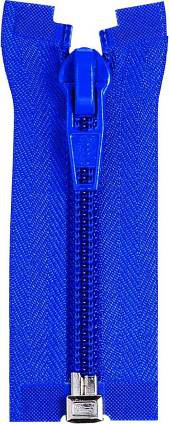
Photo: ChrisB332. CC BY-SA 4.0 · Original source. Unmodified for this article. The photograph remains under its stated license; no endorsement, polymer identification or JKPD use is implied.

01
Three questions behind a waterproof claim
A zipper described as waterproof still needs a defined application. Ask whether its surface has a treatment, whether the closed chain and ends provide a specified seal, and whether the opening retains the required protection after sewing into a bag. These are separate evidence objects.
For a sports bag or commuter backpack, start with the exposure: passing rain, contact with wet clothing or sustained water exposure. Agree on orientation, duration, specimen condition and acceptable ingress locations before sampling. This is a proposed development brief, not a waterproof rating. An attractive surface or a familiar brand name does not answer those questions.
02
Identify the chain, tape and slider on a real zipper
The photograph above shows an ordinary coil zipper so that the two tapes, chain and slider can be located. It is not an identified YKK product, a coated-zipper sample or evidence of polymer composition or water resistance. This component view helps explain where an added surface layer belongs and why ends and sewing lines need separate review.
Use the same separation in the bill of materials: chain type and size, tape article, finish, matched slider, stops and end arrangement. A short trading name leaves too many substitutions open. Keep physical samples and supplier article references together rather than identifying the construction from appearance.
03
What the PU film changes—and what remains unproven
YKK’s AquaGuard page describes PU-coated tape and explicitly distinguishes the product from a completely waterproof zipper. Different surface finishes are available. Gloss and colour therefore do not identify a complete specification.
Record the exact series, chain, tape and film version in the inquiry. When a substitute is offered, ask whether it changes the coating, substrate or complete chain assembly. An intact-looking film does not establish performance at the slider, closing line or ends. Let component documents define the supplier’s claim and application samples establish the result under the agreed exposure. Keep those records linked without treating either as a universal guarantee.
04
Select coated and sealing systems separately
YKK’s AquaSeal product information describes film-coated tape combined with a dedicated element mechanism. This manufacturer example shows why sealing-system selection involves more than adding film to ordinary tape. It does not extend that product’s claim to every zipper carrying the same brand.
For equipment intended for more demanding exposure, obtain the applicable model, size, installation guidance and conditions behind the claim. A component declaration leaves finished-bag verification open. Review opening curvature, operating access, ends and repair arrangements when changing systems. Comparing price and colour alone can overlook the details that determine whether a proposed substitution is usable.
05
Include processing and neighbouring materials
Assess the film alongside the intended production route. Proposed observations include presser-foot contact, film condition after stitching, repeated bend locations and packaging contact. Obtain processing limits and tooling advice for the selected article; ordinary zipper practice is not a substitute for product guidance.
The AquaGuard page cautions against direct ironing and notes possible colour migration in contact with certain PVC or PU materials. Revisit the contact combination after changes to the shell, lining or packaging. Retain unprocessed, processed and stored specimens separately. That comparison helps locate a change without prematurely blaming the entire zipper or attributing a result to an unverified cause.
06
Use video for context and samples for the application
The YKK video below is supplementary viewing for the AquaGuard Coil product discussion. It is not the same identified product as the ordinary zipper photograph. Neither source establishes the identity or performance of the other.
Organise sample review in two layers. First confirm the supplied assembly and film condition. Then review the actual panel or bag, including seams, ends, opening shape and condition after intended use. Record exposure conditions whenever water is applied. A demonstration may illustrate a feature, but one event does not establish certification, long-term durability or performance for a different construction.
Related video: 【YKK OFFICIAL】AquaGuard® Coil Introduction · YKK Global
Supplementary viewing only. This external demonstration is not evidence of the pictured component, certification or finished-bag performance; consult current article-specific documentation.
A demonstration is not performance certification. If the player is unavailable, use the original link; internet access is required.
07
Keep a traceable purchasing combination
A useful inquiry includes application, proposed series and full article reference, chain size, tape and film version, slider and end requirements, neighbouring materials, care expectations and the exposure still to be verified. Use photographs to locate parts, technical documents to define claims and finished-product records to evaluate the application.
If the only description supplied is “YKK waterproof zipper,” obtain the model and applicable conditions before approving marketing language. A confirmed water-resistant component can be described accurately; a finished-bag waterproof claim needs its own evidence. This keeps the material benefit visible while aligning purchasing, sampling and website copy with one controlled version.
Related reading: Zipper sample libraries.
Share the application, candidate material articles and available records through the JKPD project inquiry page.
Discuss your bag development project
ANSON XIE
General Manager & Founder
Quanzhou Junkai Pengda Special Equipment Co., Ltd.
Email: ansonxie@jkpdtime.com
Phone: +86 177 5095 3355
WhatsApp: +86 177 5095 3355
Factory address: Floors 2–4, Building 1, Phase I, Huixin Intelligent Manufacturing Industrial Park, Hui'an County, Quanzhou, Fujian, China