
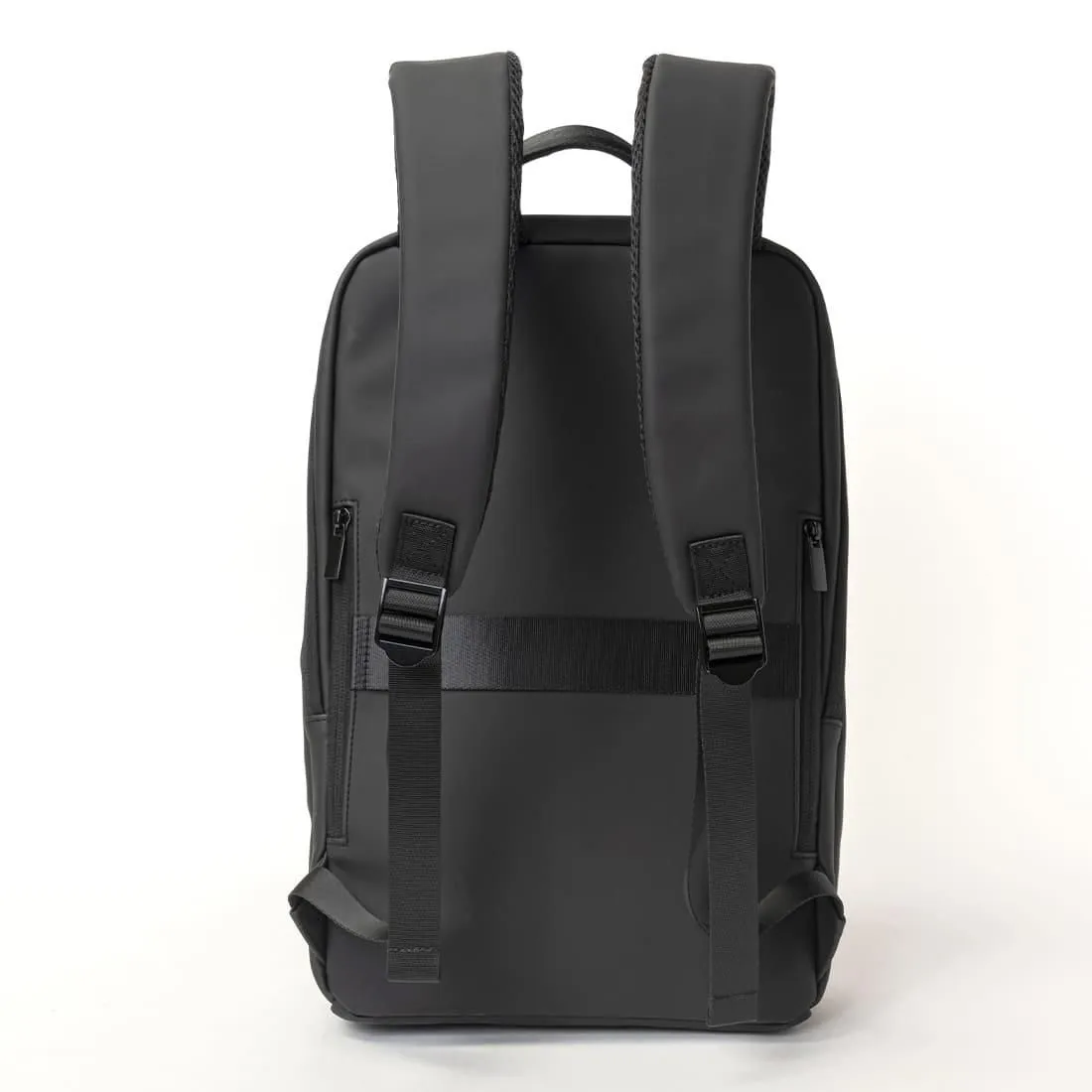
Access to a rear small-item pocket changes with the carrying mode. When the backpack is worn, the opening sits near the body. On rolling luggage, the handle and shoulder straps become neighboring components. Develop the operating task in each state before assigning particular essentials to this pocket.
Define two tasks: bring the pocket into an accessible position after wearing the pack, and find its opening once the suitcase is stationary. Include gripping, returning and closing in both tasks. A concealed location alone does not establish convenience or security performance.
01
Choose the handling posture after wearing
A pocket close to the body needs a defined retrieval posture. Choose a principal method, such as bringing the bag forward, adjusting it to one shoulder or taking it off. Then arrange the opening direction and the resting end of the zipper pull. These methods require different amounts of arm movement and surrounding space.
State the principal users, preferred hand and intended small item in the development brief. Have a reviewer follow the proposed sequence, noting whether a strap or clothing must be moved first. A rear photograph cannot establish that every wearer can reach the opening directly with both straps still on the shoulders.
02
Interpret the phone photograph carefully
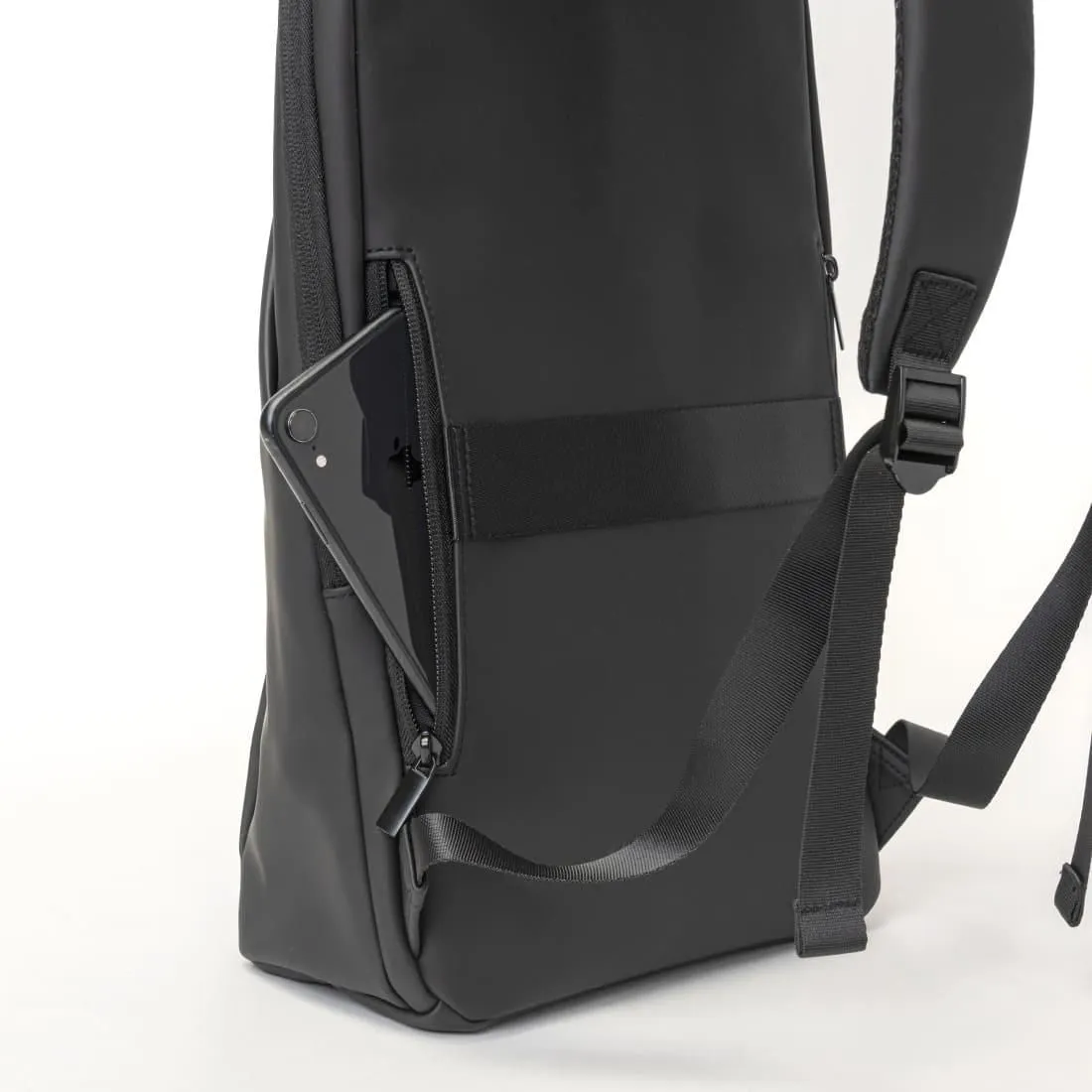
The detail photograph shows a phone partly inside an open pocket. It establishes the visible insertion direction and opening location. It does not establish fit with the zipper completely closed, or compatibility with a different phone and protective case.
Once the target device is selected, connect insertion, complete storage, closure and removal into one task. Provide a place to grip the device while allowing its full outline into the usable pocket space. A project covering several devices needs the complete reference shapes for each, rather than a comparison based on screen size alone.
03
Identify obstructions on rolling luggage
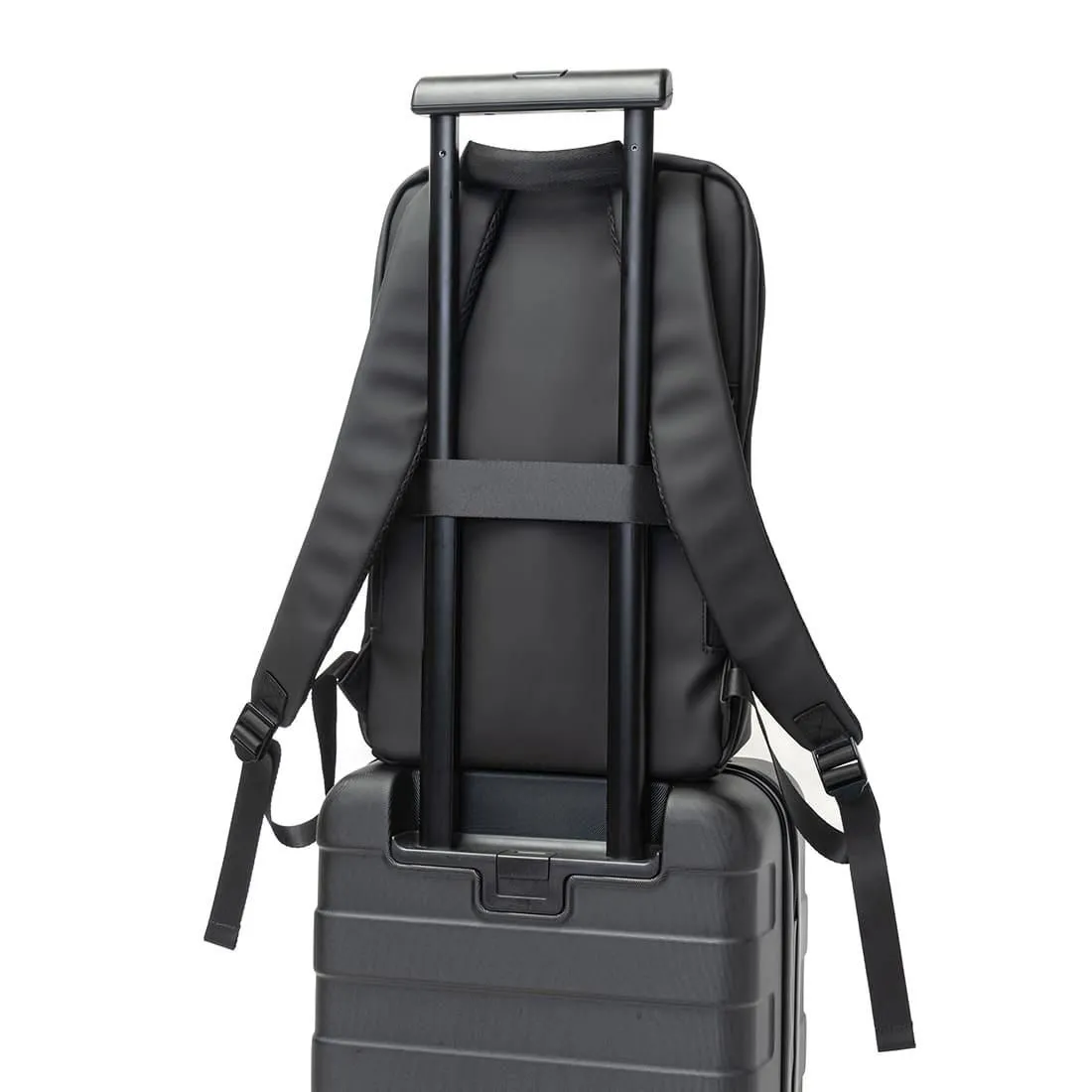
Review the luggage-mounted state with the suitcase stationary. The photograph places the handle behind the backpack and the shoulder straps at either side. Examine whether the pocket opening remains visible and whether the fingers can approach it with these parts naturally positioned.
If access requires lifting or removing the backpack first, include that step in the intended sequence. Compare another resting end for the zipper pull or a revised shoulder-strap arrangement where appropriate. Being mounted on a luggage handle does not by itself establish direct access to every opening on the back of the pack.
04
Account for a rigid item near the body
The contents of a rear pocket sit near the body-contact area. Consider a phone in that pocket together with a device inside the main compartment and the intervening back-panel layers. They share a local space whose packed shape needs to support the intended task.
Compare the position and direction of the target contents with the normal load inside. Observe the resulting rear outline, then ask intended users to assess contact during the agreed handling tasks. The photographs cannot identify hidden cushioning or establish pressure protection and long-duration carrying comfort.
05
Close the pocket before changing modes
After returning the item, confirm that it is fully inside the pocket and that the zipper pull has reached its intended resting end. Then restore the bag for shoulder carrying or luggage-mounted transport. Putting closure before the mode change gives the user a clearer sequence to follow.
Review the development sample with the straps naturally resting, rather than placing every part in an unusually convenient position. Where a dedicated parking feature is needed, build it into the confirmed revision and describe how it operates in each carrying mode. The feature should be visible in the handover information.
06
Hand over two states with one reference item
Keep the approved sample identifiable
Use the same target phone or small item to record the post-wearing handling posture and retrieval from the stationary luggage-mounted pack. Identify the shoulder-strap setting, handle position, zipper-pull resting end and any step needed to move the backpack first.
Procurement requirements can separately define the opening location, usable storage outline and closed shape. Original marks remain visible and do not establish a manufacturing relationship or joint branding. More practical product-development topics are available on the JKPD blog.
Related: business backpack rear access workspace. See the photographed product reference.
Discuss your bag development project
ANSON XIE
General Manager & Founder
Quanzhou Junkai Pengda Special Equipment Co., Ltd.
Email: ansonxie@jkpdtime.com
Phone: +86 177 5095 3355
WhatsApp: +86 177 5095 3355
Factory address: Floors 2–4, Building 1, Phase I, Huixin Intelligent Manufacturing Industrial Park, Hui'an County, Quanzhou, Fujian, China