
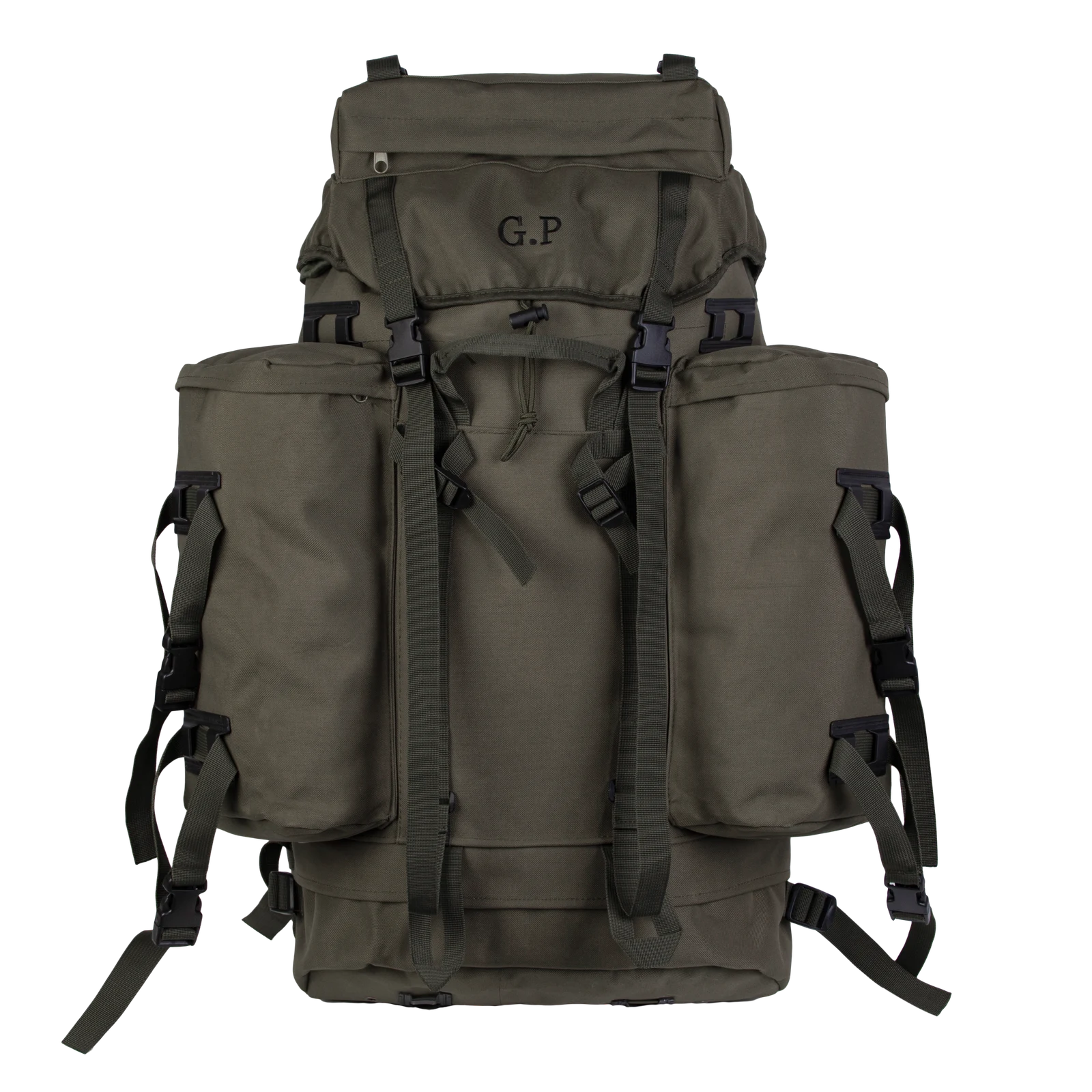
A top-loading backpack needs its drawcord collar, lid and packed height to work together. The collar gathers the main opening, the lid covers the area above it, and the front straps hold the lid in its intended position. Develop these parts around the complete opening and closing sequence with the intended contents inside.
Define a clear sequence: arrange the upper contents, gather the collar, park the cord, position the lid and adjust its straps. Check that the sequence still works when the contents change, and give each component a specific task.
01
Give the collar and lid separate tasks
The collar and lid are distinct parts that the user operates. Review the lid and gathered inner opening as separate parts on the development sample. Their opening range and closing order should let the user recognize the route into the main compartment without searching through several loose layers.
The Osprey Stratos/Sirrus owner manual lists a drawcord closure and a fixed top lid for selected top-loading models. This is an external example of the combination. The photographs here show a separate product from the company library; specifications from the Osprey manual do not establish this product’s materials or performance.
02
Reserve room above the upper contents
The collar needs space in which to gather. Clothing corners or a rigid case pushed against the closing area can alter the folds and the position of the lid. Define the principal upper contents before deciding where they should sit relative to the opening.
For a thin garment, compare a flat folded arrangement with a loosely packed one. For a rigid item, locate the projecting corners. Move the contents into the space provided by the body before revising the closure. Longer lid straps alone do not establish a larger usable capacity or an approved higher load.
03
Examine the opening after gathering
The channel construction, collar flexibility and packed contents influence the gathered shape. The exterior library photographs cannot establish the size of the gathered opening or any rating for resistance to rain and dust.
Photograph the development sample after gathering it around the normal contents. Then position the lid and examine their relationship. A project requiring rain protection should define the relevant inner packaging or other protective system and its verification conditions. The phrase “drawcord and lid” provides too little information for a whole-bag waterproof claim.
04
Position the lid edge around the packed body
Assess the lid edge in relation to the main compartment’s outline. A lid that appears centered from the front may contact the upper contents differently at the side. Compare lightly packed, normal and intended upper-limit arrangements while keeping the contents list visible to the reviewers.
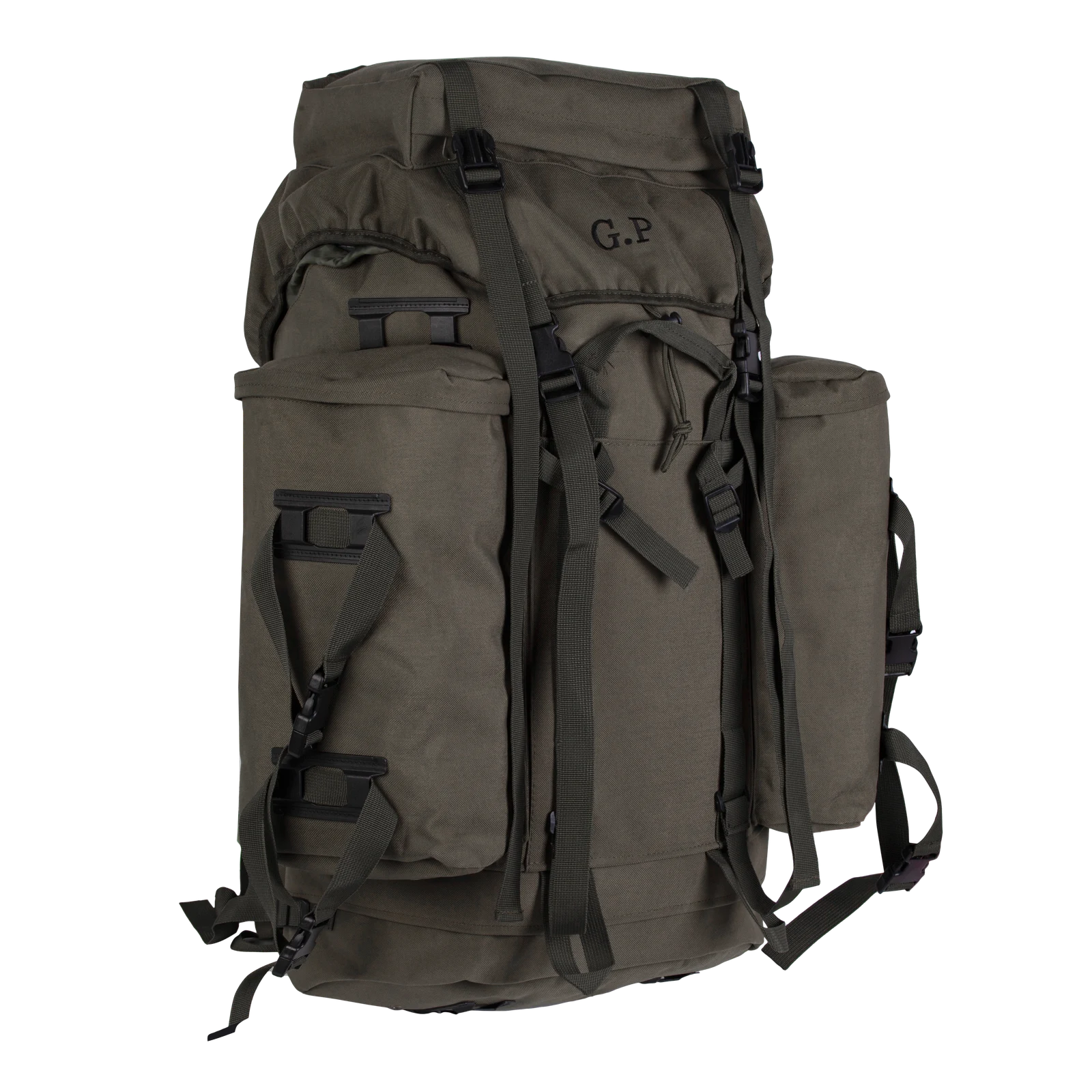
The oblique photograph places the lid, main body and side pocket in one view. Use a similar angle when recording whether the lid shifts, a side edge lifts or a buckle becomes awkward to reach. A useful revision specifies a lid length, attachment location or packing change, so the next sample addresses a defined cause.
05
Park the loose parts during retrieval
After the lid opens, its straps and the collar cord need a place to rest. Keeping them clear of the retrieval route can reduce the rearrangement needed before closing. Select that location from the sample’s actual components; the photographs do not establish a hidden cord pocket or an unseen attachment point.
After returning the frequently used item, follow the same closing sequence. Where gloves form part of the intended use, try finding the cord, releasing the relevant hardware and gathering the opening separately. Record which actions need the other hand to support the collar, rather than describing the closure as one-handed without evidence.
06
Hand over a repeatable arrangement
Keep the approved sample identifiable
Use the same target contents to document open, gathered and lid-closed states. Identify the reference points for collar height, the intended lid coverage and the adjustment range of the lid straps. This makes comparisons between sample revisions easier to interpret.
Discuss the collar, lid and body materials by zone. Gathering behavior, edge shape and body support create different development requirements. Confirm composition and performance through the relevant documents and samples; visual appearance alone cannot supply those facts. For related product-development topics, visit the JKPD blog.
Related: drawstring bag casing opening sample review. See the photographed product reference.
Discuss your bag development project
ANSON XIE
General Manager & Founder
Quanzhou Junkai Pengda Special Equipment Co., Ltd.
Email: ansonxie@jkpdtime.com
Phone: +86 177 5095 3355
WhatsApp: +86 177 5095 3355
Factory address: Floors 2–4, Building 1, Phase I, Huixin Intelligent Manufacturing Industrial Park, Hui'an County, Quanzhou, Fujian, China