
Develop an internal key tether around finding the keys at a defined location. Coordinate the anchor, retrieval range and resting position after return. The user needs a way to bring the keys into the hand and then put them somewhere predictable for the next use.
Decide first whether the keys should remain connected during use. Use the target key set to review the route from the anchor to the hand, the neighboring contents and the return location. Select length and connector arrangement around that same task.
01
Choose what the hand finds first
The user can find the anchored strap first and follow it to the keys. An anchor near the opening gives the hand a recognizable starting point. An anchor covered by a notebook or another pocket may still require the user to move other contents before finding the strap.
02
Set the range around the method of use
Using the keys while attached and disconnecting the key set after retrieval require different ranges. Choose the principal method before comparing the route from the anchor to the hand. A strap’s laid-flat length alone does not establish the space available once it passes around the bag’s contents.
The TOM BIHN Key Straps product information separates length choices from end configurations. It is an external example of selecting the two variables independently. Its specifications do not establish the components of a JKPD bag or the illustrative lanyard.
03
Coordinate the tether with the organizer
On an organizer sample, review the anchor alongside the nearby small pockets. Plan where the key set should return so it does not cover the grip area of another frequently used item.
If a dedicated resting pocket is needed, define its opening relative to the anchor on the development sample. Do not infer a retracting mechanism, automatic return or a locking feature without component evidence.
04
Keep the return route clear of closure
After use, place the keys in the agreed area, arrange the remaining strap and close the opening. Observe whether a key, connector or loose length crosses the zipper route. Where needed, compare a different anchor location or return area rather than making the strap longer without resolving its resting position.
Consider partial opening as well. The user should be able to recognize or feel the return location without always laying the entire organizer open. One-handed operation, if required, needs confirmation by intended users with the agreed contents. Record the actual action rather than assigning it from a display photograph.
05
Give rigid keys their own location
Keys have projecting edges that need a planned relationship with a phone, glasses case or paper items. Compare where the returned key set meets neighboring contents. A key sleeve or separate small pocket may be useful project options, but their protective effect is not established by the illustrative photograph.
A reference load of papers, a case and a device can help the development team keep the key set assigned to a particular layer. Avoid leaving it without a clear home between the main compartment and the front organizer, which would undermine the purpose of a defined retrieval location.
06
Record retrieval and return separately
Document the keys in the hand and the keys after return. Add the anchor position, reference key set and connector revision. The sample team can then distinguish a limited retrieval range from an unsuitable resting position, and revise the relevant part of the arrangement.
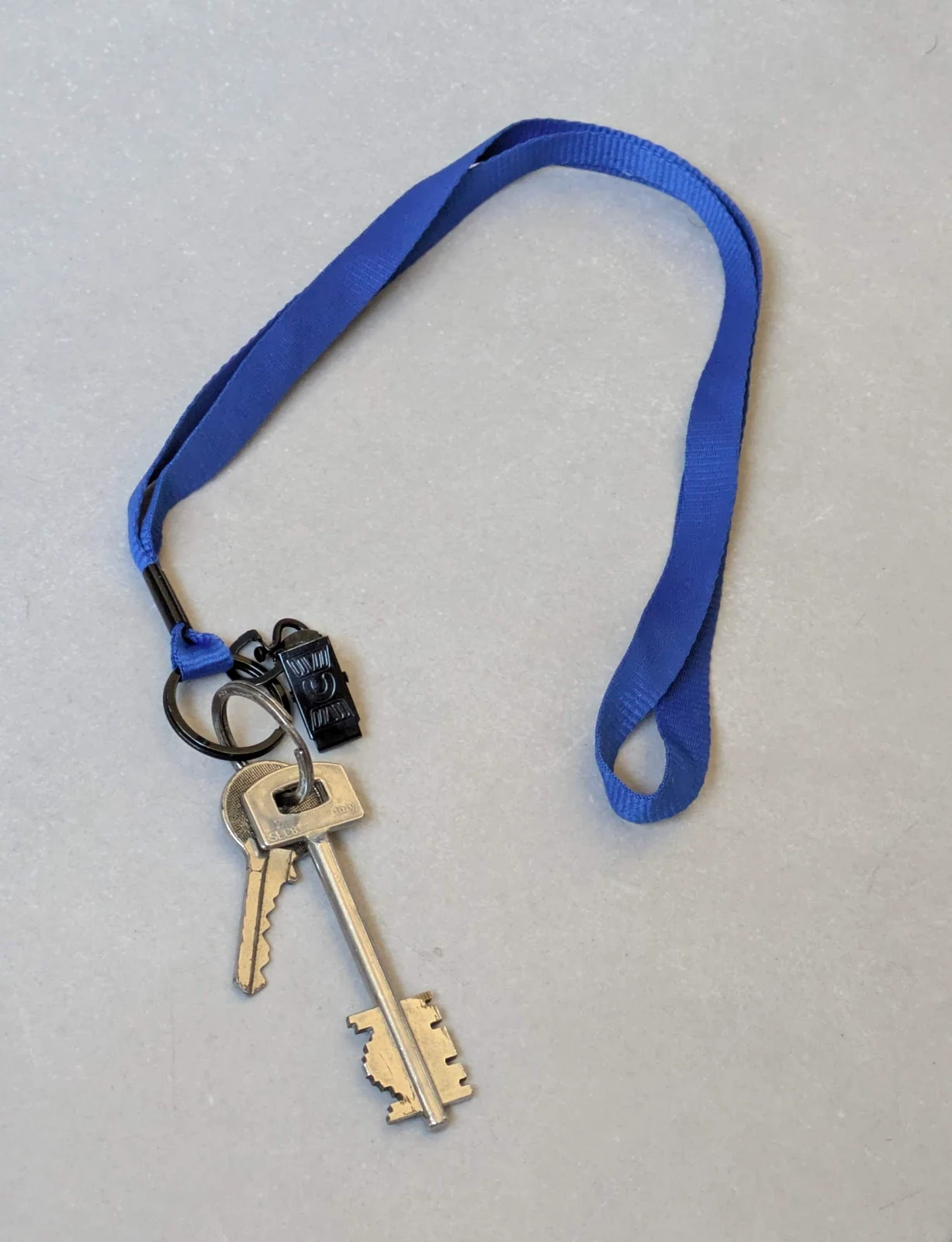
Specify materials, end connections and any retention requirement from confirmed components and project evidence. This article reports no tests or loss-prevention guarantee. The external photograph illustrates a lanyard and keys, not an installed backpack tether. More everyday storage-development topics are available on the JKPD blog.
07
Image credit
Keep the approved sample identifiable
Blue key lanyard 04.jpg by Waldyrious, licensed CC BY-SA 4.0. Proportionally resized and WebP-encoded image; the image remains available under that license. External illustrative example, not a JKPD product or an endorsement.

Related: compact backpack stacked front pockets. See the related backpack reference.
Discuss your bag development project
ANSON XIE
General Manager & Founder
Quanzhou Junkai Pengda Special Equipment Co., Ltd.
Email: ansonxie@jkpdtime.com
Phone: +86 177 5095 3355
WhatsApp: +86 177 5095 3355
Factory address: Floors 2–4, Building 1, Phase I, Huixin Intelligent Manufacturing Industrial Park, Hui'an County, Quanzhou, Fujian, China