
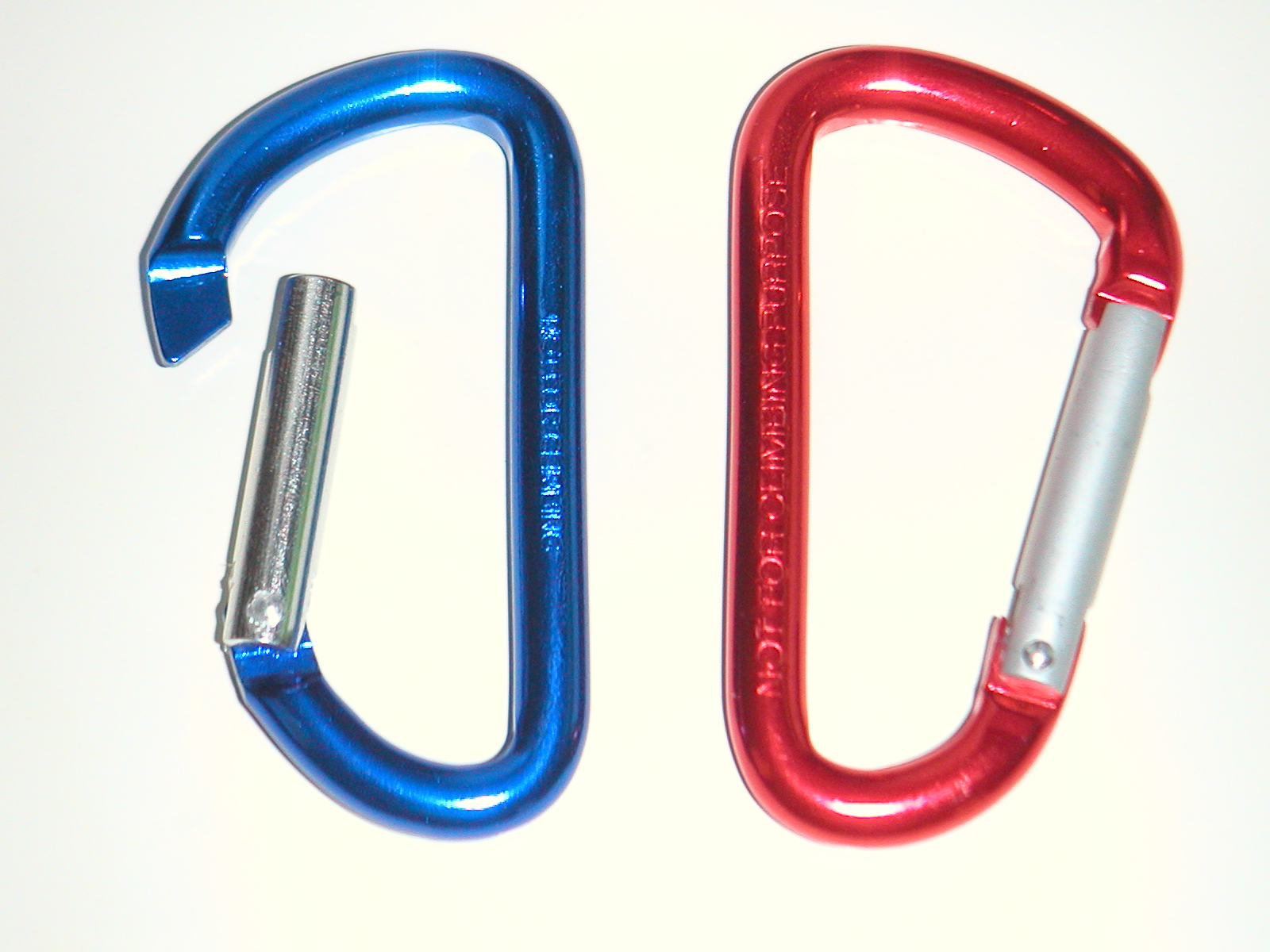
Photo: Polyparadigm. Public domain (author dedication) · Original source. Unmodified for this article. The photograph remains under its stated license; no endorsement, specific material grade or JKPD use is implied.


01
A marketing label is not a material specification
Aircraft aluminium does not identify an alloy, supplied temper, manufacturing route or finished-part requirement. Ask for material identity, then record surface treatment and intended use separately. The phrase alone establishes neither strength nor certification.
For bag clips, adjusters and connectors, decide whether the part retains ordinary items or serves a more demanding function before sampling. This guide concerns general bag-development records. It does not extend an accessory clip to climbing, person-supporting or protective equipment. Those applications need their own requirements and evidence. Even a familiar alloy designation cannot make an unidentified hardware shape suitable for every load case or environment.
02
Keep the real clip’s use restriction visible
The red-and-blue utility-clip photograph retains the words NOT FOR CLIMBING. The left gate is deliberately held open to show the closing area. This is not a loaded test specimen, and its appearance or markings do not establish alloy, temper, load capacity or a current product grade.
It helps locate body, gate, hinge and meeting surfaces in a purchasing discussion. The red and blue finishes also do not verify a particular anodizing process or film thickness. Use the photograph for visible component identification. It is neither a JKPD product nor an identified example of the primary aluminium supplier’s materials discussed here.
03
Record the alloy and temper together
Hydro’s alloy-selection guidance considers environment, finish, mechanical needs and temper together. Specifying 6061 without its condition still leaves the material comparison incomplete.
Hydro’s 6061 sheet defines T6 as solution heat-treated and artificially aged, and distinguishes other tempers. Its data concern identified material product forms, not the photographed utility clips. Nor do raw-material mechanical values become a hardware rating. Keep the designation, product form and applicable document together before considering whether the finished geometry can meet the bag project’s requirements.
04
Trace the actual manufacturing route
Ask the hardware supplier to identify stamping, machining, forging or another route. Do not infer it from a photograph. Proposed purchasing records can link raw-material batch, critical dimensions, heat-treatment history and final finish revision to the finished article. Each document should identify which supplied part it covers.
If welding is involved, Hydro’s 6061 sheet cautions that strength in the T6 weld region can decrease. This illustrates why processing history matters; it does not imply all hardware is welded or identify the photographed clips’ route. After a route change, reassess which material and component evaluations remain applicable instead of carrying approvals forward through an undocumented process substitution.
05
Approve more than anodized colour
Hydro treats anodizing response as part of alloy selection and distinguishes cosmetic considerations between alloys. Matching colours therefore do not establish matching base material or finishing systems. Ask the supplier to identify the actual treatment, agreed coating requirements, sealing condition and visual acceptance arrangement.
A proposed review can record colour, contact zones, edges and webbing rubbing locations separately instead of approving only a front photograph. Coating information, corrosion evaluation and operating behaviour are different evidence objects. Without applicable results, anodized is not a guarantee of unlimited wear resistance or freedom from corrosion. Keep the finish approval tied to the substrate and process revision that produced the sample.
06
Material strength leaves the assembly to evaluate
Evaluate finished hardware with its actual webbing, threading and loading direction. Proposed development questions include opening, adjustment, slippage, repeated operation and project-specific loading. Agree the fixture, duration and assessment. These are validation topics, not a universal test procedure supplied by this article.
The Hydro video below is supplementary viewing for an anodizing production line. It is not a manufacturing record for the photographed clips or a JKPD material certificate. A load demonstration or raw-material table cannot replace complete-part suitability assessment. Results for ordinary bag use also cannot be transferred to climbing simply because both products have a gate and an aluminium-looking body.
Related video: Anodizing at Hydro Extrusion · Hydro i Sverige
Supplementary viewing only. This external demonstration is not evidence of the pictured component, certification or finished-bag performance; consult current article-specific documentation.
A demonstration is not performance certification. If the player is unavailable, use the original link; internet access is required.
07
Link material, finish and finished-part records
A useful inquiry includes alloy and temper, raw-material form, drawing and revision, manufacturing route, finish requirements, mating webbing, intended use and outstanding validation. Ask each report to identify the specimen. Separate a supplier declaration, a raw-material certificate and a finished-part result.
If the only description supplied is aircraft-aluminium buckle, fill the documentation gap before approving website copy. This preserves a useful discussion of aluminium material choices while avoiding an unsupported strength, service-life or company-adoption claim. A controlled material name is valuable because it connects to records and samples, not because the wording sounds more specialised.
A substitution review can ask three concrete questions: does the temper change while the alloy stays the same; does the finish change while the substrate stays the same; or do geometry and processing change while both material names remain unchanged? Record each answer against the drawing and sample revision. Repeat the reviews justified by the change and any unresolved questions, while preserving final approval of the complete assembly. A raw-material certificate can help establish identity, but it cannot close a finished-part review by itself or explain an undocumented change at a gate, hinge or webbing contact surface.
Related reading: Hardware connection selection.
Share the application, candidate material articles and available records through the JKPD project inquiry page.
Discuss your bag development project
ANSON XIE
General Manager & Founder
Quanzhou Junkai Pengda Special Equipment Co., Ltd.
Email: ansonxie@jkpdtime.com
Phone: +86 177 5095 3355
WhatsApp: +86 177 5095 3355
Factory address: Floors 2–4, Building 1, Phase I, Huixin Intelligent Manufacturing Industrial Park, Hui'an County, Quanzhou, Fujian, China