
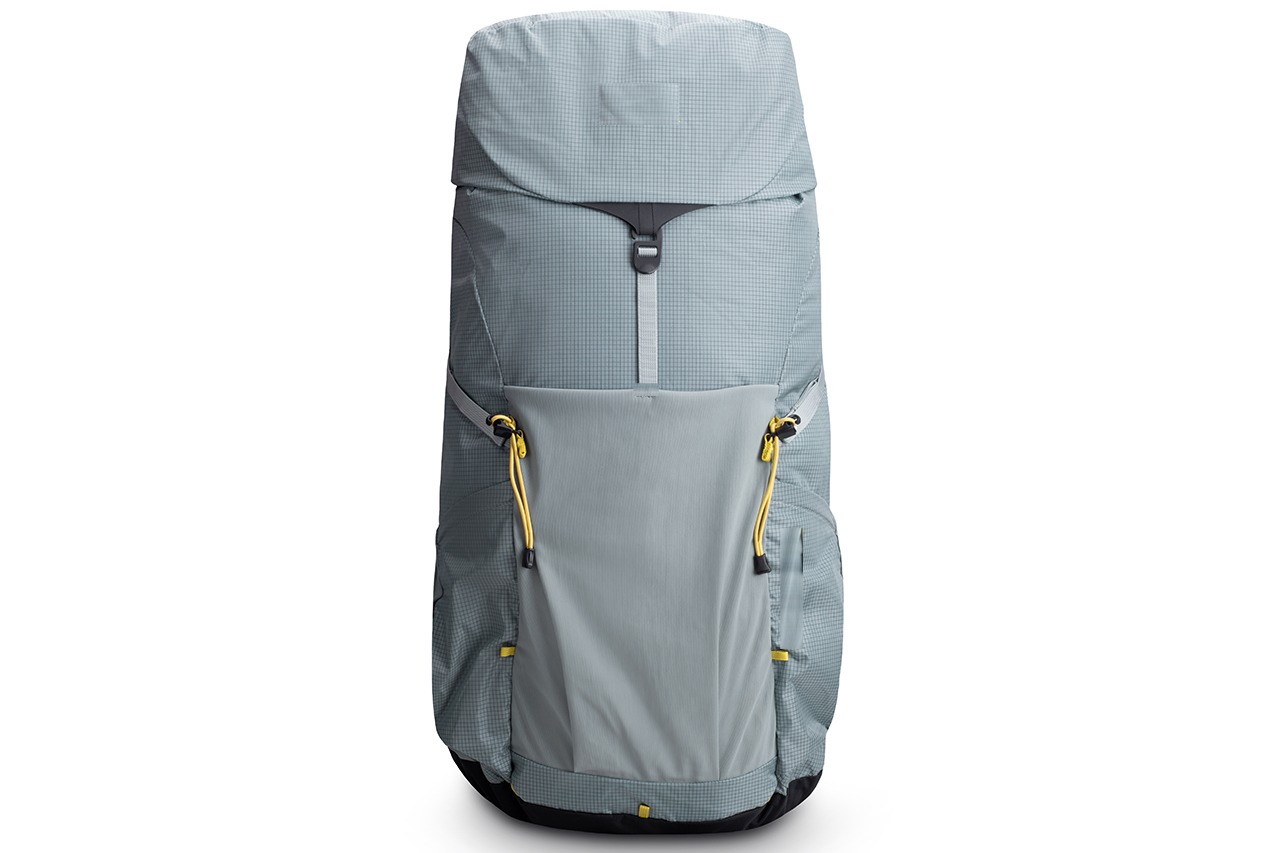
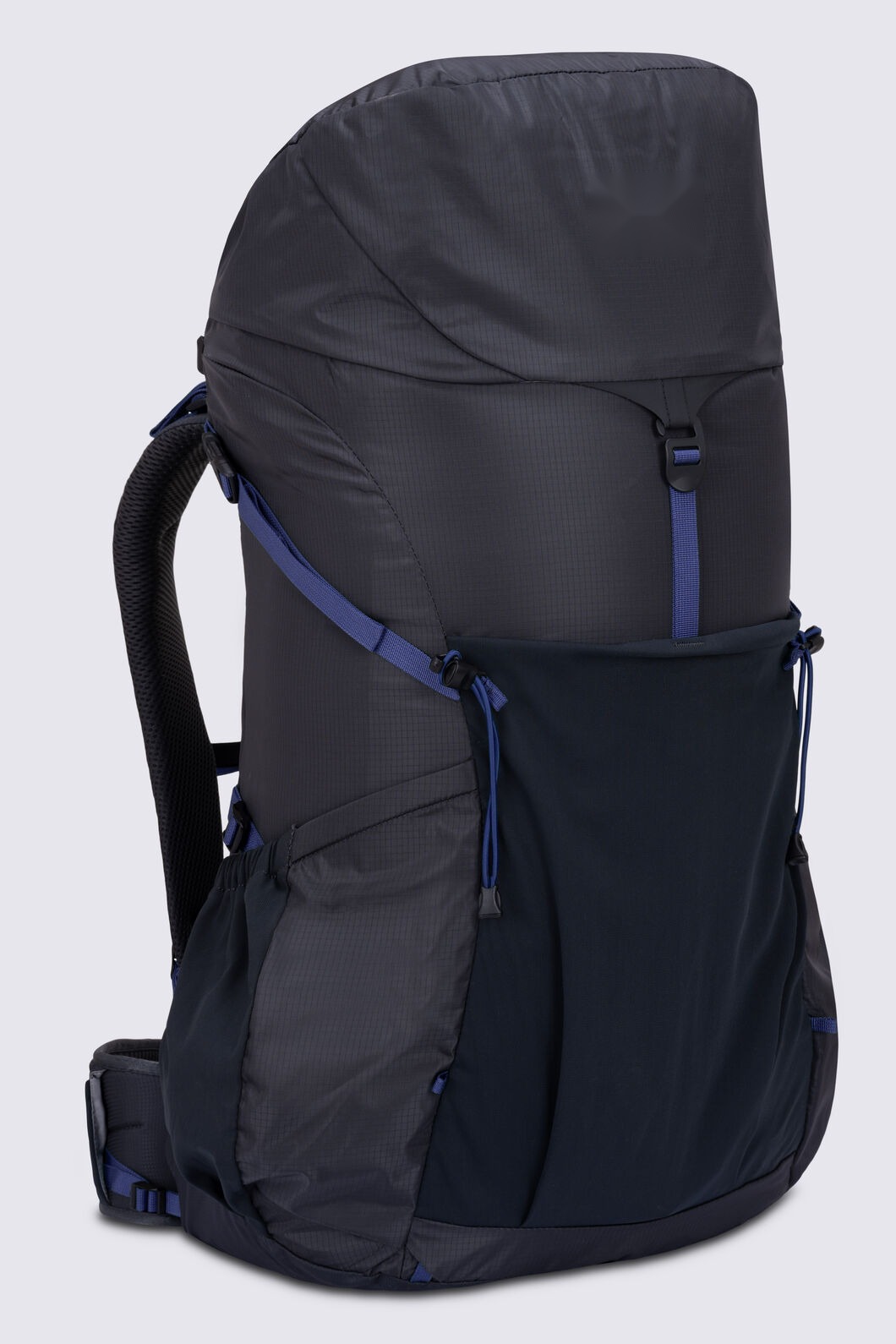
This reference trekking pack uses a removable lid, hip belt, frame and foam pad. A lighter configuration is possible, but removing a part also changes the tasks the pack can do.
The design question is which support and storage functions should remain when the load changes. Compare the full pack and the planned stripped configuration, not two headline weights.
01
At a glance
| Feature | S2 | S3 |
|---|---|---|
| Volume | 52 L | 52 L |
| Packed dimensions | 72 × 36 × 29 cm | 72 × 36 × 29 cm |
| Torso length | 45–52 cm | 50–60 cm |
| Closure | Roll-top with detachable lid | Same |
| Frame | Removable internal frame | Same |
02
Choose which parts need to stay installed
Start by separating the parts that organise the load from the ones that support it.
A lid changes access and storage; a belt and frame change the support path. Check the approved combinations without assuming that a stripped bag carries the same way.
03
Functions and features
The removable lid and the roll-top underneath
The main compartment closes with a roll-top, and the lid sits over it. The roll-top is the real closure: roll it down on a light day and the pack compresses to the size of its contents, which stops gear shifting around and upsetting the load's balance. The lid adds a zippered pocket and weather protection over the top, and an extra strap runs from the base of the pack to the lid to lift the load and add compression — a detail one long-distance guide singles out as genuinely useful.
A frame, a belt and a back panel that all come out
The internal frame slides out of the back panel, the hip belt detaches, and the foam back panel can also be removed. Check how each attachment is reached and whether the other parts stay put during removal.
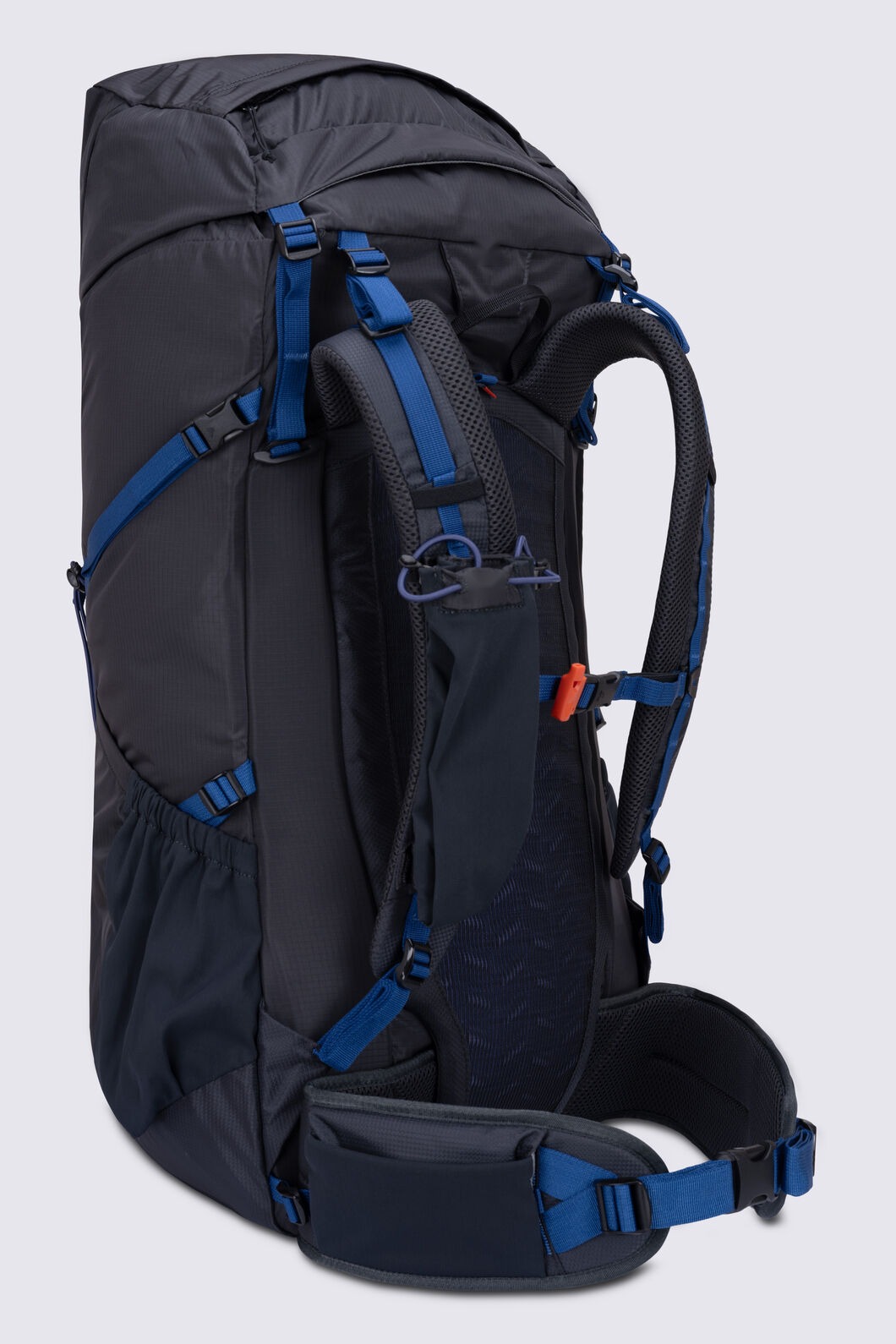
Indented foam sits under the mesh panel of the grey variant. A removable pad can also serve as a seat; check what back coverage remains after the pad comes out.
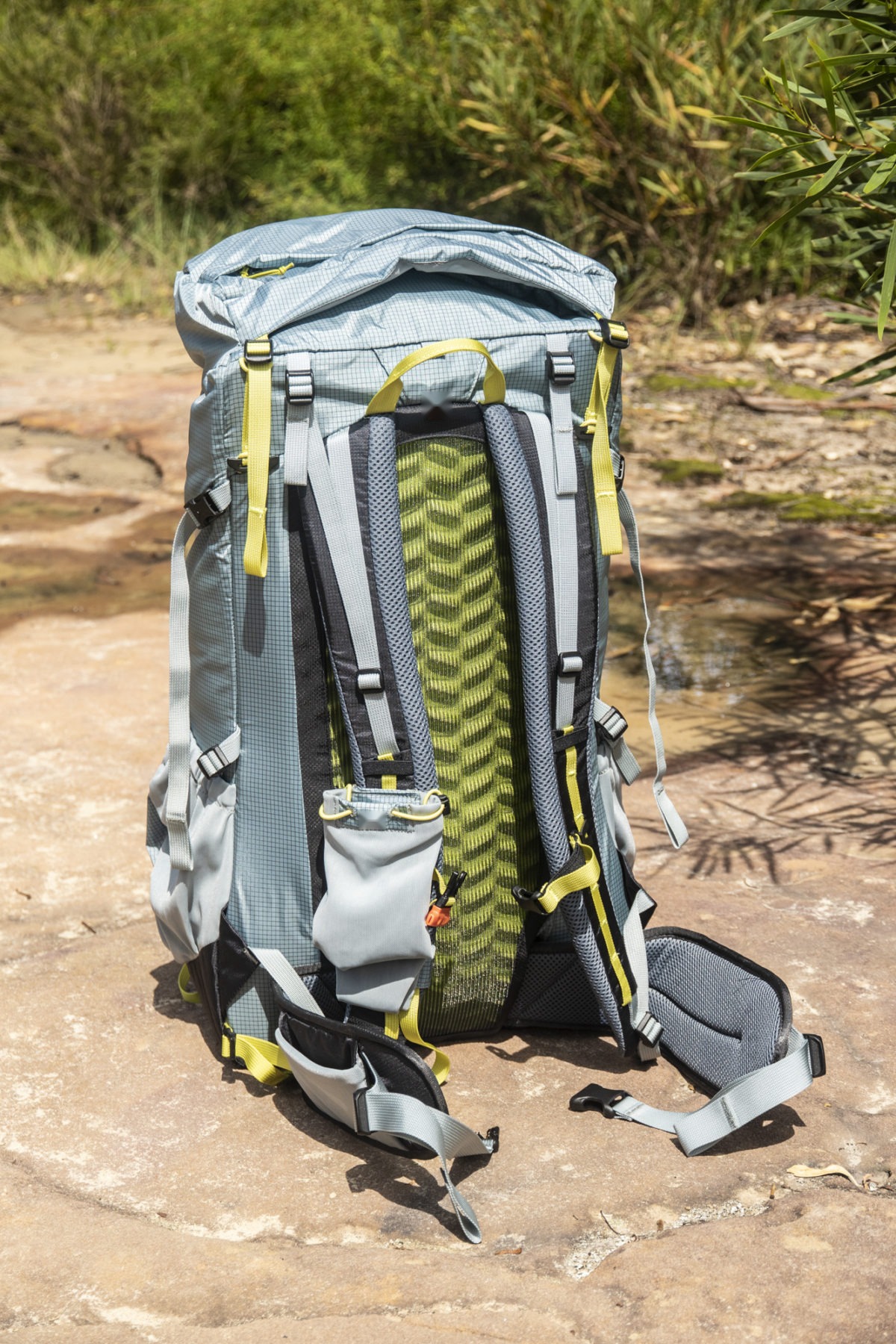
The detachable shoulder-strap pocket
A removable pocket hangs from one shoulder strap. Fit the desired flask and check pocket retention without treating the nominal capacity as a fit guarantee.
Stretch pockets, and what they can and cannot hold
The front and side pockets are stretchy, which is how the pack stores bottles and snacks outside the main compartment without adding zips or lids. Stretch has a limit, and this pack shows both sides of it. The side pockets hold bottles, the front pocket takes a rain jacket or a layer, and the open tops mean things can be pulled out without stopping. But open-top pockets can also collect rainwater, which then leaks through seams into the pack — one long-distance guide notes that this pack answers that with drain holes in the pockets, a small detail that is easy to miss and expensive to learn about in the field.
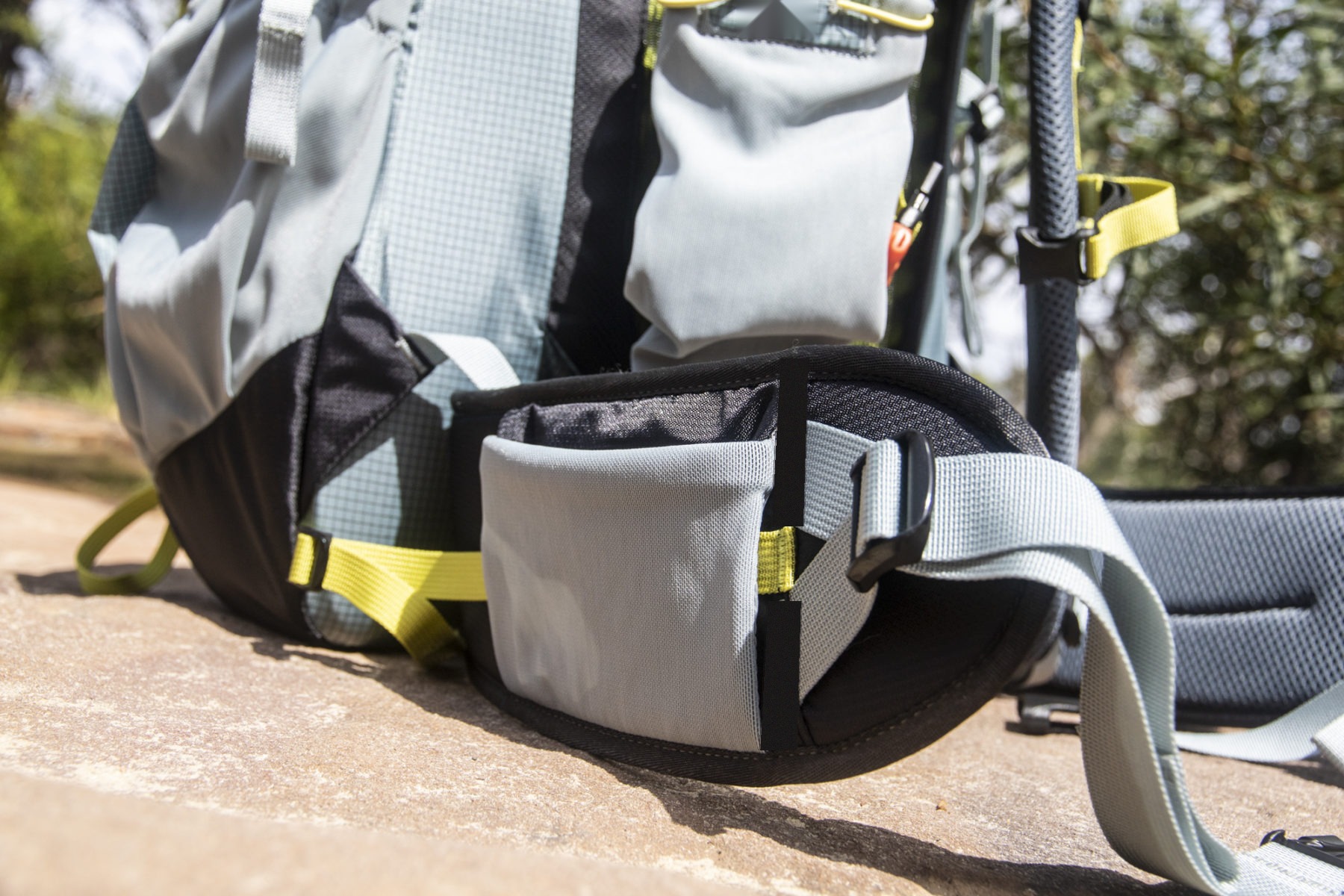
The belt pockets in the reference are flat and open. Measure what fits with the belt curving around the wearer, and check what stays in place when leaning or walking.
Hydration, poles and load lifters
A hydration bladder sits inside the pack, with the hose threaded through a port at the top of the harness — and the shoulder strap is shaped so the mouthpiece stays close without flapping as you walk. Tuck-away loops take walking poles or an ice axe. The load-lifter strap that runs from the base to the lid pulls the top of the load in towards the shoulders, which is what makes the 13– 16 kg rating believable: without it, a tall pack leans away from the body and drags on the shoulders.
04
Fabric and material combinations
The fabric story is quieter than the modularity, but it is deliberate.
- Body: nylon ripstop. Confirm fibre content, finish and tear requirements against the selected material specification.
- Base: heavier nylon where the pack is placed on rough ground.
- Lining: plain 100-denier nylon.
- Back panel and straps: mesh over indented foam, balancing ventilation against padding.
- Pockets: stretch fabric for the front and side pockets, trading some durability for weight and easy access.
The closure and fabric do not establish finished-pack waterproofing. Check leak paths and decide whether a liner is needed.
05
Who is it for?
- Multi-day hikers who want one pack for different trips, and are willing to spend a few minutes reconfiguring it between a heavy carry and a light one.
- Long-distance walkers who value a pack that can be stripped down as food and gear are consumed along a route.
- Hikers moving from a heavy conventional pack to something lighter, who want to cut weight without giving up a frame, a real hip belt and a lid.
- Walkers who carry a soft flask or a phone on a shoulder strap, and want that pocket to be removable rather than sewn on.
06
Pain points it solves
- The detachable lid, belt, frame and strap pocket let the wearer change the setup for different loads.
- A removable frame can provide structure when installed. Test both configurations separately.
- A back panel that works twice. The foam panel pads your back on the move and serves as a seat at camp.
- Water and snacks within reach. Stretch front and side pockets, plus a detachable shoulder-strap pocket for a soft flask, keep the small things out of the main compartment.
- A roll-top that compresses the load. Rolling the top down stops a half-empty pack from shifting its load around.
07
Design strengths
- Five removable components — lid, hip belt, frame, back panel and shoulder-strap pocket — all designed to come off and go back on.
- Lighter shell fabric with a heavier material in the floor.
- Drain holes in the open-top pockets, a small answer to a real problem.
- Interchangeable hip belt, so torso and belt sizes can be mixed.
- A back panel that doubles as a seat, and a sternum strap with a whistle buckle.
08
Limitations to keep in mind
- Shallow open belt pockets limit what can sit securely. Check actual gear sizes before approving that layout.
- Stripped down, it is a different pack. Without the frame and belt, the comfortable load drops with the structure — the 780-gram configuration is for light loads, not for 16 kg.
- With the belt removed, check shoulder contact and comfort rather than assuming unchanged load distribution.
- Confirm separate protection for contents in sustained rain.
09
What the design teaches
The most useful lesson in this pack is that modularity is a weight-saving strategy, not just a feature list. Most packs save weight by removing things permanently: thinner fabric, fewer pockets, no lid. This pack saves weight by making things removable, which means the weight saving is optional and reversible. A hiker who strips the pack for a light overnight has not destroyed anything; the parts go back on for the next heavy trip. That is a different kind of lightness, and it suits hikers whose trips vary more than their budget does.
Record the measured weight of each removable component using the same scale, and log which components make up each configuration.
The third lesson is that a small flaw can matter more than a big feature. Everything about this pack's carrying system is considered — interchangeable belt, removable frame, load lifters, a back panel that doubles as a seat — and then the hip-belt pockets, the most-used pockets on any pack, are flat, unzipped and barely phone-sized. Two independent reviews and a long-distance guide all land on the same complaint. For a brand developing a similar pack, the takeaway is plain: design the belt pockets first, not last, and put a zip on at least one of them.
10
Prototype brief
Useful inputs for a removable-component pack prototype include:
- Target weights: complete weight, stripped weight, and the weight of each removable part.
- Which parts remove, and how: lid, hip belt, frame, back panel, strap pockets — and which tools, if any, the user needs.
- Frame design: stay or frame-sheet material, how it sits in the back panel, and how the load lifters connect to it.
- Fabric by zone: ripstop weights for the body, heavier fabric for the base, mesh for the back panel, and the water-resistance target.
- Closure and access: roll-top volume, lid pocket layout, and the split between the main compartment and the pockets.
- Pocket layout: stretch pocket depths, drain holes, hip-belt pocket size and closure — including a zipped option.
- Sizing: torso lengths and hip-belt sizes, and which sizes the line should cover.
Related guide: An Ultralight Frame Pack with a Removable Belt and Full-Length Front Zip
Discuss your bag development project
ANSON XIE
General Manager & Founder
Quanzhou Junkai Pengda Special Equipment Co., Ltd.
Email: ansonxie@jkpdtime.com
Phone: +86 177 5095 3355
WhatsApp: +86 177 5095 3355
Factory address: Floors 2–4, Building 1, Phase I, Huixin Intelligent Manufacturing Industrial Park, Hui'an County, Quanzhou, Fujian, China