
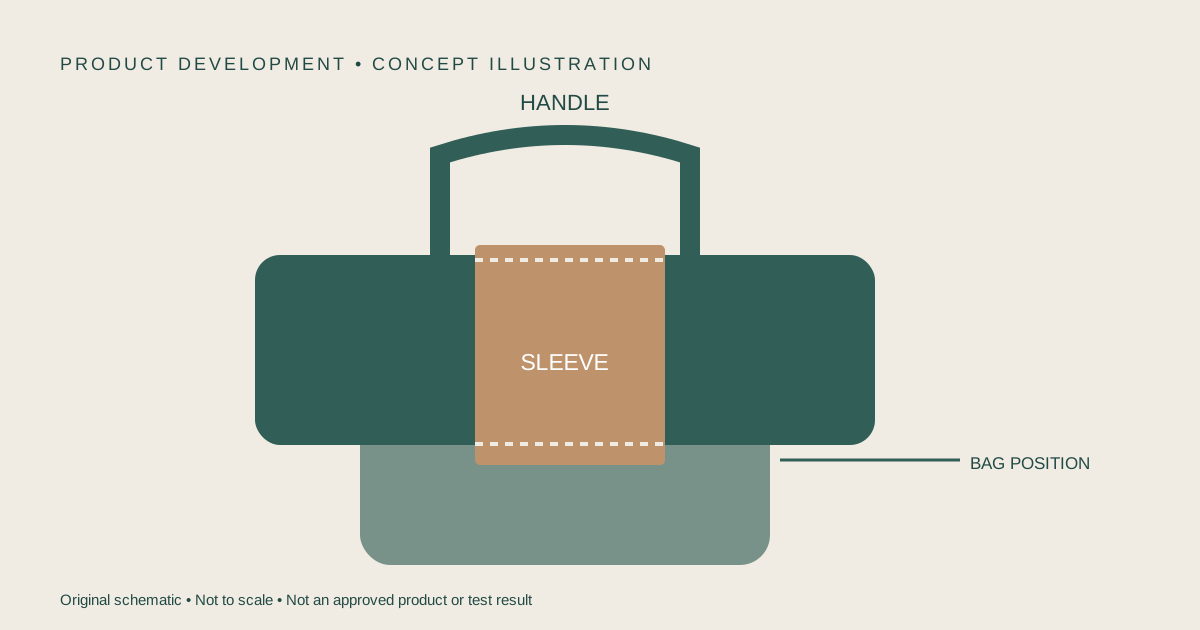
A travel bag attached to a suitcase handle still needs usable access and practical positioning. It should also return to its normal carrying mode after removal. Develop a trolley sleeve around representative luggage and an actual packing load rather than approving it from an empty-bag photograph.
01
Define the luggage you intend to support
Record the outer span of the handle rails, the crossbar shape and where the bag rests on the suitcase. If the target market uses different handle arrangements, review representative physical examples.
Universal compatibility needs a defined scope. List the handle types reviewed and known exclusions. Successful fit on one suitcase does not establish compatibility with every luggage design.
02
Define how sleeve openings are measured
The entry opening is only part of the fit. Review passage over the crossbar, effective sleeve height and changes to the fabric when the bag is loaded.
Mark measurement points and conditions in the drawing, such as flat measurement or measurement on a named handle reference. Thickness, finished edges and local reinforcement can affect clearance. Check the sewn sample rather than relying only on cut-panel dimensions.
03
Match orientation to access requirements
Horizontal and vertical placement change balance and opening direction. Decide whether users need access to a laptop, documents or a bottle while the bag remains on the suitcase.
Use the intended load to check leaning, handle-grip obstruction and movement during opening. Photographs document positions; fit and handling require physical review.
04
Check interaction with the carrying system
Shoulder straps, back padding and rear pockets may share space with the sleeve. Look for dangling straps, possible wheel contact and catching during removal.
If the sleeve is intended to double as a pocket, define the conversion and bottom-closure arrangement. Verify that construction in the sample. A pocket-like appearance alone does not establish a second function.
05
Review a complete use sequence
Pack the bag, slide it onto the handle, move the suitcase, stop to retrieve an item, remove the bag and carry it. For each luggage reference, record the packing condition and issue locations.
Look for unwanted movement, projection and collisions. Discuss changes with the development team. Specific acceptance conditions should reflect the use case; observations alone do not support safety or load claims.
06
Keep compatibility claims within the reviewed scope
Retain luggage references, measurement methods, packing lists, sample revisions and review results. Recheck affected combinations after changes, rather than using earlier photographs to describe a revised product.
Product imagery should show confirmed combinations and identify the example scope. This article uses a general principle illustration, not an approved JKPD construction. Share luggage references and access requirements through the project inquiry page to discuss a travel bag sample.
Discuss your bag development project
ANSON XIE
General Manager & Founder
Quanzhou Junkai Pengda Special Equipment Co., Ltd.
Email: ansonxie@jkpdtime.com
Phone: +86 177 5095 3355
WhatsApp: +86 177 5095 3355
Factory address: Floors 2–4, Building 1, Phase I, Huixin Intelligent Manufacturing Industrial Park, Hui'an County, Quanzhou, Fujian, China