
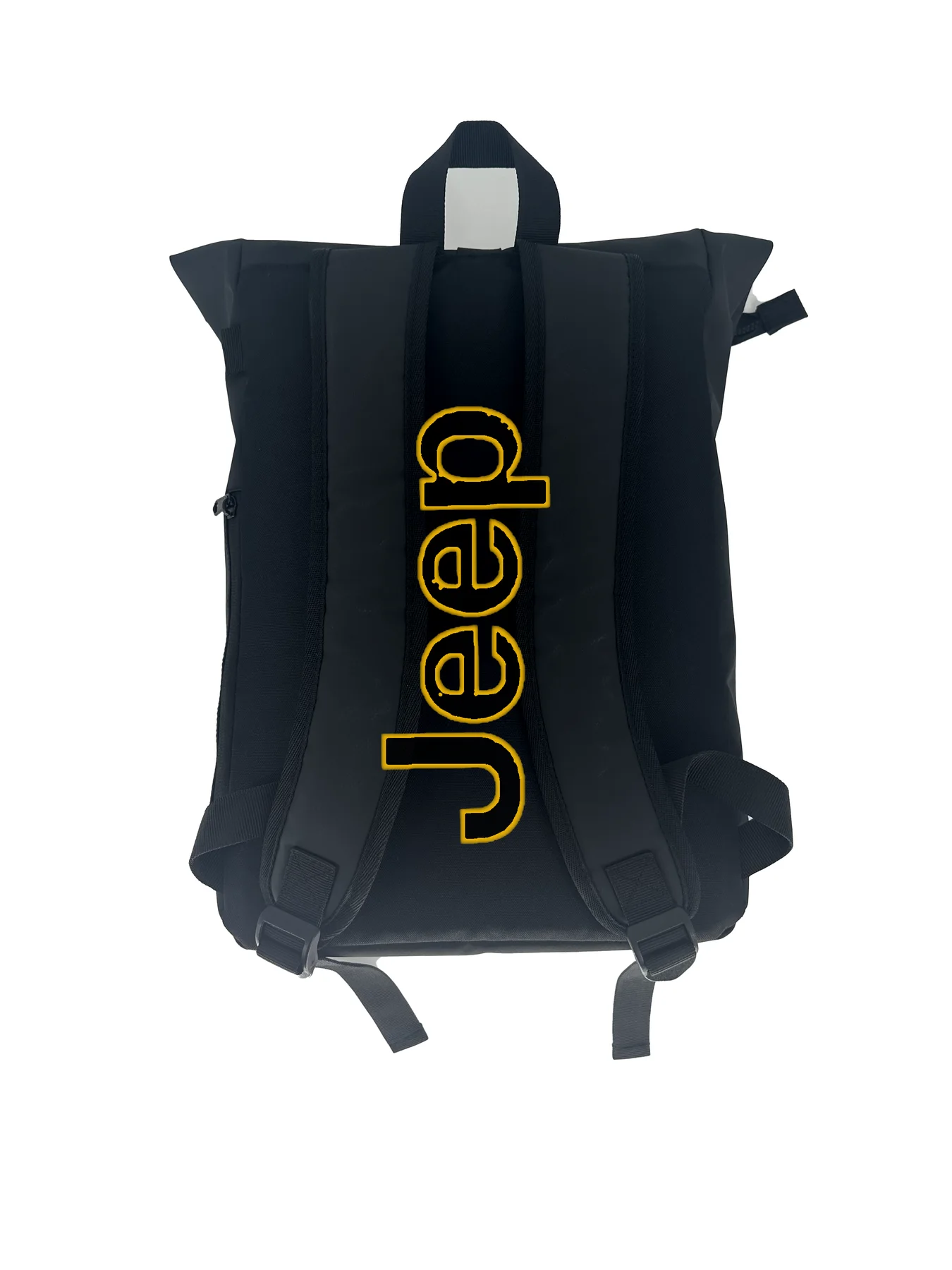
A travel bag can reach the warehouse in excellent condition and still reach the shopper with a permanent crease across its front panel. The carton that held a dozen folded bags on an inbound pallet may never have left the warehouse. A fulfillment team opened it, removed one bag, folded its handles inward and shipped it in another box. A successful test of the first carton would say little about the second.
Before requesting a transport test, ask one question: what exactly will be handed to the next carrier? The answer may be a wrapped pallet, a loose master carton, an individually boxed travel bag or more than one of these in sequence. Draw each handoff. Use the drawing to decide which package to reproduce and which evidence to ask the test laboratory for.
01
Name the shipping unit at each handoff
Take a soft-sided weekend bag with a detachable shoulder strap. On the packing line it receives a protective sleeve; several sleeved bags go into a master carton. Someone might describe this as a “cartoned shipment.” That description leaves out the most important detail for choosing the test: whether the carton stays secured in a larger load or must go through distribution on its own.
Put a box around each point where someone opens, rebuilds or separates the load. On the inbound leg, record whether the vehicle carries a dedicated full truckload of similar packaged products or moves mixed freight through terminals. On the outbound leg, note whether a retailer ships the unopened master, picks one bag into its own parcel, or adds other items to that parcel. Ask for a pack-out photo from the location making the change. A factory photo cannot identify what a downstream packing station actually uses.
Use the route description to brief the lab
The ISTA procedure directory distinguishes Procedure 3A for individual packaged products in parcel delivery from Procedure 3E for unitized loads of similar products in full truckload distribution. It also lists 3B for less-than-truckload distribution. These are different distribution cases, not successively tougher grades for the same travel bag. A pallet in a photograph is not in itself a reason to select 3E. Check the planned service, current procedure scope, package weight and configuration with the lab. A retailer may also have its own required protocol.
02
Reproduce what protects the bag, not just the outer box
For an individual parcel, the contact between a hard fitting and a soft panel can matter as much as the carton outline. Document whether the strap clips are attached, tucked inside a pocket or separately wrapped; whether a zipper pull rests against the front panel; and whether the handles are folded across the bag. Include the tissue, insert, sleeve and closure that the packing station will really use. A generous prototype insert is not evidence about the cheaper insert that will ship.
For a unitized load, describe the master-carton contents and orientation, number of layers, pallet footprint, stacking pattern, securing materials and any overhang. Show corner and interior positions. If someone changes the number of bags per carton, a previously supported top surface may now sit over an empty space. Even if the pallet dimensions are unchanged, the protective arrangement has changed. Keep a sample of the approved travel bag or equivalent production reference available for comparison after unpacking.
03
Define unacceptable damage before you see the result
“Bag arrives usable” is too loose for a buying decision. A carton scuff may be acceptable if the master is discarded at receiving. The same scuff on a gift-ready retail box may be a rejection. A temporary fold from packing is not necessarily the same as a finish damaged by a buckle. Agree which surfaces are customer-facing, whether the bag is inspected immediately after opening or after an agreed recovery period, and how the inspector will light and photograph the surface.
Add checks that a photograph alone cannot settle. Unfold the handles, operate the zipper around its corners, match a detachable strap to its fittings, and check whether every component is still in the intended pocket. If a liner has caught in the slider, record where it caught before pulling it free. These are buyer-defined product inspections. They do not replace a laboratory procedure or imply that a particular carton, bag or shipment has already passed.
04
Decide whether you need one test article or two
Consider an order split between wholesale delivery and direct-to-consumer orders. The wholesale customer receives a pallet of untouched masters. The online customer receives a separate single-bag carton. Ask the lab to quote the two configurations separately. Record the decision if the buyer accepts evidence for one route only. It is clearer to label an untested parcel route as open than to file a pallet report under a generic heading such as “all shipping approved.”
If both legs happen to the same goods in sequence, there is another question: should the outbound sample begin as a fresh bag or as one already conditioned by the inbound pack-out? A fresh bag isolates the parcel design. A bag taken from the inbound load can help investigate the combined journey. Agree on the objective and sample handling with the lab. Otherwise an inbound pressure mark may be attributed to the outbound parcel, or a fresh outbound sample may hide a mark that occurs before picking.
05
Change the pack-out where the damage starts
On receipt, photograph the shipping unit before removing wrap, then the exposed carton, then the bag as packed. Keep their orientations linked. If a dent aligns with a strap clip, compare a pack-out that separates the clip from that panel while holding the carton and fold constant. If several top cartons are bowed but the fittings leave no marks, look at the stacking pattern and internal support before adding individual hardware sleeves. Each revision should have a reason someone can check on the next sample.
For the handover, attach the route drawing, tested configuration, lab report identifier, inspection criteria, findings and final packing instructions. Record what was not covered: a different parcel box, a mixed pallet, a larger bag or a new fulfillment partner. ISTA's guidance on getting started with package design is useful for framing the lab discussion; the backpack export packaging approval guide covers the related factory handover. The most useful test report is the one a buyer can trace to the package that will actually leave the dock.
Discuss your bag development project
ANSON XIE
General Manager & Founder
Quanzhou Junkai Pengda Special Equipment Co., Ltd.
Email: ansonxie@jkpdtime.com
Phone: +86 177 5095 3355
WhatsApp: +86 177 5095 3355
Factory address: Floors 2–4, Building 1, Phase I, Huixin Intelligent Manufacturing Industrial Park, Hui'an County, Quanzhou, Fujian, China