
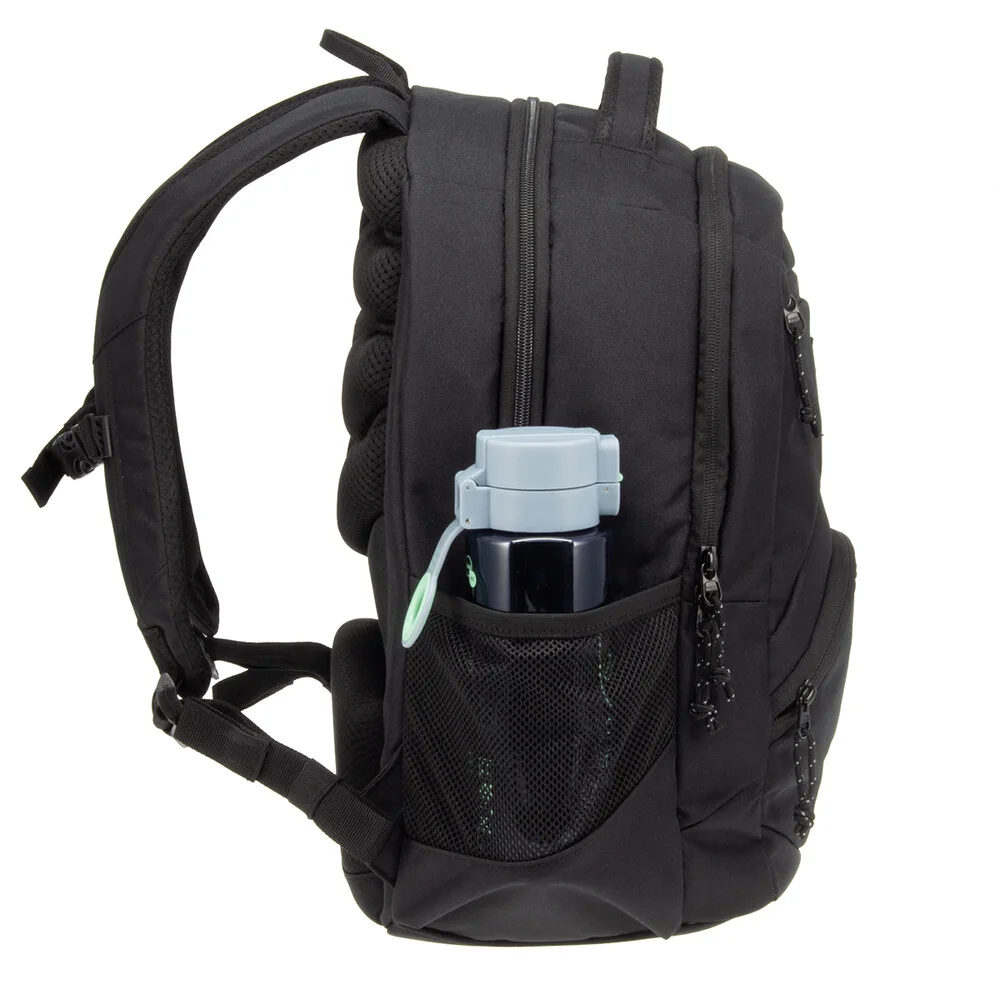
A zipper can run smoothly on the sample table and still be awkward on a packed school bag. The user has to find the puller, lift it away from the fabric and move it along the opening without catching a neighboring cord or pocket edge.
Approve the puller on the backpack, not just on a component card. Keep grip, attachment strength and zipper operation as separate questions, then check whether the chosen combination works at every opening. This is a development review for an identified student backpack, not a universal child-safety specification.
01
Start with the opening, not the decorative shape
List the main compartment, front pocket and any small accessory pockets separately. A long puller that is easy to find on the main opening may hang across another zipper on a compact front panel. Position and surrounding construction can matter as much as the puller itself.
Define who will use the bag and how they will approach each opening. Include the intended age range, hand access and whether gloves are a realistic use condition. Do not make a single adult review stand in for all intended users.
Prepare the actual zipper chain, slider, pull tab and any added cord or molded extension. Record their supplier references individually. A branded zipper chain does not identify an extension fitted later by a different supplier, and approval of one component should not silently cover the complete assembly.
02
What makes a puller easy to grasp?
Check the usable grip area with the bag resting in ordinary positions. Ask the reviewer to locate the puller without first arranging it neatly. Record whether fingers can lift it off the panel and maintain purchase through the intended opening movement.
A flat metal tab may sit closely against the bag and offer a compact appearance. A flexible extension can give the fingers more material to hold, but it also introduces another connection and more free length. Neither approach is automatically the better choice.
Compare a small set of candidates on otherwise identical samples. Keep the zipper and panel construction constant, and note the grip condition that prompted each observation. Avoid accepting a change because the isolated puller feels nicer while the installed version remains difficult to reach.
For a shaped or textured grip, review both faces and the edges. Check for uncomfortable molding flash, abrupt edges or decorative details that interfere with holding it. A photograph can help document appearance; it cannot establish grip comfort across the intended user group.
03
Check clearance through the whole travel path
Move the slider from one end to the other with the bag empty and with the agreed reference contents. Pause where the path bends or passes a seam junction. Look for contact with binding, zipper garages, adjacent pullers and the fabric covering the opening.
Repeat the review with a bottle in a nearby side pocket if that is part of the intended configuration. Packing changes the shape of the panel and the available hand space. An empty-bag approval may miss the interference the customer actually encounters.
Keep the test useful by naming the obstruction. “Hard to open” could mean poor finger access, lining entering the slider or excessive resistance along a curved zipper path. A larger grip will not correct every one of those problems, and can make some collisions more noticeable.
Use a simple review record: opening location, packing state, interference point, proposed change and the result after that change. This makes a shorter puller, a relocated seam or a revised opening path comparable decisions rather than unrelated sample revisions.
04
Separate attachment strength from operating effort
YKK's public zipper testing explanation distinguishes chain strength, locking behavior, pull-tab loading and pull-tab torsion. The distinction matters: a smooth-running zipper is not evidence that the tab connection can withstand the agreed handling loads.
Ask the component supplier which tests cover the exact slider and tab combination. If an extension is added, identify whether the report includes that extension and its attachment. A report for the original metal tab alone does not answer a question about a cord termination or molded grip.
Set the applicable method, sample condition and acceptance criteria with the buyer and test provider. Do not borrow a load value from a different zipper size or product category. Also distinguish an operating check from a destructive strength evaluation so that production staff do not damage saleable pieces during routine inspection.
For the broader mechanism choice, see zipper slider locking behavior. Here the decision is the part the hand holds and how it connects, rather than whether the slider should lock when released.
05
Review added cords and molded extensions as assemblies
Specify the cord article, finished exposed length, attachment route and termination. If a knot is part of the design, retain an identified reference showing its location and finished condition. A loose cord supplied beside the zipper is not an approved assembly sample.
Check whether the extension can reach another opening or become caught during ordinary handling. Review both the shortest and longest intended production condition. Length variation can change behavior even when the material and color remain unchanged.
For a molded extension, ask how the cord or tab is retained and what evidence supports that connection. Inspect the finished sample after the agreed conditioning and handling review for separation, movement or damaged surfaces. Do not infer durability from a soft feel or a familiar polymer label.
The intended market and user age also require a separate product-safety review. This article does not establish compliance or replace that assessment. Keep unresolved safety requirements visible before approving tooling or ordering production quantities.
06
How should production retain the approved decision?
Keep an assembled reference for each opening, with the component codes and revision date. Include clear photographs of attachment orientation and the finished extension length reference. A color swatch alone cannot prevent the wrong tab, cord or assembly route from entering a repeat order.
At the first production review, compare the installed pullers with those references and operate the finished bag. Check component identity and visible assembly condition separately from any scheduled laboratory testing. Retain the result against the production lot so a later complaint can be traced to a specific configuration.
If a supplier proposes a substitute, return to the affected questions: grip, clearance, attachment and operating behavior. Record what changed and which checks were repeated. The fact that the replacement fits through the same opening does not make it equivalent.
For quotation, send the backpack drawings, opening locations, intended user group and candidate component references through the project inquiry page. A clear brief lets the sample review focus on a workable combination rather than a decorative puller viewed in isolation.
Discuss your bag development project
ANSON XIE
General Manager & Founder
Quanzhou Junkai Pengda Special Equipment Co., Ltd.
Email: ansonxie@jkpdtime.com
Phone: +86 177 5095 3355
WhatsApp: +86 177 5095 3355
Factory address: Floors 2–4, Building 1, Phase I, Huixin Intelligent Manufacturing Industrial Park, Hui'an County, Quanzhou, Fujian, China