
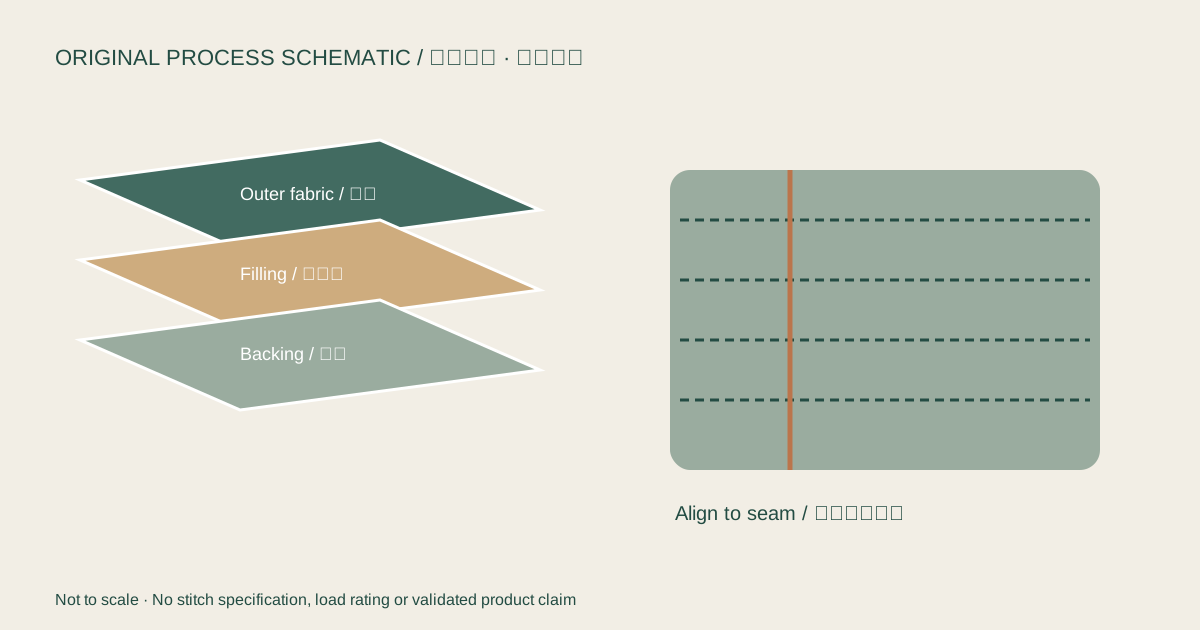
Start quilted bag development with the actual material stack, then review the finished bag. A tidy rendering communicates a visual direction but does not establish sewn thickness, handling or edge construction. Representative swatches help teams discuss these issues before assembling a sports equipment bag, travel organizer or custom soft case.
01
Identify every layer
Record the outer fabric, filling and backing references, their orientation and the swatch ID. Mark temporary substitutions by layer. Matching color does not establish matching material, and an outer-fabric swatch alone does not represent the complete stack.
Link the swatch to the material list and retain before-and-after records. If a filling or backing changes, review the affected thickness, handling and sewing behavior instead of approving the new combination from an earlier swatch.
02
Define layout relationships
Specify how quilting lines relate to openings, panel seams, pockets and labels. For patterns crossing panels, identify intended alignment and permitted breaks. These references make an uneven-looking assembly easier to assess against the brief.
Review the visual direction on a swatch and again on the bag. A successful flat area does not establish the same result around curves, corners or openings.
03
Include difficult areas in the swatch
A plain rectangle can miss assembly issues. Include a representative seam, bound edge or opening detail as appropriate, using the same material combination. Photograph the front, back and side to distinguish layer-related observations from later assembly changes.
Coats explains that seam puckering can involve tension, material structure, feeding and dimensional changes. Ask the sewing team to investigate unwanted gathering; a photograph alone does not identify one material as the cause.
04
Review the assembled bag in use
Pack intended items and observe the quilted area during folding, opening and handling. Check whether padding affects access, adjacent components or usable storage. Mark issues by location rather than requesting an undefined premium or puffier appearance.
Agree separate verification for care requirements. An appearance swatch does not establish durability, insulation or protection. The illustration in this article explains layer and layout relationships; it is not an approved product construction.
05
Retain an aligned approval package
Keep material references, quilting layout, swatch photographs, edge notes and unresolved items together. Separate appearance approval from pending use checks. When production materials change, discuss which reviews must be repeated.
Share swatch information, quilting direction and intended use through the JKPD inquiry page to discuss sampling priorities.
Discuss your bag development project
ANSON XIE
General Manager & Founder
Quanzhou Junkai Pengda Special Equipment Co., Ltd.
Email: ansonxie@jkpdtime.com
Phone: +86 177 5095 3355
WhatsApp: +86 177 5095 3355
Factory address: Floors 2–4, Building 1, Phase I, Huixin Intelligent Manufacturing Industrial Park, Hui'an County, Quanzhou, Fujian, China