
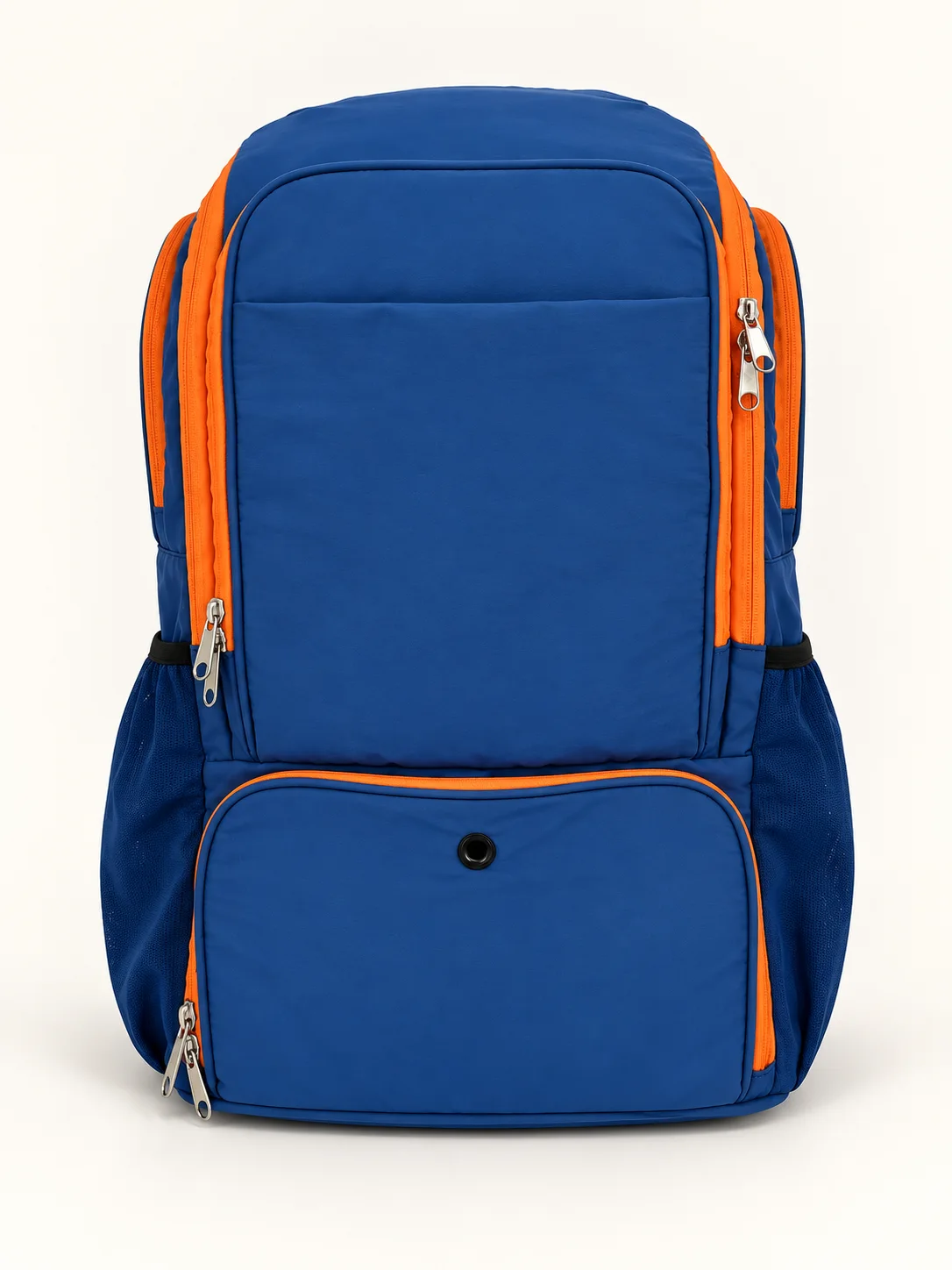
A ventilation opening can look convincing on a product drawing and do very little once the bag is packed. Shoes press against the inside, a jacket covers the outside, or a solid lining sits behind the mesh. For a pickleball bag, start by tracing the proposed air path through the assembled compartment. Choosing an attractive mesh is a later decision.
01
Define the job before drawing the panel
Decide what the opening is supposed to achieve. Allowing a compartment to exchange air is different from promising that damp shoes will dry during the journey home. It is also different from keeping dirt away from paddles and clothing. Put these objectives in separate lines of the development brief, with a way to review each one.
A useful brief describes the compartment contents, their likely condition after play, and how the bag will be stored. Include the possibility of a wet towel or muddy soles without assuming every customer uses the bag the same way. If the intended instruction is to remove damp contents promptly, keep that instruction visible rather than suggesting that ventilation replaces it.
Ask the brand team which claims they actually want on the product page. Words such as quick-drying, odor-free or waterproof create different evidence requirements. A mesh window alone is not a basis for any of them. An honest description of the construction is preferable to an unsupported performance promise.
02
Trace the opening through every layer
Draw a simple section through the proposed vent: exterior fabric, mesh, reinforcement, foam, lining and the compartment itself. Mark any layer that closes the route. A mesh face over a solid backing may be a surface detail rather than a useful ventilation opening.
Then pack the sample with the intended shoes and clothing. Check whether the contents sit directly against the opening, whether a neighboring compartment pushes its lining across it, and whether the route remains open when the bag rests on a bench. Repeat with the bag carried and laid down; orientation changes what is obstructed.
Do not solve every obstruction by making the window larger. A different location, a revised lining pattern or a modest stand-off may be worth sampling, but each introduces its own bulk and assembly questions. Compare the alternatives in the same packing arrangement so the decision is not based on an empty sample.
03
Choose the exposure you can accept
An open panel creates a route in both directions. Consider contact with court debris, splashes and objects in a car boot, as well as the intended air exchange. A lower opening may be easy to position near a shoe compartment yet receive more surface contact when the bag is set down.
A protective flap or recessed panel can limit direct exposure, but it can also obstruct the opening. Check it in the closed position and under the pressure of a packed bag. Avoid approving a photograph taken with the flap lifted if customers will normally use it closed.
Where a mesh panel faces another pocket, inspect what can reach it. Keys, rough fasteners and shoe edges should be part of the contact review. If a protective layer is added, show that exact combination to the material supplier or test laboratory instead of submitting the mesh alone.
04
Evaluate mesh as part of a construction
Ask for a supplier article code and a retained swatch, not simply black mesh. Record construction, finish and the proposed reinforcement around the cut edge. Inspect how the material feeds through the chosen seam and how it behaves where the window turns a corner.
ASTM D737 describes measurement of air permeability in textile fabrics and notes that construction and finishing can affect the result. That makes it a useful discussion point for comparing identified materials under agreed conditions. It is not a finished pickleball-bag drying test, and a fabric result should not be presented as one.
Review edge capture, distortion and contact wear separately from air permeability. A promising material can still be difficult to join consistently to a much firmer shell. Request sewn trial panels where the main uncertainty is the material combination, then carry the selected version into a complete sample.
Technical reference: ASTM D737, air permeability of textile fabrics
05
Make cleaning access part of the review
Inspect the compartment from the user's side. Can a hand reach the corners? Can loose debris be removed without pushing it into a hidden layer? A narrow opening may fit the shoes but make the lining awkward to wipe. Review access before the pattern and seam sequence are frozen.
Use only cleaning methods that are appropriate for the proposed materials and supported by the intended care instructions. Do not assume that a wipeable lining means the complete bag can be machine washed. Coatings, adhesives, foam and hardware need to be considered together.
Check the sample after the agreed cleaning procedure for trapped moisture, visible distortion and changes at the mesh join. Treat this as a documented development check with stated conditions, not as proof of unlimited wash durability. If a stronger care claim is needed, agree on suitable validation before publication.
06
Use a repeatable packed-sample check
Prepare two otherwise comparable samples if you are deciding between vent positions. Keep the packing list, contents placement and observation conditions the same. Photograph the interior and exterior openings in use, not just the empty bag on a table.
Record four practical questions: what blocks the opening, what can contact it from outside, how the compartment is cleaned, and whether the sewing remains consistent around the panel. Add any required laboratory work as a separate task with its own acceptance criteria.
If drying performance matters commercially, ask a competent laboratory to help define a relevant assembled-product comparison. Ambient conditions, starting moisture and packing arrangement need control. Do not turn an informal observation from one sample into a drying-time claim for every customer.
07
Release the panel with a clear record
Keep the approved mesh swatch, window dimensions, layer section and sample photographs together. Identify the sewing details and any checks required when materials are substituted. A replacement that matches the color can still differ in openness, stiffness or behavior at the seam.
The production inspection should be able to identify a blocked opening, an incorrectly fitted backing or an incompletely captured mesh edge. Agree on observable requirements rather than asking inspectors to decide whether a bag feels breathable.
Ventilation works best as a specific construction decision with honest limits. Give the sampling team the packed-use problem first, then approve the opening, protection and cleaning access as one arrangement.
FAQ
Questions buyers often ask
Does a mesh shoe compartment guarantee faster drying?
No. The assembled air path, packing arrangement and surrounding conditions matter. A drying claim needs relevant evidence; mesh alone does not establish it.
Can a ventilated compartment also keep water out?
That depends on the complete construction and the conditions being claimed. An exposed opening may admit water. Review protection and ventilation as separate requirements and validate any water-resistance claim.
Related development guides
pickleball compartment layout · water-protection claims · send a development brief
Discuss your bag development project
ANSON XIE
General Manager & Founder
Quanzhou Junkai Pengda Special Equipment Co., Ltd.
Email: ansonxie@jkpdtime.com
Phone: +86 177 5095 3355
WhatsApp: +86 177 5095 3355
Factory address: Floors 2–4, Building 1, Phase I, Huixin Intelligent Manufacturing Industrial Park, Hui'an County, Quanzhou, Fujian, China