
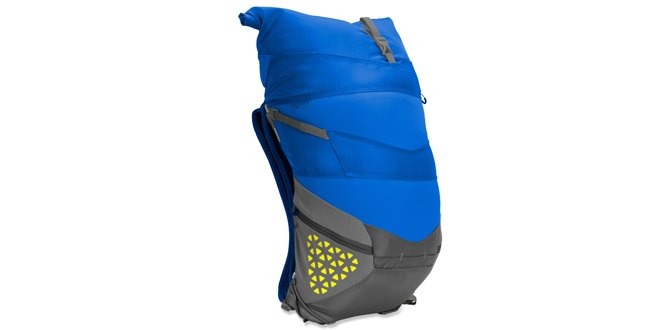
A shared backpack harness makes sense when the wearer needs the same fit but a different bag for each activity. The frame, shoulder straps and hip belt stay with the wearer. A compact hydration body, a day-hiking body and a body for wet gear can then share one interface.
The reference designs shown here are not JKPD products. This article focuses on pack structure, how loads move into the harness and what to check before developing an interchangeable system.
01
Start with the interface
Choose fixed reference points on the harness and locate every body from those points. The upper connections need to resist the load pulling back; the lower connections should stop the body from swinging or lifting. Check the lightest and fullest module on the same harness before setting anchor spacing.
02
Seven design signatures
These are seven features to consider when developing light packs around the same carry system.
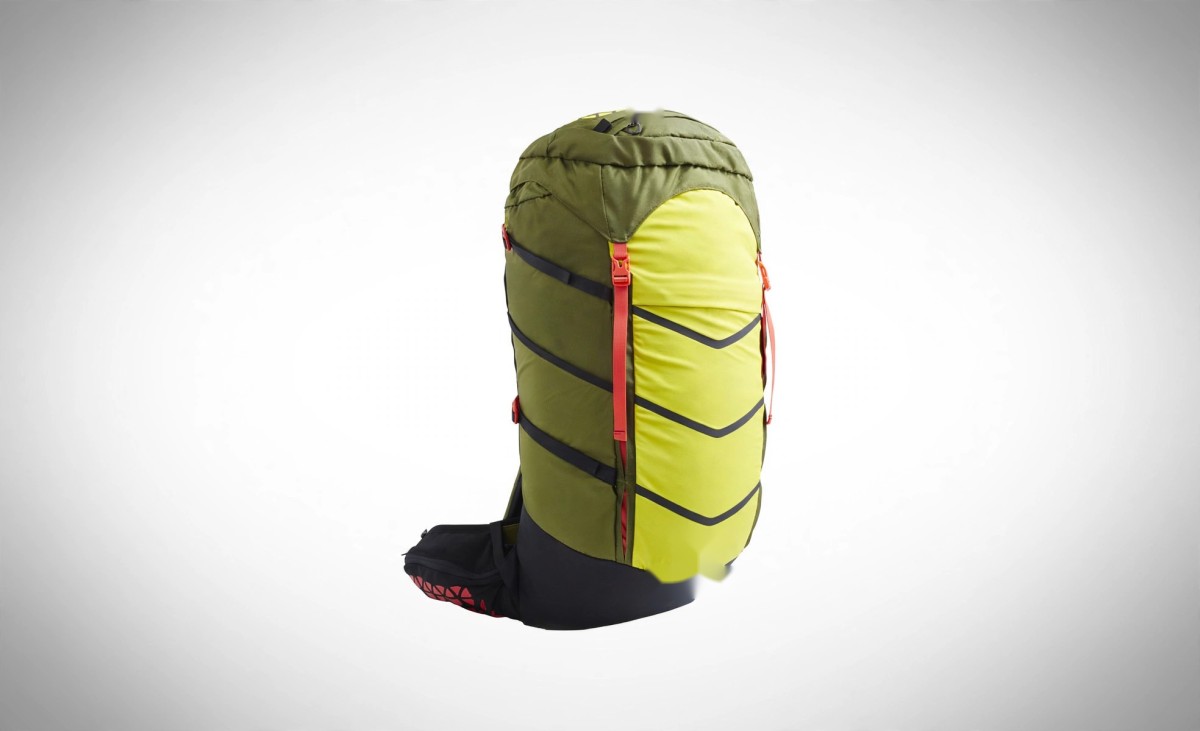
- Bold colour blocking. Grey, black or green bodies are combined with bright orange, yellow, lime or blue panels, straps and buckles.
- Hidden daisy chains. Daisy-chain attachment loops run down the pack body and along the shoulder straps. They can be pulled out when needed and tucked away when not, so the pack looks clean without losing attachment points.
- "Ribcage" construction. Applied PU ribs or taped seams on the pack body give structure to lightweight fabric, so the bag holds its shape under load without heavier materials.
- Sliding sternum strap. The sternum strap moves up and down to suit different chest shapes, and on some models includes an emergency whistle.
- Ventilated, adjustable shoulder straps. The shoulder straps are made from perforated foam with a light mesh cover, so air can move through them.
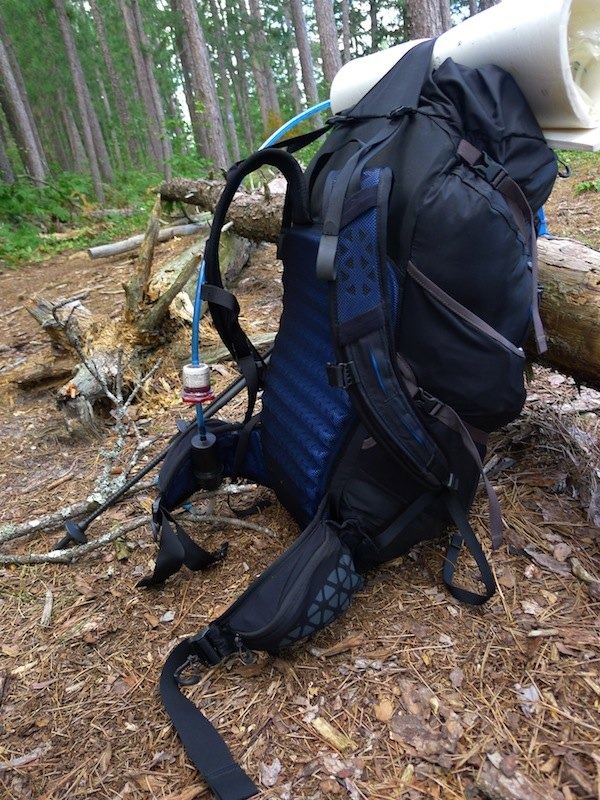
- Ultralight aluminium frame. On the larger packs, a light aluminium wire frame runs around the edge of a plastic (PE) frame sheet.
- Z-shaped moulded EVA back panel. A moulded, perforated EVA back panel with Z-shaped ridges creates air channels against the back and helps the pack grip the lumbar area.
03
Materials and construction
The range used light fabrics and relied on structure to make them work.
- Body fabric. The 45-litre and 60-litre trekking packs used 210D nylon ripstop with a silicone/ polyurethane coating for tear resistance. The 40-litre and 55-litre lightweight packs used a 100D high-tenacity triple-ripstop nylon with a silicone-impregnated coating. The 30-litre roll-top daypack used 210D nylon ripstop.
- Base fabric. The packs used a tougher 420D nylon base, where abrasion is highest.
- Zips. Coil zips on the daypack; check tape stiffness and slider access around bends.
- Suspension. The trekking packs used the moulded, perforated EVA Z-foam back panel, with a removable aluminium perimeter wire frame and PE frame sheet. The lightweight packs used a shaped EVA Z-foam back panel with a removable die-cut PE frame sheet.
The idea is consistent: keep the fabric light, put tougher fabric only where it is needed, and use ribs, frame sheets and foam shapes to give the pack structure.
Published figures
| Pack | Capacity | Weight | Notes |
|---|---|---|---|
| Roll-top daypack | 31 L | 2.2 lb (about 1.0 kg) | 22 × 12 × 8.5 in; 210D nylon ripstop |
| Lightweight trekking pack | 40 L | 1,293 g (885 g without frame) | 100D triple-ripstop body, 420D base |
| Lightweight trekking pack | 55 L | 1,361 g (953 g without frame) | Rain cover included |
| Colour-block trekking pack | 45 L | about 3 lb (about 1.4 kg) | Removable lid; M (torso ≤ 20 in) and L (> 20 in) |
04
"One frame, three bags": the modular system
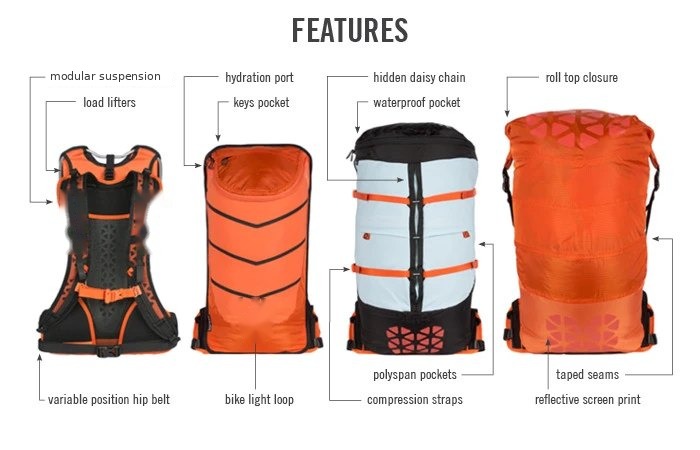
In a three-module system, one suspension harness clips onto pack bodies with different jobs:
- A lightweight hydration pack for long rides or trail runs.
- A daypack with room for lunch and gear for a full day in the mountains.
- A module for wet gear, with protected openings and seams specified for the intended exposure.
Pull straps can move the body closer to the harness for stability or leave more clearance for airflow. In either position, compare side-to-side movement and check that the attachment points stay seated when the wearer bends or pedals.
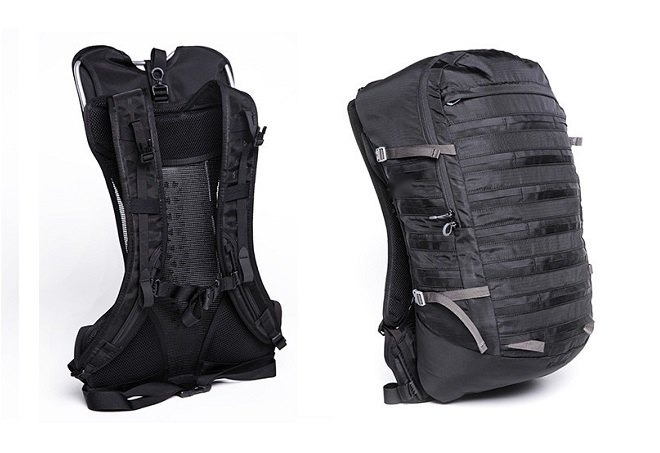
Sharing the frame and hip belt avoids building a complete suspension into every body. Features such as rear access, a stretch front pocket, hidden loops, taped seams and reflective details should belong to the module that needs them. Before adding any pocket or compression strap, make sure it cannot block the shared attachment points.
05
Keep modules distinct and compatible
Use consistent connector geometry and clear visual cues across the range. Different closures or colour panels can identify the modules at a glance without changing attachment locations. Try switching loaded modules from the same standing position so the comparison reflects actual use.
06
Who were these packs for?
- Lightweight backpackers who wanted a light pack with real structure, rather than a frameless sack.
- Multi-sport users who hike, ride and paddle and liked the idea of one harness for several bags.
- Urban and travel users who wanted a technical look in calmer colours.
- Design-minded buyers who valued hidden details, colour and clean lines.
07
Pain points they solved
- Too many single-use packs. The modular system let one harness carry three bags for three activities.
- Hot, sweaty backs. Perforated Z-foam back panels and perforated shoulder straps improved airflow.
- Clutter from attachment points. Hidden daisy chains gave attachment options without a busy look.
- Floppy lightweight packs. Ribcage construction and frame sheets kept light fabric in shape.
- Fit problems across different users. Sliding sternum straps and adjustable suspension helped different body shapes.
08
Trade-offs to check in the sample
A roll-top gives a simple main opening but can hide small items at the bottom. A trekking module may gain storage and support, but its side pockets can be hard to reach when full. Check the depth of the hip-belt wrap, bottle access and whether rain can collect at the closure instead of assuming that a larger bag is more capable.
09
Design lessons for an interchangeable range
A shared harness is useful only when each body mounts quickly and stays stable under its intended load.
- Make compatibility easy to see. Mark the mounting points and show which bodies work with each harness size.
- Hide what you do not always need. Concealed daisy chains and attachment loops let a pack look clean while staying versatile.
- Use structure instead of heavier fabric. Ribcage construction, frame sheets and shaped foam let lightweight fabrics perform.
- Colour can carry identity. Consistent colour blocking can help users identify a module before mounting it.
- Ventilation belongs in the straps too. Perforated shoulder straps and a perforated back panel work together.
10
Developing a modular pack with JKPD
Quanzhou Junkaipengda Special Equipment Co., Ltd. (JKPD) is a textile bag manufacturer in Hui'an County, Quanzhou, Fujian, China, producing outdoor, business, leisure, student and tactical bags and pet harnesses for overseas brands on an OEM/ODM basis. Our factory holds ISO 9001, ISO 14001 and ISO 45001 certification.
A modular harness-and-bags system needs more planning than a single pack. The brief should define:
- The harness: frame type, back panel, shoulder straps, hip belt and the attachment interface between harness and bags.
- Each bag module: capacity, closure (roll-top, zip, drawcord), waterproofing and pocket layout.
- Fabric and seam strategy for each module, including any taped or welded seams.
- How the modules attach, how they are tested for strength, and how they are sold (sets or separately).
- Colourways and how they carry across modules.
Our standard terms for a new style:
- MOQ: 500 pcs per style.
- Price: quoted per style, based on materials and construction.
- Sampling fee: USD 300 per style.
- Lead time: usually 60–120 days, depending on order quantity.
We develop each client's own system and do not copy other brands' logos, names or protected designs.
Discuss your bag development project
ANSON XIE
General Manager & Founder
Quanzhou Junkai Pengda Special Equipment Co., Ltd.
Email: ansonxie@jkpdtime.com
Phone: +86 177 5095 3355
WhatsApp: +86 177 5095 3355
Factory address: Floors 2–4, Building 1, Phase I, Huixin Intelligent Manufacturing Industrial Park, Hui'an County, Quanzhou, Fujian, China