
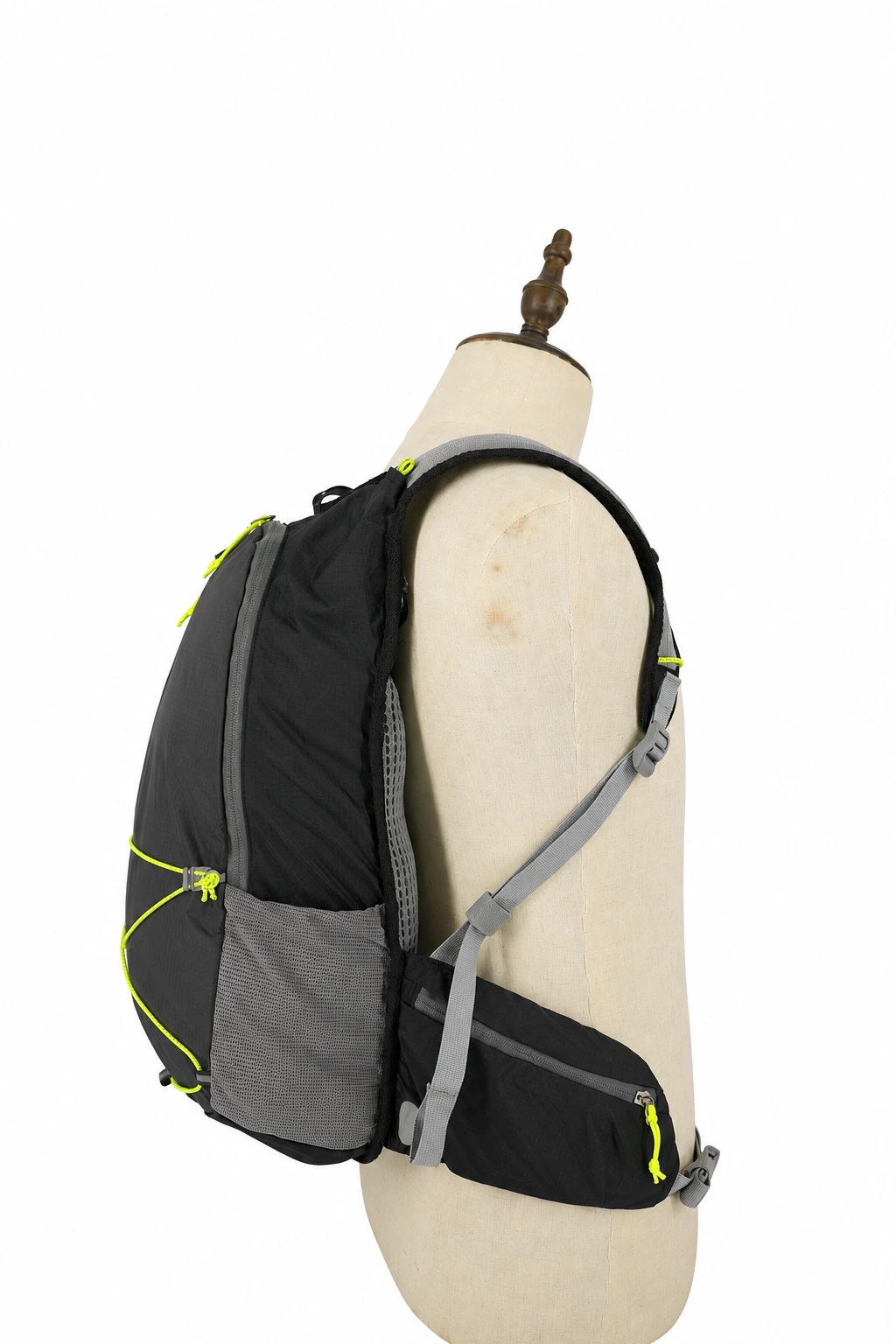
Lower shoulder webbing and a belt-pocket opening can share a side zone. Distinguish the loaded span, adjuster and free tail, then observe access after tightening. Moving a loose tail does not establish a changed structural load path.
Authorised archive photograph; ordinary branding/background cleaned where present. Visible structure reference only.
01
Read two operating routes from the side
A harness that looks orderly from the front can gather lower shoulder webbing, a hip wing and a small pocket into a narrow side zone. One route adjusts the shoulder harness; another lets the hand approach a pocket zipper. Proximity does not mean both operations should occupy the same space.
The side photograph shows grey diagonal webbing above a belt pocket. It establishes relative position, not hidden attachment construction, force or worn comfort. Mark what is visible before choosing the movement that needs review.
02
Identify the tensioned span, adjuster and free tail
Trace the route from the shoulder towards its lower attachment. Distinguish the section held in tension, the adjustment component and the loose end extending beyond it. Saying that a strap blocks a pocket can mix up substantially different changes. Managing a tail and moving an attachment are not equivalent interventions.
A free end can be organised while retaining an intentional grasp section. It should not be arbitrarily tied to the pocket opening, sewn immovable or routed so that the adjuster loses its intended operation. Moving an attachment calls for review of the affected structure rather than treating it as cosmetic cleanup.
03
Check hand approach after adjustment
A loose strap can stand clear of a pocket but take a different route when tightened. Clothing, pocket contents and belt curvature alter the available space too. An empty pack with its belt unfastened is therefore an incomplete access reference.
Complete the intended harness adjustment first. At a safe stop, approach the belt pocket and observe whether the wearer must move webbing, change grip or lift the pouch. Each extra movement points to a location that can be changed more precisely than a general request for easier access.
04
Give the zipper its own operating area
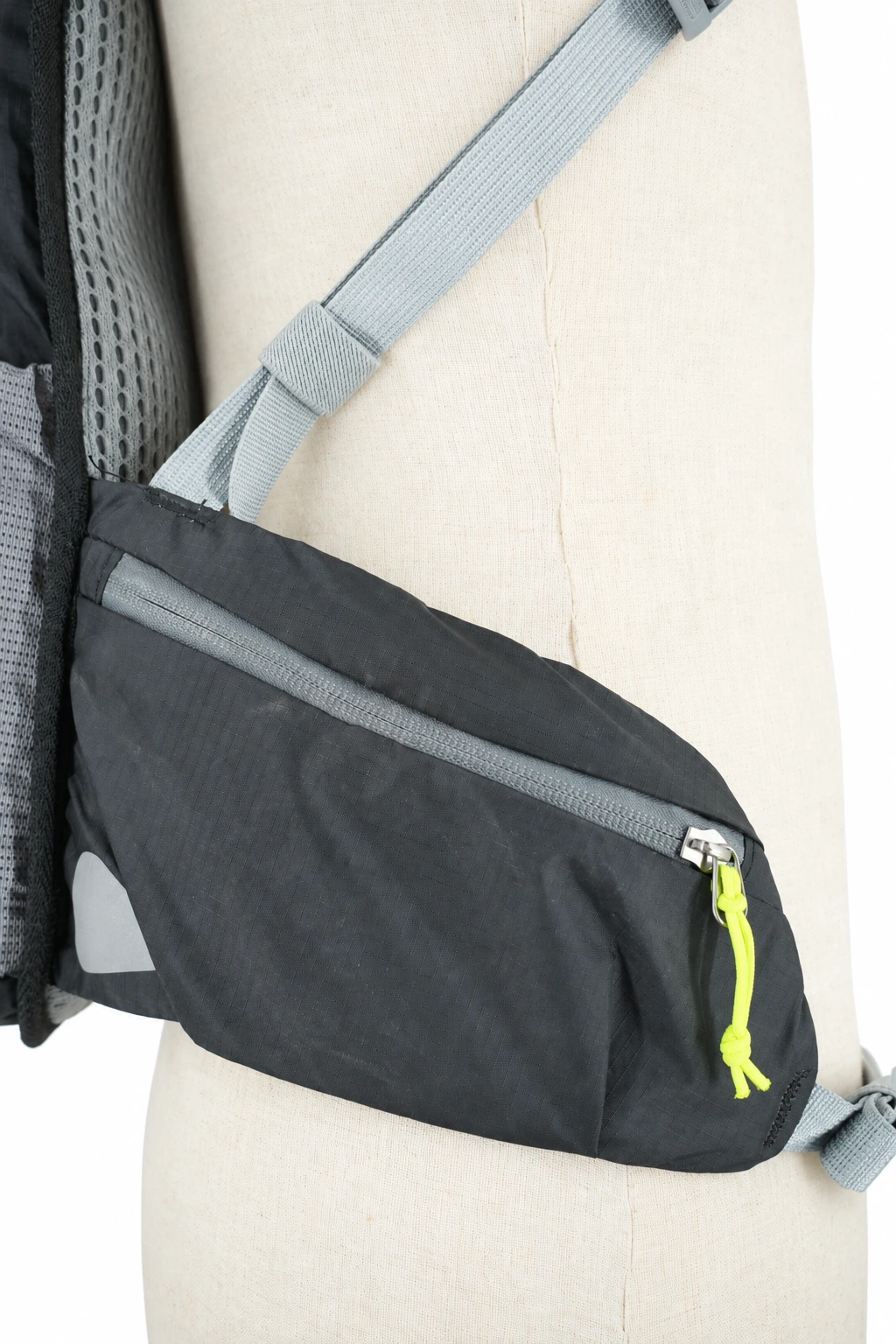
The close-up shows a zipper edge, extended pull and diagonal strap above it. The hand needs to reach the pull, and the slider then needs to travel along its actual path. A single flat arrow cannot describe both spaces. A bulging pocket or clothing can change their relationship.
When operation hesitates, distinguish difficult hand approach from fabric trapped in the zipper. The former directs attention to neighbouring routes and contents; the latter requires locating the trapped fabric. Do not mask the problem with more pulling force or identify a locking mechanism from pull colour or appearance.
05
Manage the tail without losing adjustment
Gathering a free tail can reduce its opportunity to cover the pocket. Keep the grasp and release actions specified for the user, however. If removing the pack first requires undoing several retainers, tail management may have exchanged an access problem for an adjustment problem.
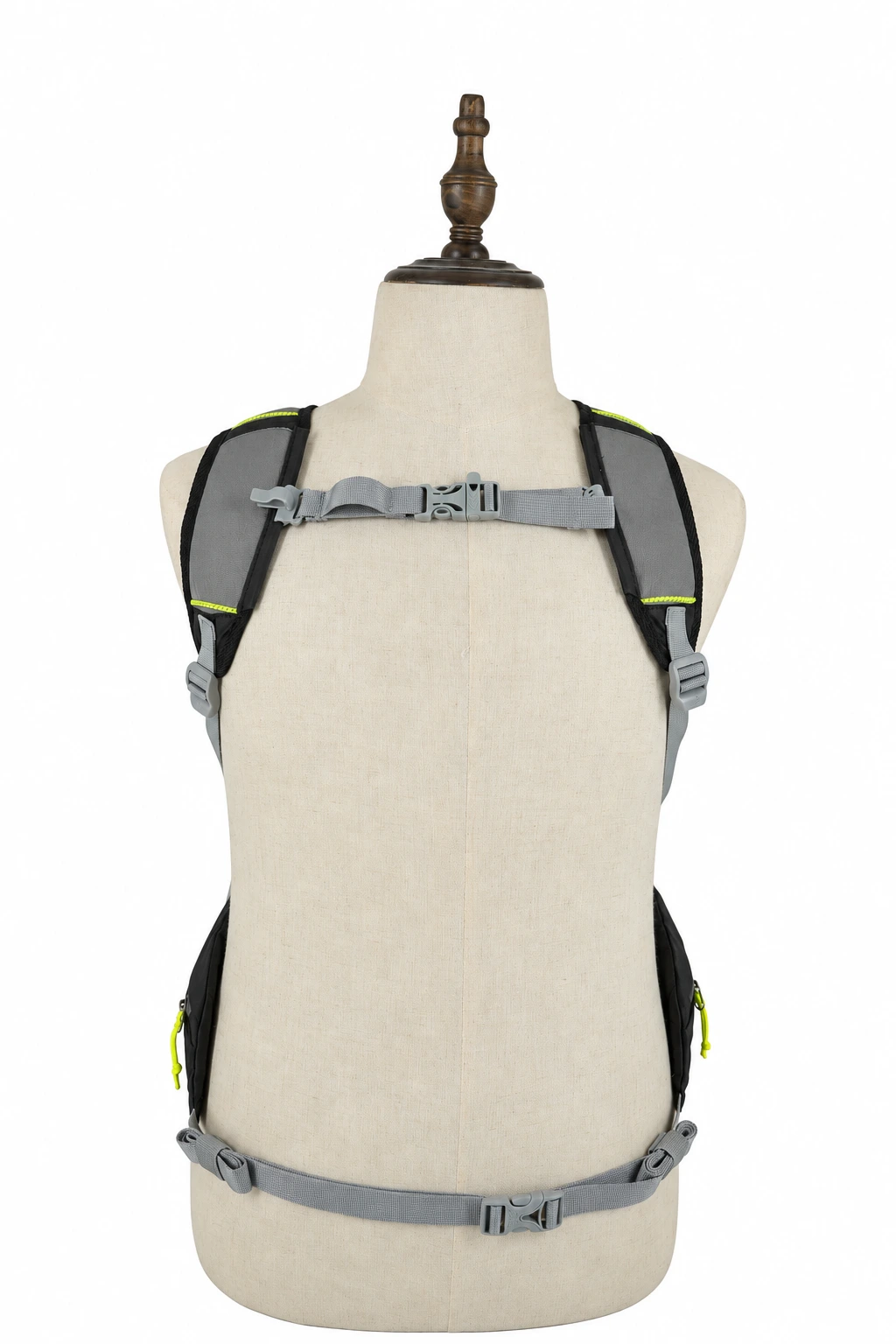
The front harness photograph helps locate where the lower routes approach the body sides. Left and right operations need not be identical. Gloves, a device in one hand or a fuller pocket can change the route. Observe the intended user rather than treating a symmetrical display as proof of symmetrical handling.
06
Supply a side view with three operating states
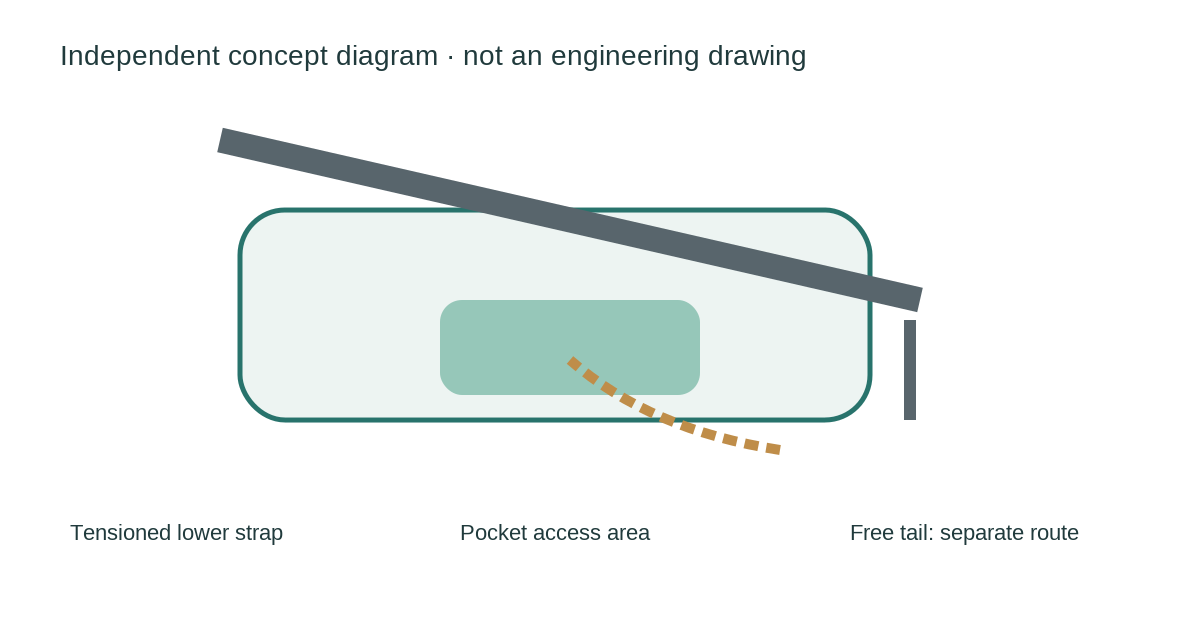
Show the loose harness, completed adjustment and pocket retrieval as separate states. Identify the tensioned webbing, free tail and hand approach zone in each. The independent schematic explains that distinction; it supplies no claimed attachment movement dimension.
Retain the sample’s load and clothing conditions. Record extra strap-clearing movements, changed grip and incomplete closure. Then decide whether tail management, pocket orientation or a more substantial layout revision is needed. Planning adjustment and storage together keeps the side zone usable.
Discuss your bag development project
ANSON XIE
General Manager & Founder
Quanzhou Junkai Pengda Special Equipment Co., Ltd.
Email: ansonxie@jkpdtime.com
Phone: +86 177 5095 3355
WhatsApp: +86 177 5095 3355
Factory address: Floors 2–4, Building 1, Phase I, Huixin Intelligent Manufacturing Industrial Park, Hui'an County, Quanzhou, Fujian, China